News
Are Candles Allowed in Apartments? Lease Rules, Smoke Alarms and Your Deposit

Sep
Renting & Rules
Are candles allowed in apartments? Usually that is decided by your lease rather than by your city. In most states the fire code bans open flame in a dormitory sleeping unit and says nothing at all about the apartment next door, which leaves one sentence in a private contract doing the entire job. Here is what that sentence reaches, what a lit wick does to an alarm wired into the whole building, and the three things a candle can be charged for out of a deposit.
Key takeaways
This page is about a lit candle in a long-term rental. The separate question of whether the flameless appliance is permitted was answered on our page about where to put a candle warmer lamp, and student housing runs on a different rulebook entirely, covered in how campus housing handles candles and warmers. Neither is repeated here.
- The rule you are looking for is in a contract, not in a code. Minnesota’s State Fire Marshal states that “open flames devices, candles, and incense are prohibited in Group R-2 dormitory sleeping units.”[3] Apartment houses sit inside that same Group R-2.[4] The prohibition names dormitories. It does not name the apartment down the hall.
- Your building is still a different fire class from a house. The U.S. Fire Administration writes that multifamily buildings “tend to have stricter building codes than one- and two-family buildings” and are “usually required to comply with more stringent fire prevention statutes and regulations involving smoke alarms and sprinkler systems.”[1]
- The alarm is the part that stops being private. In a newer complex, the same agency notes, “the alarms are often connected to the building alarm system, and the fire department is automatically called.”[1]
- Deposits turn on one phrase. Texas defines normal wear and tear to exclude deterioration that results from “negligence, carelessness, accident, or abuse” — which is the bucket soot, spilled wax and burn marks fall into.[8]
Almost every answer to this question online is a guess dressed as a rule: either a flat “no, it is against fire code” or a shrug that says check with your landlord. The first is wrong in most places and the second is useless. The documents that actually govern a jar of wax on a rented coffee table are readable, they are public, and they disagree with each other in a specific and knowable way. Below are four of them — a state fire code, a state building code, a housing agency’s own resident handbook and two state deposit statutes — read line by line, along with the one thing in a multifamily building that turns a small mistake into an expensive one.
01Are Candles Allowed in Apartments? The Short Answer
Are candles allowed in apartments? In most of the United States, yes as a matter of law and often no as a matter of your lease — and the lease is the document that will actually be enforced against you. Fire codes are written around occupancy classes and buildings; they prohibit open flame in a handful of specific settings and leave a private dwelling unit alone. A residential lease is a contract, and a contract can prohibit anything the parties agree to. So the honest answer to the question is not a fact about candles. It is an instruction to go and read four or five sentences of a document you have already signed.
That is not a dodge, because the reading takes ten minutes and it settles three separate exposures at once. The first is the tenancy itself: burning a candle where the lease forbids it is a breach, whether or not anything ever happens. The second is the alarm, which in a multifamily building is not a private household device and does not stay in your unit. The third is money at move-out, where soot on a ceiling and a wax stain on a carpet are treated very differently from a faded paint job. Those three run on different documents, and the rest of this page takes them in that order.
02Why Are Candles in Apartments a Lease Question and Not a Fire Code One?
Candles in apartments are governed by two documents that most people collapse into one, and the clearest way to separate them is to watch a state fire code draw the line itself. Minnesota’s State Fire Marshal publishes a page on candles and open flames that sets out where each restriction applies, and its residential entry is precise: for Group R occupancies generally, buildings “shall comply with MSFC Sections 308.1 through 308.1.6.3,” while for one sub-type the rule is absolute — “open flames devices, candles, and incense are prohibited in Group R-2 dormitory sleeping units,” justified by dormitory fire loss data.[3] Now look at what Group R-2 contains. Washington’s adoption of the building code defines it as residential occupancies with more than two dwelling units where occupants are “primarily permanent in nature,” listing “apartment houses” and “dormitories” in the same enumeration.[4] The two building types share a classification. The candle ban picks one of them by name and stops.
That is not because the code ignores your building. It reaches it in ways a house is never reached. The U.S. Fire Administration puts it plainly: multifamily residential buildings “tend to have stricter building codes than one- and two-family buildings,” and because many are rentals they “are usually required to comply with more stringent fire prevention statutes and regulations involving smoke alarms and sprinkler systems.”[1] The rule even follows you outdoors. New York’s Department of State, explaining the fire code provision on open-flame cooking devices, notes that the exception for one- and two-family dwellings cannot be stretched: “a building containing more than two independent living units would not meet this exception,” so charcoal burners and similar devices stay off combustible balconies there.[5] That is a cooking rule rather than a candle rule, but it shows the pattern — the code governs your building, your balcony and your alarms, and then declines to govern the wick on your side table.
Which leaves the second layer, and it is the one with teeth. Minnesota’s Attorney General describes a lease as what happens when an owner gives someone “the temporary use of that place in exchange for money or services,” creating “a legally binding rental contract,” and adds the sentence that explains this whole page: “Leases can set out some of the rules for the tenant and landlord to follow, but the law also sets out some rules that must be followed even if they are not in the lease or even if the lease is different than the law.”[6] Statute is the floor. The lease is free to build on top of it, and on this subject it almost always does.
The fire code
- Public, searchable, identical for every unit in the jurisdiction
- Aimed at buildings and occupancy classes, not at habits
- Names dormitory sleeping units, not apartment dwelling units
- Enforced by inspection, usually of common areas and systems
Your lease
- Private, unique to your building, often amended by an addendum
- Free to prohibit anything lawful, including a candle
- This is where a candle rule almost always lives
- Enforced by notice, fees, deposit deductions and eviction
03The Three Sentences a Lease Uses, and What Each One Reaches
Published rental rulebooks are easier to find than people think, because public housing agencies put theirs online. One of them is worth quoting in full, because its drafting is typical and its final clause is the trap. The Central Texas Housing Consortium’s resident handbook for its conventional properties lists, among the conduct that violates the lease, “using candles, incense, kerosene lamps or any item that has an open flame or has potential to create a fire from a heated source.”[7] Read the first half and it is a plain flame prohibition. Read the second half and it is something else: a heated source is not a flame, and a sentence written that way was written to be broad.
Across the rulebooks that exist, three drafting families do nearly all the work, and they do not overlap as neatly as tenants assume. Search only for the word “candle” and you can pass over the other two entirely.
| Clause family | Typical wording | What it plainly covers | Where the argument starts |
|---|---|---|---|
| The candle sentence | “No candles or incense in the unit” | Named objects, lit or otherwise, depending on whether the verb is “using” or “possessing” | Whether an unlit decorative candle counts |
| The open-flame sentence | “No open flames of any kind” | Anything burning: wicks, incense, oil lamps, fondue burners | Nothing much. This one is clear, and a candle is inside it |
| The heated-appliance catch-all | “Any item that has an open flame or has potential to create a fire from a heated source”[7] | Flame, plus any device that gets hot | Everything with a plug, which is why this is the sentence to email about |
| The insurance sentence | “Nothing that increases the risk of fire or the rate of fire insurance” | Whatever an insurer would price differently | Almost anything, since the test is a third party’s judgment rather than an object |
Two practical consequences follow. First, a lease that bans open flame has already answered the candle question and no amount of care changes it — a glass hurricane, a saucer or a promise to stay in the room are not exceptions to a contract term. Second, a broad catch-all is genuinely ambiguous rather than secretly permissive, and ambiguity in a document you did not draft is not something to resolve in your own favour by yourself. The fix for both is the same email, and it is set out in section seven.
04Do Candles in Apartment Buildings Set Off Smoke Alarms?
Yes, a burning candle can trigger a smoke alarm, and the mechanism is not a malfunction — it is the alarm doing precisely what it was designed to do. NIST explains that ionization alarms charge the air between two metal plates and register a drop in current when particles arrive, and that they “tend to detect small black soot particles from flaming fires more quickly because they are produced in greater numbers and take away more current from between the plates,” while photoelectric units are “more sensitive to particles that are larger in size and white or light-colored, and thus more reflective, like those emitted by smoldering fires.”[10] A candle flame is a flaming fire producing exactly the small dark soot particles in the first description. It is not an edge case for the sensor. It is the sensor’s home ground, which is why a snuffed wick trailing smoke sets alarms off far more often than a steadily burning one does. The physics of that soot, and where it lands, is worked through in our guide to avoiding candle soot on walls.
What makes this an apartment problem rather than a household one is what the alarm is wired to. Describing why small fires are reported more often in multifamily buildings than in houses, the U.S. Fire Administration writes that someone “may hear the alarm in the complex” or smell smoke and notify the building manager, and that “if it is a newer complex, the alarms are often connected to the building alarm system, and the fire department is automatically called” — whereas in a house, “as little damage occurs and only the residents hear the smoke alarm or smell the smoke, the residents may elect not to call the fire department.”[1] That is the whole difference. In a house a false alarm is a window and a tea towel. In a building it can be a corridor full of neighbours, an engine on the street and a management company with your name on the incident.
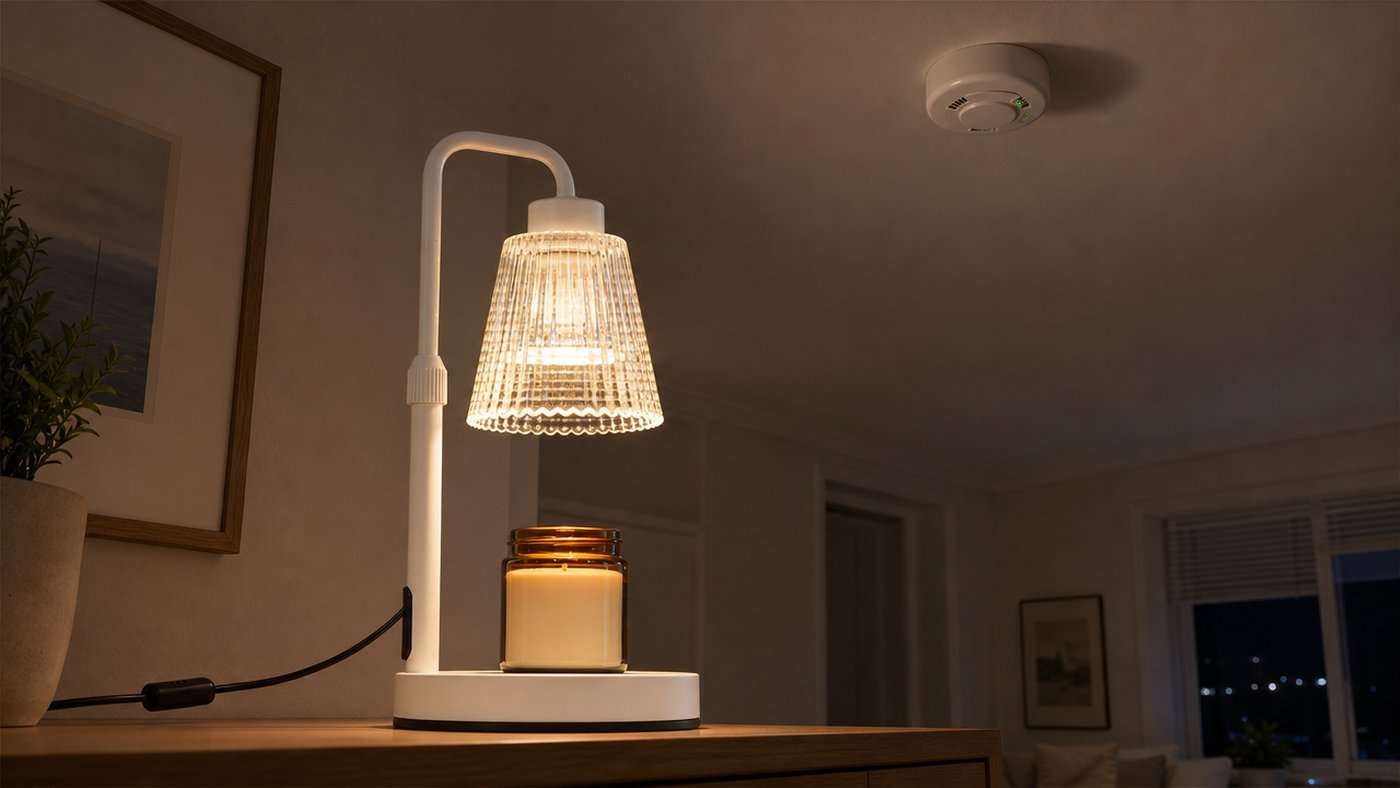
It is worth holding that risk at its real size rather than the size a lease clause implies. The same federal dataset ranks what actually causes fires in these buildings, and candles are not near the top of it.
Source: U.S. Fire Administration, “Multifamily Residential Building Fires (2017-2019),” Topical Fire Report Series.[1] Nonconfined fires only; these six causes account for about half of them. Looked at by heat source rather than cause, candles specifically account for 4 percent. Retrieved September 8, 2026.
05What Can a Candle Actually Cost You From a Security Deposit?
Deposit law is written state by state, but the load-bearing distinction is the same everywhere and it is not the one tenants expect. California allows a deposit to be claimed for “the repair of damages to the premises, exclusive of ordinary wear and tear, caused by the tenant or by a guest or licensee of the tenant,” and separately for “the cleaning of the premises upon termination of the tenancy necessary to return the unit to the same level of cleanliness it was in at the inception of the tenancy.”[9] Texas allows deduction of “damages and charges for which the tenant is legally liable under the lease or as a result of breaching the lease,” bars retaining any part of a deposit to cover normal wear and tear, and then defines the exclusion that decides candle cases: normal wear and tear is deterioration from the intended use of a dwelling, but “does not include deterioration that results from negligence, carelessness, accident, or abuse.”[8]
Run the three things a candle leaves behind through that sentence and none of them survives it. A grey soot film above a shelf or around a vent is not the intended use of a wall; it is a by-product of an activity, and it is the reason our page on candle soot exists. Wax in a carpet pile or in the grain of a hardwood floor is an accident by definition, however careful the person was, which is why getting wax out of carpet is a page of its own. A heat ring or a scorch on a windowsill is damage in the plainest sense. Note also the first half of the Texas provision: charges the tenant is liable for “under the lease” are deductible too, so where a lease banned candles outright, the breach itself supplies the hook and the argument about wear and tear never has to be had.
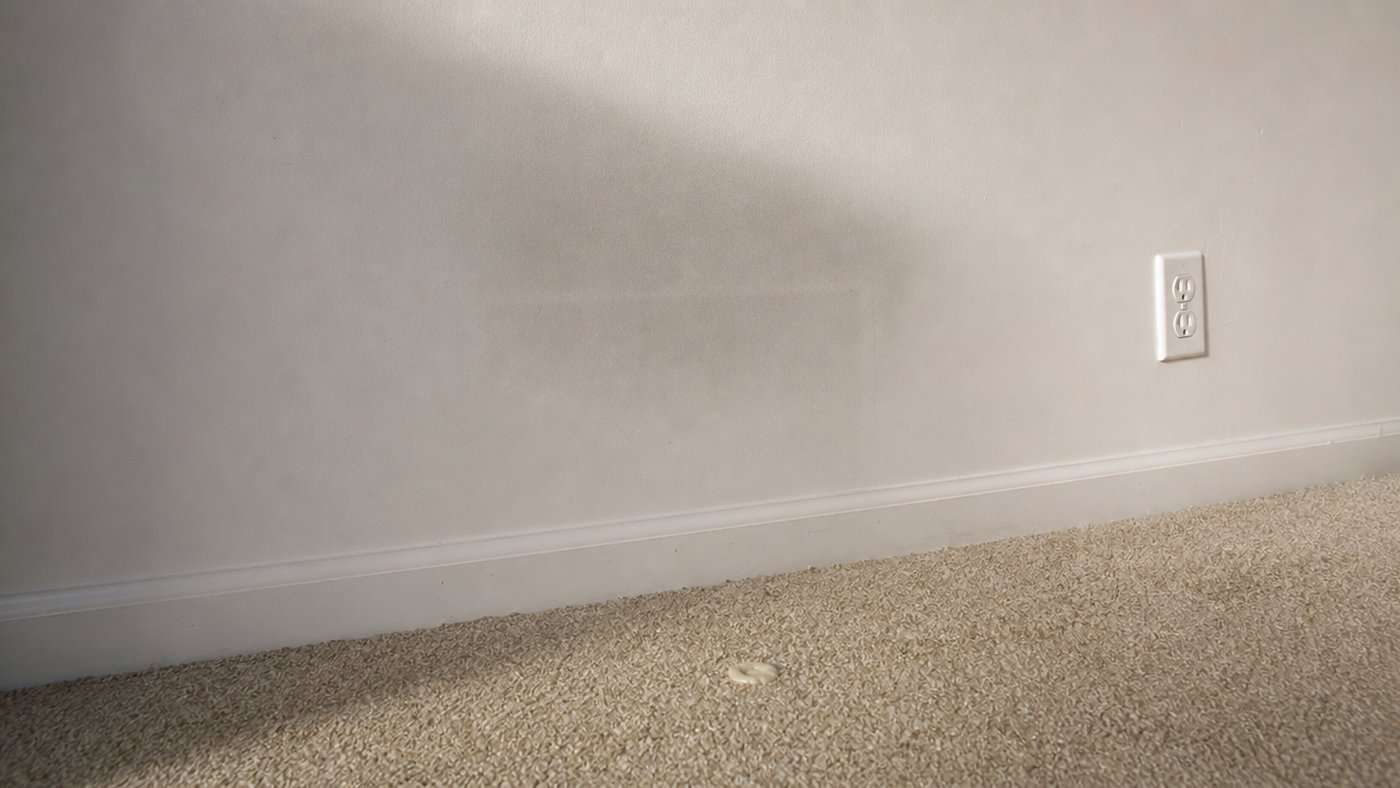
The practical defence is photographic and boring. Photograph every wall, the ceiling above any surface you use, and the floor on the day you move in, then again on the day you leave; states that allow deductions generally also require an itemised written accounting, and an itemised list is much easier to dispute when you have a dated picture of the same wall. What none of this is, is legal advice: the statutes quoted above bind California and Texas, deposit rules elsewhere differ in deadlines, caps and burden of proof, and a real dispute belongs with a tenant advice service in your own state rather than with an article.
06Apartment Candles: What Two Problems Does a Small Unit Create?
Apartment candles have two problems that have nothing to do with permission, and both come from volume rather than from rules. The first is proximity. The National Fire Protection Association reports an annual average of 5,894 US home structure fires with candles as the heat source across 2020 to 2024, causing 63 civilian deaths, 532 civilian injuries and $286 million in direct property damage — and its two findings about where and why matter more here than the totals do: more than half of those fires began when something combustible was too close to the flame, and 36 percent started in the bedroom.[2] In a studio or a one-bedroom, the bedroom is often also the living room, the desk and the place the laundry gets folded, so “keep it clear of anything that can burn” is a real constraint on where a jar can go rather than a slogan.
The second is that the same air stays with you. Scent load is specified for rooms, not for the volume you actually have; a jar sized to fill an open-plan floor will be overpowering in 400 square feet, and the heating months when apartment windows stay shut are exactly when candle use peaks — 12 percent of candle fires occur in December and 10 percent in January.[2] The sensible adjustments are unglamorous: buy the smaller jar rather than the larger one, treat one room as the target rather than the flat, keep the surface clear and hard and away from curtains and bedding, and never run anything unattended, which is the question our page on leaving a warmer on overnight takes apart properly. There is no product recommendation hidden in that list, because none of it is about which candle you buy.
07How Do You Settle It for Your Own Lease in Ten Minutes?
Read four words rather than one, and write one email. The reason this works is that the answer already exists in writing somewhere in your tenancy file; the only reason people do not have it is that the relevant sentences are scattered across two or three documents under headings nobody reads twice.
Collect the whole agreement, not just the lease
Community policies, house rules and a fire safety addendum are usually separate files incorporated by reference. A clause in an addendum binds you exactly as much as one in the lease body.
Search four words: candle, flame, appliance, hazard
Searching only for “candle” is the common mistake. The catch-all sentence rarely contains the word, and it is the sentence with the widest reach.
Read the smoke alarm clause while you are in there
Nearly every lease forbids disabling, covering or removing a detector. That clause is what turns “I took the battery out for an evening” from a mistake into a serious, separately enforceable breach.
If it is silent or broad, ask in writing and keep the reply
Email rather than phone, describe the object rather than the category, and file the answer. A written yes costs nothing and settles the point for the length of the tenancy.
Photograph the walls, ceiling and floor now
Dated move-in photographs are what an itemised deduction list gets compared against later. This is the cheapest step here and the one people skip.
One note on the email, because tone changes the answer you get. Ask about the specific thing on your table rather than about a category, and give the manager an easy way to say yes: what a property manager can approve quickly is a described object in a described place, not a request to interpret their own clause. If the object is flameless, describe it that plainly: a plaster candle warmer lamp on the hall console, with nothing lit. If the answer is no, take it at face value. A refusal by email costs you nothing, whereas a disagreement discovered at move-out is argued from a position where the other side is holding your money. The workplace version of the same conversation, with its own separate rulebooks, is set out in our page on using a candle warmer at the office.
08What This Page Cannot Settle
Everything above is assembled from documents that bind somebody, but not necessarily you. The fire code guidance quoted is Minnesota’s published reading of its own adopted code, and other states amend the model code differently; the occupancy definition is Washington’s adoption of the building code, and while Group R-2 is stable across jurisdictions the details are not.[3][4] The resident handbook quoted is one housing agency’s document and is described in its own pages as subject to periodic revision, so it illustrates how these clauses get drafted rather than what any other landlord requires.[7] The deposit statutes bind two states out of fifty.[8][9] The federal fire figures cover 2017 to 2019 and count reported incidents, not risk to any particular household.[1] None of this is legal advice, and no article can read your lease for you.
Two limits cut against our own product, and they belong here rather than in a footnote. The first is that a flame clause is about combustion, and a warmer lamp melts a jar from above at roughly 100 to 160 °F, or 38 to 71 °C, with nothing lit at any point[11] — but that observation does not decide the device question, which is answered separately in our page on where a candle warmer lamp belongs, and it does not survive contact with a catch-all clause written to reach anything with “potential to create a fire from a heated source.”[7] A sentence drafted that widely is one to ask about, not one to read in your own favour. The second is blunter: going flameless removes the fire and the soot, and does nothing whatever about wax. A warm jar knocked off a shelf stains a rented carpet the same way a lit one does, and the deposit risk in section five is only two-thirds addressed by any appliance.
The short below follows the order this article does. It opens on section one: yes as a matter of law and often no as a matter of your lease, and the lease is the document that gets enforced. It turns section three into four search words — candle, flame, appliance, hazard — because the widest clause, the one reaching any item with potential to create a fire from a heated source, rarely says candle at all. Then the routine of section seven: quote the clause, name the device, ask in writing and keep the reply. It ends where section eight ends: a warmer lamp removes the flame and the soot, but it does nothing whatever about wax.
Frequently asked questions
These cover the situations the sections above do not reach — silent leases, unlit candles, balconies, and the two arguments that actually happen between neighbours and at move-out.
Can you light candles in apartments if the lease never mentions them at all?
Yes in most places, because can you light candles in apartments is a question your lease answers and a silent lease has not answered it against you. A tenancy is a contract, so anything it does not prohibit is generally permitted unless a law says otherwise, and in most states the fire code reaches your building, your alarms and your balcony rather than the wick on your table. Two cautions before you treat silence as a yes. Check the community policies or house rules addendum as well, since the clause is often there rather than in the lease body. And silence does not protect your deposit: soot, wax and burn marks are chargeable on their own, whatever the lease says about candles.
Does a no-candles clause cover unlit or decorative candles too?
Read the verb, because that is what decides it. A clause written around using candles reaches the act of burning one, so an unlit jar sitting on a shelf as decoration usually sits outside it. A clause written around possessing, keeping or storing candles reaches the object itself, and some rulebooks are drafted exactly that way, which is why an unburnt candle can be a violation in one building and unremarkable in the next. Wick trimmed or not makes no difference to either version. If your clause uses a broad verb and you own decorative candles, ask in writing rather than guessing, and keep the reply; it is a two-minute email that removes a whole category of argument.
Are candles allowed on an apartment balcony or patio?
Assume the same rule applies, and often a stricter one. A balcony is part of the premises you lease, so a clause prohibiting open flame in the unit almost always travels out there with you, and many buildings add balcony-specific rules on top because a fire on one balcony threatens the ones above it. Fire codes treat these spaces differently from a house too: the provision on open-flame cooking devices bars them from combustible balconies, and its exception for one- and two-family dwellings does not extend to a building with more than two independent living units. That is a cooking-device rule rather than a candle rule, but it tells you which direction the code leans. Wind is the practical argument anyway.
Can a landlord charge me for a smoky smell rather than for visible damage?
Possibly, and cleaning is usually the heading it arrives under rather than damage. California, for example, lets a deposit be used for cleaning necessary to return the unit to the level of cleanliness it was in when the tenancy began, which is a different test from repairing something broken. Odour claims are harder for a landlord to itemise than a soot line on a ceiling, so they tend to appear alongside visible marks rather than alone. Your defence is the same either way: dated photographs from move-in day, dated photographs from move-out day, and the written itemised accounting most states require before money is kept. Ventilate well before the final inspection and deal with visible residue first, since the mark is what anchors the claim.
My neighbour's candle smoke keeps drifting into my apartment. What can I do?
Start with the building rather than with your neighbour, because in a multifamily building this is a management problem with a paper trail attached. Report it in writing to the property manager and describe what you experience and when, since a dated written complaint is what triggers any obligation the landlord has and what supports you later if nothing happens. Most leases contain both a candle or open-flame clause and a quiet-enjoyment or nuisance clause, and either can apply. Do not cover or disable your own smoke detector to stop it going off; almost every lease treats that as a serious breach on its own, and it removes your warning rather than theirs. If smoke is entering through shared ductwork or a gap around a door, that is a maintenance request as well as a complaint.

Candle Warmer Lamps
A GODONLIF flameless candle warmer lamp melts your jar candle from above with a dimmable bulb — an electric candle warmer, not an open flame — so the same candle lasts far longer and melts evenly with no tunnelling.
Browse all candle warmer lampsSold and shipped by GODONLIF — free shipping within the contiguous US. Prices are shown on each product page.
Sources and evidence limits
Fire statistics come from the U.S. Fire Administration and the National Fire Protection Association; the code readings come from a state fire marshal, a state building code and a state building standards bulletin; the tenancy material comes from two state statutes, a state attorney general’s handbook and a housing agency’s own published handbook; the sensor mechanism comes from NIST. Warmer temperatures are manufacturer guidance, the least authoritative tier used here. Each link was checked on September 8, 2026.
- U.S. Fire Administration, “Multifamily Residential Building Fires (2017-2019),” Topical Fire Report Series, Volume 21, Issue 7, August 2021. Source for the annual estimate of 106,700 multifamily residential building fires causing 400 deaths, 3,875 injuries and $1.7 billion in property loss; for cooking as the cause of 74 percent of multifamily fires and 15 percent of nonconfined ones; for the cause breakdown charted in section four and the 4 percent figure for candles as a heat source; for the statement that multifamily buildings “tend to have stricter building codes than one- and two-family buildings”; and for the passage in section four on alarms “connected to the building alarm system.” Counts reported incidents from the National Fire Incident Reporting System, not risk to a given household. usfa.fema.gov — multifamily residential building fires (Retrieved September 8, 2026).
- National Fire Protection Association, “Safety with candles.” Source for the figures in section six: an annual estimated average of 5,894 US home structure fires with candles as the heat source across 2020 to 2024, causing 63 civilian deaths, 532 civilian injuries and $286 million in direct property damage; for the finding that more than half of candle fires began with something combustible too close to the flame; for 36 percent starting in the bedroom; and for the December and January shares of 12 and 10 percent. Covers all US homes rather than rentals specifically. nfpa.org — safety with candles (Retrieved September 8, 2026).
- Minnesota Department of Public Safety, State Fire Marshal Division, “Candles and open flames,” fire code information by topic. Source for the quoted rule in the key takeaways and sections two and eight — “open flames devices, candles, and incense are prohibited in Group R-2 dormitory sleeping units” — and for the instruction that Group R occupancies other than R-2 dormitories “shall comply with MSFC Sections 308.1 through 308.1.6.3.” This is one state’s published reading of the code it has adopted. dps.mn.gov — candles and open flames (Retrieved September 8, 2026).
- Washington State Building Code Council, WAC 51-54A-0202, amending Section 202 of the International Building Code as adopted in Washington. Source for the Group R-2 definition used in the key takeaways and sections two and eight: residential occupancies “containing sleeping units or more than two dwelling units where the occupants are primarily permanent in nature,” enumerating “apartment houses” and “dormitories” among others. State adoptions of the model code vary in detail. app.leg.wa.gov — WAC 51-54A-0202 (Retrieved September 8, 2026).
- New York State Department of State, Division of Building Standards and Codes, Technical Bulletin TB-3005-FCNYS, “Open flame cooking devices on combustible balconies and decks.” Source for the balcony point in section two, including the quoted fire code text that “charcoal burners and other open-flame cooking devices shall not be operated on combustible balconies or within 10 feet of combustible construction,” its exception for one- and two-family dwellings, and the bulletin’s conclusion that “a building containing more than two independent living units would not meet this exception.” A cooking-device provision, not a candle provision. dos.ny.gov — technical bulletin TB-3005-FCNYS (Retrieved September 8, 2026).
- Office of the Minnesota Attorney General, “Landlords and Tenants: Rights and Responsibilities,” chapter 1, Entering into the Agreement. Source for the two statements in section two: that giving temporary use of a home in exchange for money or services creates “a legally binding rental contract called a ‘lease,'” and that “leases can set out some of the rules for the tenant and landlord to follow, but the law also sets out some rules that must be followed even if they are not in the lease or even if the lease is different than the law.” Describes Minnesota law. ag.state.mn.us — landlords and tenants handbook (Retrieved September 8, 2026).
- Central Texas Housing Consortium, “Resident Handbook for CTHC Conventional Properties,” Temple, Texas. Source for the clause quoted in section three, the comparison table and section eight: the list of conduct that violates the lease includes “using candles, incense, kerosene lamps or any item that has an open flame or has potential to create a fire from a heated source.” One housing agency’s published handbook, stated in its own pages to be updated periodically. cthc.org — resident handbook for conventional properties (Retrieved September 8, 2026).
- Texas State Law Library, “Landlord/Tenant Law: Security Deposit Refunds,” citing Texas Property Code Sections 92.104 and 92.001(4). Source for the deposit rules in the key takeaways and section five: a landlord may deduct “damages and charges for which the tenant is legally liable under the lease or as a result of breaching the lease,” “may not retain any portion of a security deposit to cover normal wear and tear,” and normal wear and tear is defined as deterioration from the intended use of a dwelling that “does not include deterioration that results from negligence, carelessness, accident, or abuse.” Texas law only. guides.sll.texas.gov — security deposit refunds (Retrieved September 8, 2026).
- California Civil Code Section 1950.5(b), California Legislative Information. Source for the two permitted uses quoted in section five: “the repair of damages to the premises, exclusive of ordinary wear and tear, caused by the tenant or by a guest or licensee of the tenant,” and “the cleaning of the premises upon termination of the tenancy necessary to return the unit to the same level of cleanliness it was in at the inception of the tenancy.” California law only. leginfo.legislature.ca.gov — Civil Code section 1950.5 (Retrieved September 8, 2026).
- National Institute of Standards and Technology, “How Do Smoke Detectors Work?”, updated February 2026. Source for the sensor mechanism in section four: ionization alarms “tend to detect small black soot particles from flaming fires more quickly because they are produced in greater numbers and take away more current from between the plates,” while photoelectric alarms are “more sensitive to particles that are larger in size and white or light-colored, and thus more reflective, like those emitted by smoldering fires.” Describes detector physics, not candles. nist.gov — how do smoke detectors work (Retrieved September 8, 2026).
- GODONLIF, “How Hot Does a Candle Warmer Get?” Source for the 100 to 160 °F / 38 to 71 °C wax-pool band cited in section eight — merged there from manufacturer guidance rather than independent measurement, and the least authoritative source on this page. godonlifstore.com — how hot does a candle warmer get (Retrieved September 8, 2026).
Further reading on this site — background rather than evidence cited above: candles and warmers at the office is the version of this question where an employer, a building manager and a fire code all get a separate vote on the same desk.
Evidence limits are set out in section eight. The lease clause quoted is one published example rather than a survey, and no attempt is made here to describe what any particular landlord requires. Deposit rules, notice periods and the burden of proof differ by state and sometimes by city. Warmer-lamp temperatures are manufacturer guidance rather than independent measurement. Nothing on this page is legal advice or a reading of your tenancy agreement, and a real dispute belongs with a tenant advice service in your own jurisdiction.
You may also like