



News
How to Get Candle Wax Off the Wall Without Damaging the Paint

Oct
Clean It Up
How to get candle wax off the wall without leaving a mark comes down to the order you work in: cold before heat, a plastic edge before anything sharp, and a test patch before every step. Five household tools cover it, and which ones you can use depends on whether the wax landed on flat paint, glossy trim or wallpaper.
Key takeaways
Find your wall in the table in section 01, then use the first tool in section 02 that your wall allows. Most drips never get past the first one.
- Cold first. A university extension procedure for painted walls starts with an ice cube in a plastic bag to harden the wax, then a very gentle scrape with a dull edge or the edge of a plastic card.[1]
- The lowest heat is already enough. Common candle waxes melt between about 115 and 180°F, and an iron’s lowest setting runs near 230°F, so the dial never needs to go up.[2][3]
- Flat paint is the fragile one. One paint maker says flat paint is “prone to scuffs and stains”; another says flat, matte and eggshell need “a gentler touch.”[4][5]
- Rubbing alcohol comes last. It can lift the tint a dyed candle leaves behind, but it also softens latex paint, which is the standard home test for latex versus oil.[6]
How to get candle wax off the wall: below are five ways, ordered from the fewest steps to the most, and the first one uses no heat at all. Whichever you pick, try it on a hidden patch of the same wall first, behind a chair or inside a closet, because the paint finish decides more of the outcome than the wax does.
01Which Method Is Safe for Your Wall: Painted Walls and Wallpaper
How to get wax off painted wall finishes, and how to remove candle wax from painted wall surfaces without leaving a dull or shiny patch, starts with the sheen. One paint maker’s sheen guide says flat paint “can be more challenging to maintain, as it is prone to scuffs and stains,” while its satin and eggshell entry calls those finishes “easily washable” and semi-gloss is “easy to clean.”[4] Another paint maker’s cleaning guide says “lower sheens like flat, matte, and eggshell require a gentler touch,” and asks you to test any cleaner “in an inconspicuous place” first.[5] Find your wall in the left column and read across.
| Wall | Ice pack and plastic scraper | Hair dryer and paper towels | Iron and brown paper bag | Dish soap and warm water | Rubbing alcohol |
|---|---|---|---|---|---|
| Flat or matte paint | Yes | Yes, on low; blot, don’t rub | Test first; lowest setting, light pressure | Gently, no scrubbing[5] | Skip: it can soften latex paint[6] |
| Eggshell or satin paint | Yes | Yes | Yes, lowest setting | Yes | Hidden-spot test first, then dab only |
| Semi-gloss or gloss paint, including trim | Yes | Yes | Yes, lowest setting | Yes | Hidden-spot test first, then dab only |
| Wallpaper | Yes, keep melt water off the paper | Low, in brief passes[8] | Skip | Only if the label says extra washable or scrubbable[7] | Skip |
If you are not sure which sheen is on the wall, treat it as flat. That column is the most cautious one, and nothing in it will be wrong on a glossier finish.
How to Get Candle Wax Off Wallpaper
How to get candle wax off wallpaper depends on one symbol on the roll label. Paper marked spongeable is meant to be wiped with a damp, not soaking, sponge and water alone, with no cleaning fluids or chemicals, so on most wallpaper the cold method has to do almost all the work.[7]
- Harden the wax with an ice cube or ice pack sealed in a plastic bag, so no melt water runs onto the paper.[1]
- Lift the hardened wax off with the edge of a plastic card, working along the pattern and away from the seams.
- If a film is left, warm it with a hair dryer on low in short passes and blot with a paper towel. A wallpaper seller’s removal guide uses the same heat to soften the adhesive when paper comes down, so keep the dryer moving and stop if an edge starts to lift.[8]
- Finish with the wipe in section 03, using plain water unless the label says extra washable or scrubbable.[7]
Leave the iron and the rubbing alcohol out of it on wallpaper. If a colored shadow survives the steps above, it is better to live with it than to scrub through the print.
02How to Get Wax Off Walls, Tool by Tool
How to get wax off walls with what is already in the house: start with the first tool below that you have and that your wall allows in section 01, and move down the list only if the one before it leaves something behind. The no-heat method leads because the extension procedure for painted walls starts there,[1] and rubbing alcohol comes last because it can soften latex paint.[6] Every method ends at the same wipe and check, in section 03.
Without Heat: An Ice Pack and a Plastic Scraper
How to remove candle wax from wall without heat takes three steps, and it is the one method that suits every wall in the table.
- Hold an ice cube or ice pack, sealed in a plastic bag, against the wax until it turns hard and brittle.[1]
- Slide the edge of an old plastic card or a plastic scraper under the wax and lift it off in chips, very gently.[1]
- Do the wipe and check in section 03.
Wall note: keep the bag sealed so melt water does not run down flat paint or paper, and hold the card nearly flat to the wall so its corner cannot dig in.

A Hair Dryer and Paper Towels
For the thin film a scraper leaves behind, or wax that has settled into a textured wall.
- Set the hair dryer to low. The household guides that use this method go no higher than medium.[9][10]
- Warm the wax while moving the dryer in small circles, never parked on one spot, until the surface turns glossy and soft.
- Blot the softened wax with a folded paper towel as it melts, turning to a clean patch each time.[9]
- Do the wipe and check in section 03.
Wall note: on flat paint, blot rather than rub, since low sheens need the gentler touch.[5] On wallpaper, low and brief only, because the same heat softens wallpaper adhesive.[8]
An Iron and a Brown Paper Bag
For a thicker smear on painted drywall or trim that the dryer is too slow to lift.
- Cut a plain brown paper bag open into a flat sheet, choosing one with no printing and no wax coating.[11]
- Set the iron to its lowest setting and use it as a dry iron, without steam.[11]
- Hold the paper over the wax and touch the iron to it in short intervals of a few seconds, moving it rather than pressing hard.[10]
- Shift to a clean part of the paper as the wax soaks in, then do the wipe and check in section 03.
Wall note: painted walls only, never wallpaper, and try a hidden spot first. The brown-bag version comes from a laundry maker’s guide written for fabric, and section 04 shows why the lowest setting is already hotter than the wax needs.

Dish Soap and Warm Water
This one is not for wax. It is for the greasy shadow that can stay on the paint once the wax itself is gone.
- Stir a few drops of mild dish detergent into a bowl of warm water.[5]
- Dampen a large non-abrasive sponge, squeeze it nearly dry, and rub the mark gently in a circular motion.[5]
- Rinse as you go with a second sponge dipped in clear water.[5][1]
- Dry the patch with a soft cloth and check it as in section 03.[1]
Wall note: the extension procedure specifies detergent, not bar soap,[1] and on spongeable or washable wallpaper the label allows water alone.[7]
Rubbing Alcohol for Colored Wax Stains
For the pink, red or green tint a dyed candle can leave after the wax is off, and only after a test.
- Test first: dab a cotton ball of rubbing alcohol on a hidden spot of the same wall and look at the cotton. Paint on the cotton means latex paint that the alcohol is softening, so stop there.[6]
- Dilute it: one part rubbing alcohol to two parts water, the ratio an extension stain guide gives for dye left by wax on carpet and upholstery; it does not cover walls, so the hidden-spot test in step 1 decides.[1]
- Dab the tint with the diluted alcohol on a cotton ball or the corner of a white cloth, without rubbing.
- Blot the patch with a cloth dampened in clear water to take the alcohol off the paint.
- Let it dry, then do the check in section 03.
Wall note: skip it on flat paint and on wallpaper. If the tint is still there after two light passes, stop rather than press harder.
03Finish Up: Wipe the Wall and Check the Paint
Every method above ends here, and it takes three steps.
- Wipe the patch with a sponge dampened in clear water, then dry it with a soft, clean cloth.[1]
- Look at it from the side, against the light, for a shiny patch, a dull patch or a ring of tint.
- If the wall was painted in the last two weeks, leave any further cleaning for later; one paint maker asks for at least two weeks of cure before a newly painted wall is cleaned.[5]
A gray or black mark that does not feel waxy is soot from the flame, not wax, and it calls for a different method, set out in our guide to avoiding candle soot on walls.
04Why the Lowest Heat Setting Is Enough
Heat methods work because candle wax melts at temperatures well below what household heat tools put out. A wax maker’s detailed melting-point tables put paraffin at 115 to 155°F, soy at 120 to 180°F, coconut wax at 124 to 127°F and beeswax at 144 to 147°F.[2] An iron maker’s settings guide puts the lowest dot, the silk and nylon setting, at about 230°F, and the middle setting at 250 to 300°F.[3]
Sources: a wax manufacturer’s melting point tables;[2] an iron manufacturer’s temperature settings guide.[3] Typical ranges; dye and fragrance move every wax figure. Retrieved October 26, 2026.
Read the bars together and the advice in section 02 explains itself. Every common wax is liquid well before the iron’s lowest dot, so turning the dial up adds heat that only the paint and the paper behind it feel. The same logic is why the hair dryer starts on low: the wax needs only to soften enough for the paper towel to take it.
05What Not to Put on a Painted Wall
A few common shortcuts cost more paint than they save time.
- Anything sharp. The extension procedure scrapes “very gently” with a dull knife, a spoon, a spatula or the edge of a plastic card;[1] a sharp blade is not on that list.
- Glass cleaner and heavy-duty sprays. One paint maker warns that they “contain strong solvents that can damage the finish.”[5]
- Hard scrubbing on low sheens. Flat, matte and eggshell need the gentler touch, and flat paint is the finish most prone to marking.[5][4]
- A wet sponge or cleaning fluid on spongeable wallpaper. The label allows a damp sponge and water, nothing more.[7]
- A heat gun on wallpaper you want to keep. A wallpaper seller’s removal guide suggests a hair dryer or heat gun to soften the adhesive when the paper is coming down.[8]
Vinegar sits in a gray zone. Some household guides finish with a vinegar-and-water rinse at about one part to three,[9] while the paint maker’s own advice stops at warm water and mild dish detergent.[5] This page stops where the paint maker does.
06Why Wax Lands on Walls, and How to Stop the Next Splash
On a wall, wax usually turns up as drips and spatter rather than a pool, and the National Candle Association’s safety tips cover the habits behind both. On putting a candle out, its advice is: “Use a snuffer or gently blow out the flame—don’t use water, which can cause hot wax to splatter.” It also says to keep candles “at least 12 inches away from curtains, bedding, books, and other flammable items.”[12] For a candle near a wall, the snuffer and the clearance are the two that matter.
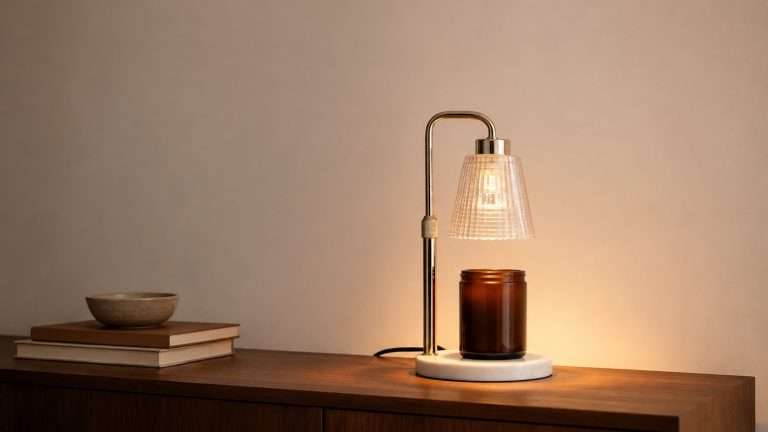
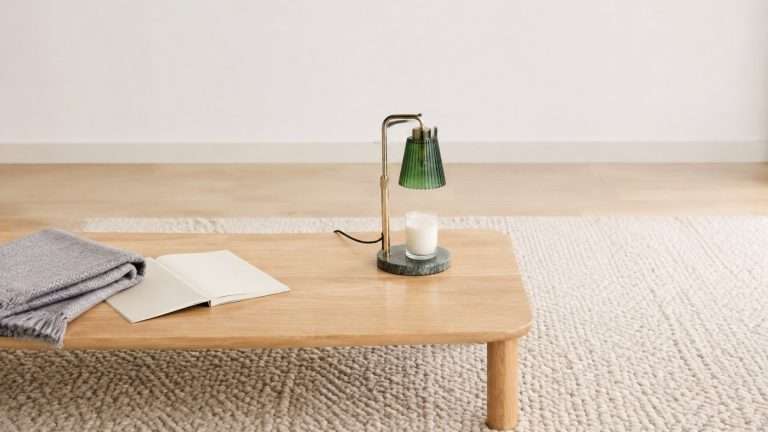
There is also the route with no flame at all: a candle warmer lamp heats the jar from a bulb above it, and the wick is never lit.


Candle Warmer Lamps
A candle heat lamp works from above. The bulb sits inside the shade, a few inches over your jar, and the warmth of that candle warmer light melts the top layer of wax so the scent fills the room.
Browse candle warmer lampsSold and shipped by GODONLIF — free shipping within the contiguous US. Prices are shown on each product page.
If the wax got further than the wall, the cold-first order carries over with changes for each surface, covered in our guides to getting candle wax off the floor and getting wax out of carpet.
A splash that caught a sleeve or a curtain is a laundry job, and it is set out step by step in how to get wax out of clothes.
The short version: ice and a plastic card first, low heat and paper second, dish soap for the greasy shadow, rubbing alcohol only for color and only after a hidden-spot test, then a wipe and a look at the paint from the side.
The short below opens in a room with moving boxes, where a woman in denim overalls, a white T-shirt and a red headscarf lifts a framed leaf print off a pale wall; below the frame are a few pink drips of wax. She presses the frame back, runs to the front door and looks through the peephole at an older man in a flat cap who is holding a clipboard and checking his watch. She takes ice from the freezer drawer, seals it in a zip bag and holds the bag against the wax. A white plastic card slides under the pink drop, which comes away into her palm and leaves a faint yellow mark. A yellow sponge from a bowl wipes the mark, and a grey cloth dries the wall. The man comes in, lifts the frame, then looks along the wall with his cheek close to it, against the window light. He hands her an envelope, and she pumps her fist behind him. In the evening she sits on a floor cushion among the boxes eating noodles, while a warmer lamp with an amber glass flower shade, a gold arm and a round wooden base glows over a pink jar candle on the dresser.
Frequently asked questions
Five questions the methods above leave open. Where a wall is not in the table, the cold method is still the first thing to try.
How to get wax melts off wall paint, and is it any different from candle wax?
It is the same job, done in the same order. Wax melts are made from the same wax families as candles, so harden the drip with a sealed bag of ice, lift it with the edge of a plastic card, and only then reach for a hair dryer on low and a paper towel for any film that is left. One thing comes up more often with melts: many are dyed, so look for a colored ring before you decide you are finished. If a warmer tipped over and hot wax ran down the wall, let it cool completely before you start, because warm wax smears instead of chipping.
Should you wipe candle wax off a wall while it is still soft?
No. Let it set hard first, or harden it with ice, and then lift it. Soft wax smears when you wipe it, pressing a thin layer into the texture of the paint and spreading the oily part of the wax over a wider patch than the original drip. Hard wax comes away in chips, which is why the extension procedure for painted walls starts by hardening the wax rather than wiping it. If the drip is still liquid, leave it alone for a few minutes and keep cloths and paper towels away from it, since pressing something into hot wax on a vertical surface tends to drag it downward. Once it has turned opaque and firm, start with the ice pack and the plastic card.
How do you get candle wax off a brick or stone wall?
Use cold and a plastic edge, and leave the heat out. Brick and unsealed stone are rough and porous, which makes them a poor match for the hair dryer and iron methods written for smooth painted walls, and at least one household guide skips heat entirely on brick. Its order is to freeze the wax completely with ice, scrape it off with a butter knife or the edge of a credit card, and treat any sticky residue with a paste of baking soda and water. Work the paste in gently, rinse it off with clear water, and let the wall dry before you judge it. On painted brick, use the painted-wall row of the table instead, and test anything new on a hidden spot first.
How do you get candle wax off wood paneling?
If the paneling is painted, treat it exactly like a painted wall: the same university extension procedure covers painted drywall, plaster and paneling, starting with ice and a very gentle scrape. Stained or varnished wood needs more care, because the finish is what you are protecting, not the wood under it. Harden and lift the wax first, warm any film with a hair dryer on low and blot it with a paper towel, and stop there if the finish looks clean. For a greasy shadow, use a barely damp cloth with a little mild detergent and dry the board straight away. Keep rubbing alcohol off finished wood unless a test on a hidden board, such as the edge behind a door, leaves nothing on the cotton.
What if paint comes off with the wax?
Stop cleaning that spot, let it dry fully, and plan a touch-up instead of trying to blend the patch by rubbing it. Rubbing a damaged patch of flat or matte paint tends to widen the mark rather than hide it. If you still have paint from the same can, try a small dab on a hidden area first, because the shade and sheen need to match the wall, then apply it thinly with a small brush or roller and feather the edges outward. Without leftover paint, the color name and sheen are often recorded on the can lid or the receipt, and a paint counter can match a small chip cut from an inconspicuous spot.
Sources and evidence limits
The methods come from a university extension stain-removal procedure for painted walls, two paint makers’ published guides, a laundry maker’s wax guide, wallpaper sellers’ care-label and removal guides, and three household-advice sites; the wax and iron temperatures come from manufacturer tables. We did not test any method on a wall, so each step is the published guidance named in its footnote, and a hidden-spot test on your own wall outranks all of it. Each link was opened and checked against the line it supports before this page was scheduled.
- University of Georgia Extension, “Remove Stains From Candle Wax, Paraffin.” Source for the walls and ceilings procedure on painted drywall, plaster and paneling: an ice cube in a plastic bag to harden the wax, a very gentle scrape with a dull knife, spoon, spatula or plastic card edge, a wipe with washing soda or detergent and water (not soap), a clear-water rinse and drying with a soft cloth. Also cited for its dilution of 1 part rubbing alcohol to 2 parts water for dye; that ratio, like its warm-iron blotter method, is from the carpet and upholstery sections, not the wall procedure. site.extension.uga.edu, candle wax and paraffin stains (Retrieved October 26, 2026).
- Hywax, “Wax Melting Point.” Source for paraffin 115 to 155°F, soy 120 to 180°F, coconut 124 to 127°F and beeswax 144 to 147°F, all from its detailed melting-point tables; the article’s opening paragraph gives narrower single figures. A wax manufacturer’s typical ranges, not our measurements. hywax.com, wax melting point (Retrieved October 26, 2026).
- Rowenta USA, “How to Choose the Right Iron Temperature Settings for Fabrics.” Source for the low (one dot) setting at about 230°F and the medium setting at 250 to 300°F. An iron maker’s guide; individual irons vary. rowentausa.com, iron temperature settings (Retrieved October 26, 2026).
- Sherwin-Williams, “How to Choose Paint Finishes” (paint sheen guide). Source for the quoted descriptions of flat, satin, eggshell and semi-gloss finishes and durability rising with sheen. sherwin-williams.com, paint sheen guide (Retrieved October 26, 2026).
- Benjamin Moore, “How to Clean Walls Without Damaging Paint.” Source for the two-week cure, the non-abrasive sponge and warm water, mild dish detergent, the gentle circular motion and rinsing as you go, the gentler touch for flat, matte and eggshell, the solvent warning and the inconspicuous-place test. benjaminmoore.com, cleaning painted walls (Retrieved October 26, 2026).
- Hunker, “How to Tell Whether Wall Paint Is Latex or Oil” (Nat Howard, updated 2018). Source for the cotton-ball alcohol test and latex paint coming off onto the cotton. A home-advice site rather than a paint maker. hunker.com, latex or oil paint (Retrieved October 26, 2026).
- World of Wallpaper, “Wallpaper Symbols Guide” (2018). Source for the spongeable symbol meaning a damp, not soaking, sponge with water only and no cleaning fluids or chemicals, and the washable, extra washable and scrubbable grades. A wallpaper retailer’s explainer of the standard care symbols. worldofwallpaper.com, wallpaper symbols guide (Retrieved October 26, 2026).
- Livette’s Wallpaper, “How to Remove Peel and Stick Wallpaper.” Source for heat from a hair dryer or heat gun on a low setting softening wallpaper adhesive during removal. A wallpaper seller’s removal guide, cited here for what heat does to adhesive. livetteswallpaper.com, removing peel and stick wallpaper (Retrieved October 26, 2026).
- Cleanipedia (Unilever), “How to Get Candle Wax Off Walls and Wood.” Source for a hair dryer on medium with a cloth wiping the wax as it melts, the call to be very gentle on painted walls, and the 1:3 vinegar-and-water rinse. cleanipedia.com, candle wax off walls (Retrieved October 26, 2026).
- House Digest, “How to Remove Candle Wax From the Wall Without Leaving a Mark” (Michele Wanke, 2023). Source for the hair dryer on medium, the iron on its lowest setting run over paper towels in short intervals, and skipping heat on brick. A home-advice site. housedigest.com, candle wax off a wall (Retrieved October 26, 2026).
- Clorox, “How to Get Wax Out of Fabric.” Source for the plain brown paper bag with no wax coating or writing, cut open flat, the lowest iron setting and a dry iron without steam. Written for fabric; applied here only to the paper and the iron setting. clorox.com, wax out of fabric (Retrieved October 26, 2026).
- National Candle Association, “Candle Safety Tips.” Source for the snuffer and the no-water warning on splattering wax, and the 12-inch clearance from flammable items. candles.org, candle safety tips (Retrieved October 26, 2026).
Nothing here endorses a particular product or brand. The table in section 01 is our reading of these sources; where a source does not cover a wall and tool, the cell is the cautious choice.
You may also like