




News
Types of Candles: Votive, Taper, Pillar, Tealight and Jar Candles, and What Each One Is For

Oct
Candle Basics
Ask about the types of candles and most guides hand you a list of shapes. The more useful way to tell them apart is the one the industry’s own terminology uses: what holds the wax while it burns. A votive needs a cup, a taper needs a candlestick, a pillar stands on a plate, a tealight brings its own cup, and a jar candle is poured into the vessel it burns in. This page takes the five one at a time, with what each is for and where it goes.
Key takeaways
This page sorts candles by shape and by what holds them. Wax and scent get one table each; burn times and the fit of a jar under a warmer lamp are answered on their own pages.
- Five shapes cover most of the shelf. The National Candle Association’s own list of what is sold runs “from tapers, votives, pillars and tealights to container and jar candles” before it reaches the specialty formats.[2]
- The definitions sort by what holds the wax. In 2005, a US Consumer Product Safety Commission guideline quoted ASTM’s terminology: a taper is used “with a candle accessory for support,” a votive is for use “fully within” a votive holder, and a filled candle is “produced and used within the same vessel.”[1]
- Two of the five come with numbers attached. The same document puts tapers at 6 to 18 inches long and quotes ASTM’s tealight at about 1.5 inches across and 0.75 inch tall.[1] We found no standard size for a votive, a pillar or a jar.
- The jar is the type the scented shelf is built on. In 2021, an industry-funded emissions study noted that the most popular scented candles in Europe and North America “are filled glasses with a single wick.”[7]
Walk down a candle aisle and the names arrive all at once: votives, tapers, pillars, tealights, three-wick jars, something labeled a container candle. Most of those names describe a shape, and a shape is easy to see. What the shape does not tell you on its own is the thing that matters once the candle is home: whether it can stand on the table by itself, or needs a cup, a candlestick or the jar it came in. That is the question each section below answers first, before getting to where each type looks right and the mistake that tends to come with it.
01Types of Candles at a Glance
There are five candle types most people mean: votive, taper, pillar, tealight and jar (or container) candles. Sorted by shape they look like five unrelated products. Sorted by what holds the wax, they fall into three groups, and that second sorting is the one that tells you where each can go. A taper and a votive need a holder bought separately, a pillar stands on its own but still wants a plate under it, and a tealight and a jar candle come with their containers built in.
The grouping comes from the trade’s own vocabulary. In 2005 the US Consumer Product Safety Commission wrote an investigation guideline for candle fires that quotes the definitions in ASTM F1972, the industry’s terminology standard, and nearly every one of them is phrased around a holder or a vessel.[1] The different types of candles sold today stretch well past these five, and the trade association’s own list keeps going after them.[2] The five below are the ones that make up most of an ordinary home shelf, and the table puts them side by side before each gets its own section.
| Type | What it looks like | What holds it | Typical use |
|---|---|---|---|
| Votive | Short and thick | A small cup it burns fully inside | Rows and clusters on a table or mantel |
| Taper | Long and slender, 6 to 18 inches | A candlestick that keeps it upright | The dinner table and the sideboard |
| Pillar | A thick column that stands by itself | Nothing to stand, but a heat-resistant plate underneath | Mantels, trays and centerpieces |
| Tealight | A small flat disc, about 1.5 inches across | Its own metal or plastic cup | Lanterns, small holders, teapot and fondue warmers |
| Jar or container | Wax poured into glass, tin or pottery | The vessel it was poured into | Scenting a room, lit or warmed from above |
Search results for this question mix two more ways of sorting, by wax and by scent, and section eight gives each of those one table. Shape comes first here because it is what you can see in a shop, and because it is the only one of the three that decides what a candle needs underneath it. A soy pillar and a paraffin pillar need the same plate; a soy pillar and a soy jar do not.
02What Is a Votive Candle?
A votive candle is a short, thick candle made to burn completely inside a small cup, its votive holder. ASTM’s wording, as quoted in the CPSC guideline, is “a candle produced for use fully within a candle accessory, specifically, a votive holder,” and the same document explains why the cup matters: votives “must be burned in a container since the wax melts at low temperatures and creates a pool of molten wax.”[1] The cup is what keeps that pool in place.
A votive holder is typically a small glass cup that lets the light through its sides, and that is what votives are good at: several small, low lights in one place. A row down the middle of a dining table, a cluster of three on a mantel, a pair on a shelf well away from anything that can catch. The name comes from the Latin votum, a vow, and Merriam-Webster’s noun sense still covers both a prayer offering and plain decoration.[3]
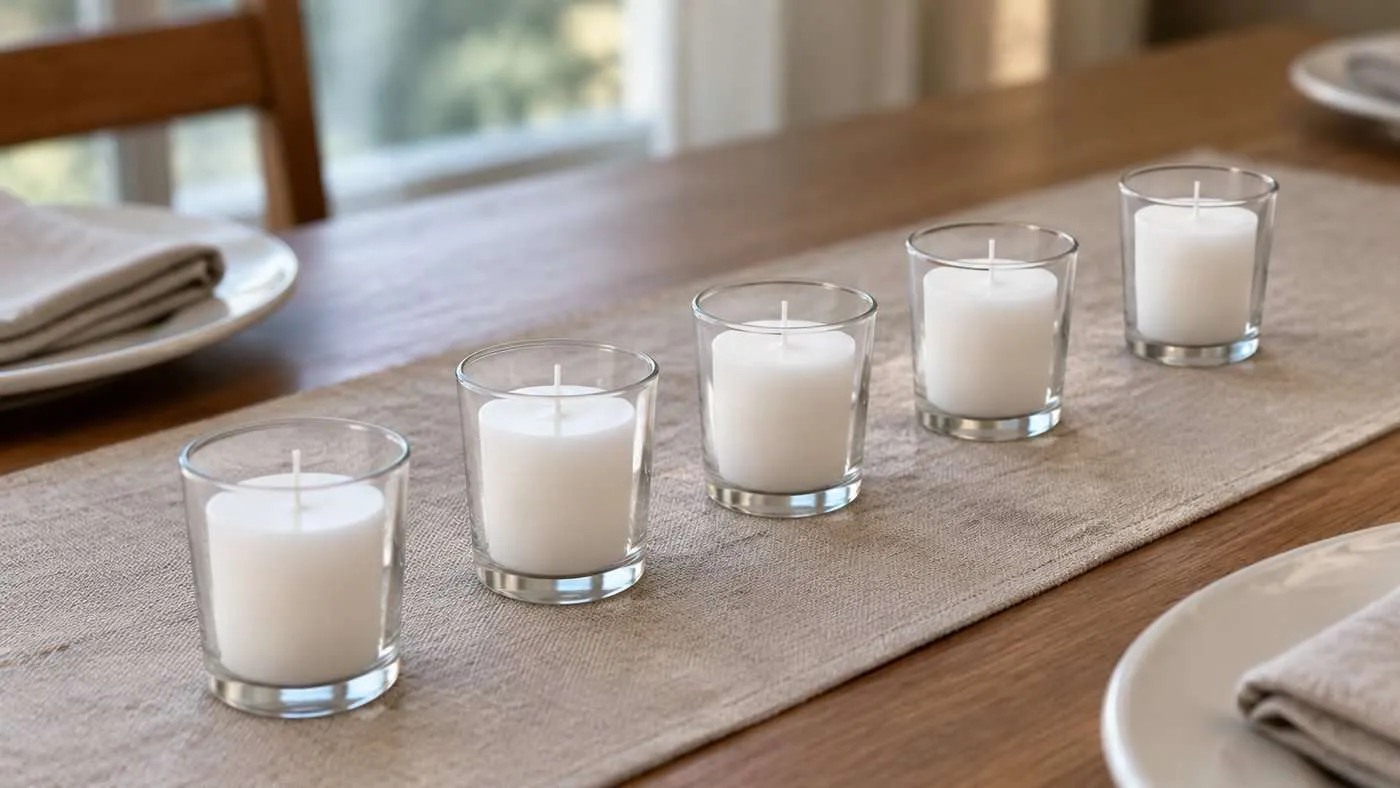
The common mistake is to treat a votive as a short pillar and stand it on a saucer. Out of its cup it does what the definition warns about: the wax pools, has nothing to hold it, and runs. If a candle is sold as a votive, plan on the cup that goes with it. Many votive holders will also take a tealight, which arrives in a cup of its own. The swap does not work the other way round: a bare votive set down where a tealight would go has no cup to hold its pool.
03What Is a Taper Candle?
A taper candle is a long, slender candle that is not made to stand by itself and goes in a candlestick. The CPSC guideline describes tapers, also called dinner candles, as “long and thin,” varying “from 6 to 18 inches in length,” and records ASTM’s definition: “a slender candle produced to be used with a candle accessory for support.”[1] Merriam-Webster’s first sense of the noun is simply “a slender candle,” and the adjective, “progressively narrowed toward one end,” describes the shape many tapers have from base to tip.[4]
Tapers belong where people sit and look at them, which in most homes means the dinner table, a sideboard or a mantel. The same guideline notes they are “usually” not scented and “may be drip-resistant,”[1] which suits a table where the food brings its own smell. Their base is made to sit in a candlestick socket, and the National Candle Association’s advice for any holder is to use one that is “sturdy” and “won’t tip over easily.”[6]
The usual mistake is to buy tapers for scent. They are built for light and for the look of a set table, and an unscented taper is doing exactly what it was made to do. Anyone who wants a candle to perfume a room is shopping for a different type, almost always a jar.
04What Is a Pillar Candle?
A pillar candle is a thick, freestanding candle that keeps its own shape without a cup, though it still needs a heat-resistant plate or holder underneath. In the CPSC guideline, pillars are “thick in diameter,” and “the shorter pillar candles can stand on their own without the assistance of a candle holder/accessory, but should always be used with a candle holder/accessory.”[1] ASTM’s wider category, the freestanding candle, takes in “pillar-shaped, column-shaped, or figurine” candles and is “recommended to be used on a heat-resistant, nonflammable surface or on a candle accessory.”[1]
Because the category covers columns and figurines as well as plain cylinders, it also takes in the molded and figure-shaped candles that turn up under the heading of candle shapes. Pillars suit surfaces where one steady block reads well: the middle of a mantel, a tray on a coffee table, three heights grouped on a sideboard. The guideline also describes jumbo pillars, sometimes called colonnades, as thicker and larger again, and often scented.[1]

The mistake with pillars is reading freestanding as needing nothing underneath. The ASTM wording quoted above still pairs a freestanding candle with “a heat-resistant, nonflammable surface” or an accessory,[1] and the National Candle Association’s tips ask for “stable, heat-resistant surfaces.”[6] A plain ceramic plate or a metal tray a little wider than the candle does the job.
05What Is a Tealight?
A tealight is a small, flat candle poured into its own shallow cup of metal or plastic, so it needs no separate holder to contain its wax. ASTM defines it as “a cylindrical filled candle produced with a diameter and height of approximately 1.5 in. (38 mm) and 0.75 in. (19 mm) respectively,” the only one of the five common types its quoted definitions pin to a size.[1] Merriam-Webster dates the word to 1978 and says these candles are “so called from the use of such candles to keep a pot of tea hot.”[5]
That is still what tealights do best: sit inside something else. The CPSC guideline notes they are “now used with a variety of products,” naming potpourri burners as one,[1] and they go into lanterns, small glass holders and votive cups as readily as under a teapot. How many hours each of these formats gives is a separate question, answered on our page about how long a candle lasts.
The common mix-up is between a tealight and a votive. A tealight is a filled candle, and its cup is part of it; a votive is bare wax that depends on a holder you supply. The word has stretched, too: under the same entry, Merriam-Webster also lists a battery-operated artificial candle “of similar size and shape,”[5] which gives light with no flame. Scented wax with nothing to light is a different object again, the subject of our page about a candle with no wick.
06Jar and Container Candles
A jar candle, also called a container or filled candle, is wax poured into the glass, tin or pottery vessel it is sold and burned in. ASTM’s definition is “a candle produced and used within the same vessel,” and the CPSC guideline describes these candles as “decorative and highly scented candles poured into various glass, tin, or pottery pieces, called containers.”[1] The vessel holds the melted wax from the first evening to the last.
This is the type the scented shelf is built around. In 2021, a chamber study supported by European, North American and Latin American candle associations, with seven fragrance houses on its advisory committee, set out to test an “average” scented candle, and its authors wrote that “the most popular scented candle types both in Europe and North America are filled glasses with a single wick”; their test jar held about 240 ml (8.1 fl oz).[7] That matches what buyers say they want. The National Candle Association reports that three-fourths of candle buyers call fragrance “extremely important” or “very important” when they choose a candle.[2]

The jar is also the only one of the five that can be used without lighting it at all. A candle warmer lamp holds a bulb inside a shade above the open jar and melts the top layer of wax from above. The jar stands in a round well in the lamp’s base, in its own glass, with no dish under it, and there is no open flame. Tapers, pillars, votives and tealights are made to be lit, and none of them is designed for that kind of heat: a pillar has no wall to hold a pool, a taper or a votive needs the holder it was made for, and a tealight’s shallow cup holds very little wax. Whether a particular jar is the right width and height is a fit question, covered in our guide to which candles fit under a warmer lamp.
That use, a jar warmed under a lamp, is what the soy wax candles on our own shelf are poured for. The mistake to avoid with any jar is treating the glass as a wrapper to be swapped or done without: by the definition above it is part of the candle, and the wax is meant to stay in it, lit or not.

07Which Type Goes Where? Start From What Will Hold It
Pick the spot first and then the type its holder allows, because the shape decides what has to sit underneath. Most candles end up in a handful of rooms. The National Candle Association’s current facts page, read in October 2026, reports that candle users most often burn them in the living room (42 percent), the kitchen (18 percent) and the bedroom (13 percent), and that nine out of ten use candles “to make a room feel comfortable or cozy.”[2] Britannica makes the same point from the other end: candles today are “mostly used for decoration, ambience, and ceremonial purposes.”[9]
Source: National Candle Association, “Facts & Figures”[2] (“nine out of ten” and “three-fourths” plotted as 90 and 75 percent). The page gives no survey date or sample size, so read these as the association’s own description of its market. Retrieved October 13, 2026.
Those two reasons, a comfortable room and a scent, divide the five types. Light at a table where people sit is the work of tapers and votives; scent across a room is the work of jars; pillars and tealights sit in between, as light for a mantel or a lantern. The holder settles the rest, using the three groups from section one: two need something from you, and one brings its own.
The container comes with it
- Tealight: the metal or plastic cup is part of the candle
- Jar: the glass, tin or pottery vessel is part of the candle
- Ready to set down as bought, on a stable surface
- The vessel sets the size; you cannot trim a jar to fit
You supply the holder or the plate
- Votive (needs a holder): a small cup it burns fully inside
- Taper (needs a holder): a candlestick that holds it upright
- Pillar (stands by itself): still goes on a heat-resistant plate or tray
- The wrong holder undoes the design: a saucer under a votive, a loose socket under a taper
Name the spot
The dining table, the living room shelf, the bathroom counter. The spot decides how much room there is around the flame and who will be watching it.
Look at what will hold it
A candlestick takes a taper; a small glass cup takes a votive or a tealight; a heat-resistant tray takes a pillar; with nothing at all, choose a type that brings its own container.
Decide whether it is for light or for scent
Light where people sit points to tapers and votives. Scent across a room points to a jar, which can also be warmed from above instead of lit.
Check the clearance
The National Candle Association’s tips ask for at least 12 inches between a burning candle and curtains, bedding or books, and 3 inches between candles.
Know when it is finished
The same tips say to stop when half an inch of wax remains.
The clearance and finishing rules in steps four and five come from the association’s safety tips.[6] A jar bought for scent leaves one more choice, whether to light it at all, and section six covers that.
08Candle Wax and Scent Types in One Table
The other two ways to sort candles, by wax and by scent, cut across all five shapes: a pillar can be paraffin or beeswax, a jar can be soy or a blend, and any of them can carry any fragrance. Every candle wax is a hydrocarbon, “whether the wax is of animal, vegetable, or petroleum origin,” in the National Candle Association’s words,[8] and the longer story of what candle wax is made of has a page of its own. The waxes also arrived in a rough order: tallow and beeswax first, with Britannica crediting the Romans with the first true wicked candles, then stearin, spermaceti and paraffin in the 1800s, and palm and soy wax in the 1990s.[9]
| Wax | Where it comes from | One thing to know |
|---|---|---|
| Paraffin | Refined out of petroleum | “By far the most frequently used candle wax on a worldwide basis today”[8] |
| Soy | Hydrogenated soybean oil | Developed for commercial candle use in the late 1990s[8] |
| Palm | Hydrogenated palm oil | Developed alongside soy in the same years[8] |
| Beeswax | Made by honeybees | Used worldwide “in significantly smaller quantities”;[8] what a “natural” label does and does not promise is in our nontoxic candle basics |
| Gel | A liquid fuel such as mineral oil, thickened | Made “quasi-rigid” and sold in containers or in taper style[1] |
| Blends | Two or more of the above | The association lists “a variety of wax blends and customized wax formulations”[8] |
Whether any of these waxes is a health question has its own evidence and its own pages, on whether soy candles are toxic and whether paraffin wax is toxic; this page does not rank them.
Scent sorts differently again. When the industry’s 2021 study needed a representative scented candle, the fragrance houses involved first divided “the common candle fragrances” into five families: floral, fresh, fruit, oriental, and spice and edibles.[7] Shops use their own names for the same groups, but most of what is on a scented shelf falls into one of these.
| Family | What it usually smells like |
|---|---|
| Floral | Flower notes such as rose, jasmine and lavender |
| Fresh | Clean, green or citrus-leaning scents, the linen and laundry end of the shelf |
| Fruit | Fruit notes; the study’s fruit blend leaned on benzaldehyde, the almond-like note[7] |
| Oriental | Warm, resinous notes such as amber, vanilla and musk |
| Spice and edibles | Cinnamon, clove, baked goods and other kitchen scents |
Which family suits which room comes down to taste, and we take it room by room in our guide on how to make your house smell good.
09What This Page Cannot Settle
The definitions on this page are ASTM’s, but we read them second-hand: the CPSC guideline quotes the 1999 edition of ASTM F1972, and the standard has been revised since, so the wording of a later edition may differ.[1] The taper length range and the tealight dimensions come from that document. We found no standard size for a votive, a pillar or a jar candle, so the tables give none, and any size you see quoted for those is a maker’s own.
The National Candle Association figures are survey results published without a date or sample size on the page, and the 2021 chamber study that describes the most popular scented candle was paid for by candle associations, with fragrance houses advising.[2][7] Neither changes what a votive or a taper is. Both mean the percentages and the “most popular” line are the industry describing its own market rather than independent measurements. Nothing here ranks one type above another, because no source we found compares them on a common scale.
The short below opens in a living room. He is down on one knee in front of the sofa, holding up a small red cushion with a tall white taper candle standing in a glass cup, while she laughs behind her hand with a paper gift bag on her lap. The taper comes back out of the cup, and she hands him a thicker wrapped candle that he stands on top of it. Next she holds up a small white candle, and then lifts a glass jar candle with a wooden lid out of the bag. She walks over to a side table and sets the jar under a candle warmer lamp. Later, with the lamp on over the jar, he bows and holds out his hand, and the two of them dance in the middle of the room.
Frequently asked questions
Five questions the sections above raise without closing.
What is a votive, and does the word always mean a candle?
No. As a word, votive described an offering long before it named a candle. Merriam-Webster traces it to the Latin votivus, from votum, a vow, dates the adjective to 1597 and defines it as "offered or performed in fulfillment of a vow or in gratitude or devotion." The noun meaning a candle is recorded only from 1956, as "a short thick candle used especially as a prayer offering or for decoration." That older sense is why a search for the word also turns up objects that have nothing to do with wax, such as the bronze votive chariot from an archaeological site that the dictionary quotes among its examples. On a candle shelf, though, the word only ever means the small candle made to burn inside its own cup.
What are the main types of candle scents?
Most candle scents fall into five families, floral, fresh, fruit, oriental, and spice and edibles, the same grouping the scent table above uses. The families are broad on purpose. The National Candle Association estimates that more than 10,000 different candle scents are available to US consumers, far too many to compare one by one, and many blends borrow from two families at once, such as a fruity top over a warm, spicy base. Treat the family as a first filter: it tells you roughly where a candle sits, and the name on the label tells you the rest. It says nothing about strength, which depends on how much fragrance the maker added, not on which family it belongs to.
What other kinds of candles are there besides these five?
Quite a few, though most are a use or a theme rather than a new shape. The National Candle Association's own list continues past tapers, votives, pillars, tealights and jars to floating, outdoor, novelty and utility candles, among others. The CPSC guideline singles out two with rules of their own: gel candles, whose fuel is a thickened liquid, and citronella candles, which are meant for outdoor use only and whose insect-repellent claims are regulated by the EPA rather than the CPSC. Novelty covers anything shaped like an object or tied to a season. Almost every one of them still falls into one of the holder groups on this page: it needs a holder, it stands on its own, or it comes in its own vessel.
How much do the different types of candles cost?
Most fall between a couple of dollars and a few dozen. The National Candle Association puts the usual retail range at "approximately $1.99 for a votive to $35 for a large pillar or jar candle," so the smallest common format and the largest sit at opposite ends of the same shelf. Within each type, size does most of the work, because a large pillar or jar simply holds far more wax than a votive. A jar also pays for its vessel, and tealights, the smallest of the five, are usually sold several to a pack. None of the five is a premium format by definition, so compare candles of the same type and size rather than across types.
Is a wax melt a type of candle?
Not by the standard definition. ASTM, as quoted in the CPSC guideline, defines a candle as "one or more combustible wicks supported by a material that constitutes a fuel," solid or semi-solid at room temperature, whose combined function is "to sustain a light-producing flame." A wax melt has no wick and is never meant to carry a flame; it is scented wax made to be softened in a warmer. That makes it a separate product rather than a sixth shape, even though it is often sold in the same aisle and in the same fragrances. The practical difference is the one this page keeps returning to: a candle comes with, or needs, something to hold it while it burns, and a wax melt needs a warmer instead.

Wax Warmers & Candle Melters
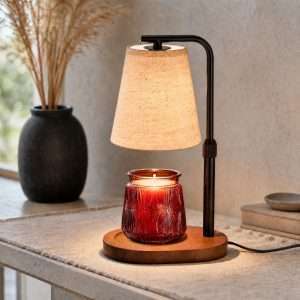
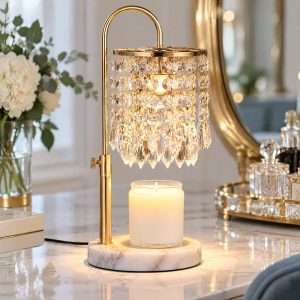
An electric wax warmer uses the gentle heat of a halogen bulb, not a flame. The bulb sits above the candle and warms the top layer of wax into an even melt pool, which releases the fragrance.
Shop all wax warmersSold and shipped by GODONLIF — free shipping within the contiguous US. Prices are shown on each product page.
Sources and evidence limits
Definitions come from a US Consumer Product Safety Commission guideline quoting ASTM’s terminology standard; market and survey figures, wax facts and safety tips from the National Candle Association; word histories from Merriam-Webster; candle history from Encyclopaedia Britannica; the typical scented candle and the fragrance families from a peer-reviewed 2021 chamber study. Retrieval dates are given with each source.
- US Consumer Product Safety Commission staff, “Candle Fires and Fire Hazards,” Investigation Guideline, Appendix 121, October 2005. Source for the descriptions of tapers, freestanding and pillar candles, jumbo pillars, votives, tealights, filled candles and gel candles, the 6 to 18 inch taper length, and the quoted ASTM F1972-99 definitions, including the tealight’s 1.5 by 0.75 inch dimensions. A staff guideline that quotes the 1999 edition of the standard, not the standard itself. reginfo.gov: CPSC candle fires investigation guideline (PDF) (Retrieved October 13, 2026).
- National Candle Association, “Facts & Figures.” Source for the list of candle types sold, the three-fourths of buyers rating fragrance extremely or very important, the nine in ten using candles to make a room comfortable or cozy, the 42, 18 and 13 percent room figures, the more than 10,000 scents and the $1.99 to $35 price range used in the FAQ. Undated survey figures from a trade association. candles.org: facts and figures (Retrieved October 13, 2026).
- Merriam-Webster, “votive” (adjective and noun). Source for the Latin votivus from votum, the 1597 and 1956 first-use dates and the quoted definitions. merriam-webster.com: votive (Retrieved October 13, 2026).
- Merriam-Webster, “taper” (noun and adjective). Source for “a slender candle” and “progressively narrowed toward one end.” merriam-webster.com: taper (Retrieved October 13, 2026).
- Merriam-Webster, “tea light.” Source for the definition, the 1978 first known use, the teapot origin of the name and the battery-operated artificial candle listed under the same entry. merriam-webster.com: tea light (Retrieved October 13, 2026).
- National Candle Association, “Candle Safety Tips.” Source for the sturdy holder, stable heat-resistant surface, 12 inch clearance, 3 inch spacing and half-inch stopping point. candles.org: candle safety tips (Retrieved October 13, 2026).
- Salthammer, T.; Gu, J.; Wientzek, S.; Harrington, R. & Thomann, S., “Measurement and evaluation of gaseous and particulate emissions from burning scented and unscented candles,” Environment International, volume 155, article 106590, 2021. Source for the quoted line on the most popular scented candle types, the roughly 240 ml (8.1 fl oz) test jar, the five fragrance families and benzaldehyde as a main component of the fruit blend. Peer-reviewed; financial support came from candle associations, with fragrance houses on the advisory committee. Its emission results are not used on this page. candles.org: full text (PDF) (Retrieved October 13, 2026).
- National Candle Association, “Elements of a Candle: Wax.” Source for all waxes being primarily hydrocarbons, paraffin as the most used wax worldwide, soy and palm wax developed in the late 1990s, beeswax used in smaller quantities, and the mention of blends and customized formulations. A trade association page. candles.org: elements of a candle, wax (Retrieved October 13, 2026).
- Encyclopaedia Britannica, “candle.” Source for the Romans’ first true wicked candles, the 19th-century arrival of stearin, spermaceti and paraffin, palm and soy wax in the 1990s, and the quoted line on how candles are used today. britannica.com: candle (Retrieved October 13, 2026).
Evidence limits: no source here measured candles for this page, and we have not tested any type ourselves. Definitions are a staff guideline’s quotation of a 1999 standard; market figures are a trade association’s own survey results; dictionary entries describe usage, not manufacture.
You may also like


