


News
What Smells Do Cats Hate? The Scents Cats Avoid, Why, and Which Are Safe to Use at Home
Oct
Pets & Home Fragrance
What smells do cats hate? Citrus, strong mint and eucalyptus, scented litter, ammonia-heavy cleaners and strong detergents turn up on almost every list, and a few of them sit on poison-control plant lists too. This page sorts the folklore from what has been measured, explains the nose behind the reaction, and keeps every pet-safety line to what veterinary and poison-control sources actually wrote.
Key takeaways
This page is about which smells cats avoid and why. Whether a burning candle or a warmer is a problem for a cat is a separate question, answered on separate pages linked below.
- The nose is the reason. VCA Animal Hospitals puts a cat’s nose at 45 to 80 million scent receptors, possibly up to 200 million, against about 5 million in a person.[1]
- Several of the famous dislikes are listed plants. The ASPCA files lemon, mint and eucalyptus as toxic to cats, with essential oils as the toxic principle in each entry.[5][6][7]
- Measured dislike is rarer than claimed. In a 2010 shelter study of 150 cats, interest in scented cloths was low overall, just over 6% of observation time, and only catnip stood out at 11.14%; no scent was shown to repel.[2]
- Many of the worst offenders are ones we add. Feline guidelines say cats often find aromatic litter and deodorizers offensive, and that ammonia cleaners smell like urine to a cat.[10]
Most people arrive at this question for one of two reasons. Either the cat keeps jumping on a counter, digging in a planter or using the rug, and a smell sounds like a cheap fence. Or the cat keeps leaving a room the moment a new candle, cleaner or litter goes in, and the owner wants to know which one did it. Both start in the same place, and a smell strong enough to move a cat is often strong enough to matter for other reasons.
01What Smell Do Cats Hate? The Short Answer
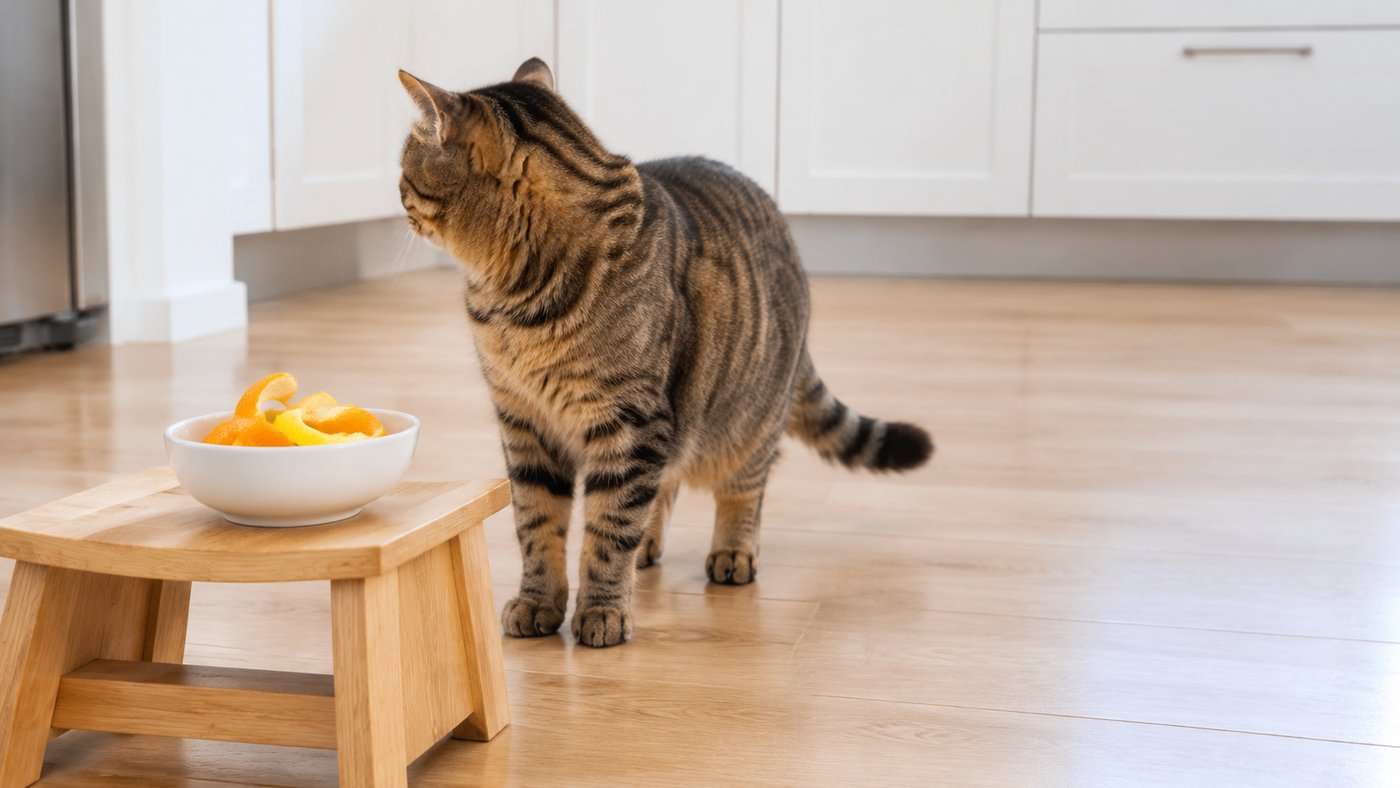
What smell do cats hate most reliably? Sharp, concentrated ones: citrus, strong mint and eucalyptus, ammonia, aromatic litter and deodorizer powders, and strong cleaners and detergents. A university extension bulletin on keeping cats out of gardens says flatly that “most cats dislike the smell of citrus,” and notes that limonene from citrus peel is registered with the EPA as a cat repellent.[11] Feline veterinary guidelines add the household side: cats “often find aromatic litter and litter deodorizers offensive.”[10]
What ties the list together is not a family of notes but intensity and familiarity. A cat reads its home largely by smell, and the 2013 AAFP and ISFM guidelines describe cats using “olfactory and chemical information to evaluate their surroundings and maximize their sense of security and comfort.”[9] A strong new smell does two things at once: it is loud, and it overwrites the scent map the cat built.
02Why Smells Cats Hate Hit Harder Than You Think
Smells cats hate hit harder because the same room arrives at a much higher resolution. VCA Animal Hospitals, writing for owners, gives a cat’s nose “45 to 80 (possibly up to 200) million scent receptors” against “about 5 million” in the human nose, and calls the cat’s sense of smell about 14 times more sensitive than ours.[1]
VCA also describes the Jacobson’s, or vomeronasal, organ as opening into the roof of the mouth just behind the upper incisors, working as “a secondary olfactory system” and detecting chemical signals such as pheromones rather than ordinary smells.[1] The open-mouthed grimace a cat sometimes makes after sniffing something, the flehmen response, is that organ being used.
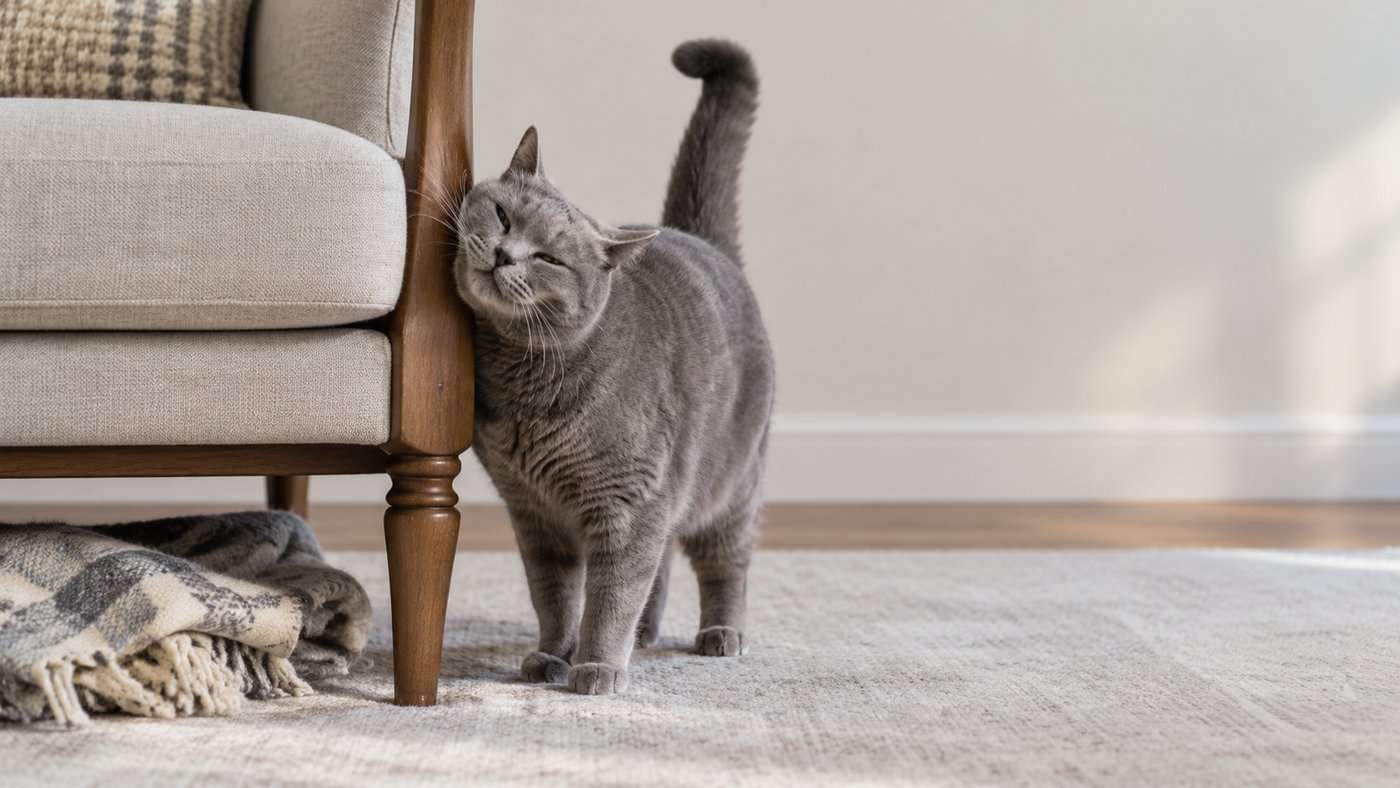
Scent is also how a cat marks what is safe. The feline environment guidelines describe facial rubbing as the way a cat “deposit[s] its scent throughout its environment,” and ask owners to be “careful not to interfere with a cat’s olfactory and chemical signals and scent profile.”[9] So a cat can object to a smell that is not unpleasant at all, simply because it erased the familiar one.
03What Scents Do Cats Hate? Scent by Scent, With What Vets Say
What scents do cats hate, and which of those dislikes come with a warning attached? Sorting matters, because for several entries the poison-control listing points the other way. The table keeps each claim to the source that made it.
| Smell | Why a cat may pull away | What the source says | Use it as a deterrent? |
|---|---|---|---|
| Citrus peel (lemon, orange, lime) | Bright, fast-evaporating oils at close range | ASPCA lists lemon as toxic to cats; toxic principles “essential oils and psoralens”; vomiting, diarrhea, depression, potential dermatitis[5] | Only as the garden bulletin suggests, outdoors; the plant itself is on the toxic list |
| Mint | Sharp menthol-type aroma | ASPCA lists mint as toxic to cats; toxic principle essential oils; vomiting and diarrhea with large ingestions[7] | No |
| Eucalyptus | Strong camphor-like aroma | ASPCA lists eucalyptus as toxic to cats; toxic principle eucalyptol; salivation, vomiting, diarrhea, depression, weakness[6] | No |
| Aromatic litter and deodorizers | Perfume where the cat expects its own scent | AAFP and ISFM: cats “often find aromatic litter and litter deodorizers offensive”; use non-scented clumping litter[10] | Not a deterrent; a cause of avoiding the box |
| Ammonia-based cleaners | Reads as urine | AAFP and ISFM: avoid them because they “smell like urine to a cat”[10] | No; it can draw a cat back to the spot |
| Strong cleaners and detergents | Loud and unfamiliar, and it erases scent marks | AAFP and ISFM: avoid products “that may disrupt the cat’s sensory perception”[9] | No |
| Vinegar | Pungent acid | Widely repeated; we found no controlled study measuring it and no poison-control entry to quote | No verdict here; ask your vet |
Read down the right-hand column: the smells cats hate are mostly the ones with the least business being used on purpose near a cat, because the essential oils that carry the smell of citrus peel or eucalyptus are the toxic principles the ASPCA names. For the same question asked about dogs, our page on what smells dogs hate runs the same sorting with canine sources.
04What Smells Do Cats Hate the Most? What Has Actually Been Measured
What smells do cats hate the most? Nobody has run a ranking study, so any numbered list is opinion. The closest thing to a measurement is a 2010 study by Ellis and Wells in Applied Animal Behaviour Science, which randomly assigned 150 shelter cats to one of five scent conditions, among them an odourless cloth and cloths carrying rabbit scent, lavender or catnip, presented for three hours a day on five consecutive days.[2]
Interest was low across the board: the cats spent just over 6% of the observation time interacting with the cloths. Catnip was the one scent that stood out, at an average of 11.14%. Interest also dropped after the first hour of each session, which the authors read as habituation.[2] The study did not show lavender or any other scent driving cats away. What it shows is that a scented cloth mostly fails to hold a cat’s attention, and that the attention it does get fades within hours.
Any ranking of “the most” therefore rests on how consistently a smell shows up in the advice above, not on a trial: citrus and strong mint-family aromas first, then the household offenders in the next section.
05The Smells Cats Hate That You Add Without Noticing
The strongest everyday dislikes are often ones the owner bought. The 2014 AAFP and ISFM guidelines on house-soiling put it bluntly: “cat litter is marketed to people, not to cats.” They recommend “a fine, sand-like, non-scented, clumping material,” no liners or deodorizing powders, and removing waste at least once a day.[10] A perfumed litter can push a cat out of the box for exactly the reason the label was meant to fix.
The same guidelines warn against “ammonia-based cleaners, which smell like urine to a cat,” and suggest an enzyme-based laundry detergent solution for accidents instead.[10] That one surprises people: the cleaner that smells strongest to you can tell a cat the spot is a toilet. The environment guidelines widen the list to “cleaners, detergents, scented litter or other cat paraphernalia” that may disrupt the cat’s sensory perception, and suggest washing bedding “on a rotation basis so that some items will retain the cat’s scent.”[9]
06Which of These Are Safe to Use at Home?
Very few of them as a deterrent, and the sources that recommend scent repellents admit the evidence is thin. The same extension bulletin that suggests citrus peel for garden beds also says “there’s no solid scientific proof that repellents consistently work.”[11] Garden guides, that one included, also suggest essential-oil sprays; before borrowing that advice indoors, know that veterinary toxicology singles cats out on essential oils because, in the Merck Veterinary Manual’s words, “cats are deficient in the enzyme glucuronyl transferase,” and the oils and what they mean for a scented home are covered on our page asking are wax warmers safe for cats.[12]
Using a smell to move the cat
- Strongest candidates are listed plants: lemon, mint, eucalyptus
- Interest fades within hours, so it needs topping up
- No solid proof repellents work consistently
- Can overwrite the cat’s own scent marks
- Citrus peel in an outdoor bed is what the garden bulletin suggests
Removing the smells the cat avoids
- Non-scented clumping litter, scooped daily
- Enzyme cleaner instead of ammonia on accidents
- Unscented or lightly scented cleaning products
- Bedding washed in rotation so some keeps its scent
- Straight from AAFP and ISFM guidance
If a cat is avoiding a room or the box, take smells away rather than adding them, in this order.
Check the box first
Swap any scented or deodorized litter for a non-scented clumping one, remove powders and liners, and scoop at least daily, as the house-soiling guidelines advise.
Change the cleaner, not the cat
Retire ammonia-based products on any spot the cat has used, and clean accidents with an enzyme-based detergent solution instead.
Undo the newest smell
A new air freshener, detergent, perfume or candle that arrived the week the avoidance started is the first suspect. Remove it for a week and watch.
Leave the cat a scent anchor
Wash bedding and throws in rotation so something in each room still smells of the cat.
Call the vet if it persists
Avoidance, drooling, vomiting or a change in litter habits that outlasts the change is a veterinary question, not a fragrance one.
07What Smells Do Cats Like?
What smells do cats like? The best-measured answer is a handful of plants, led by silver vine and catnip. In a 2017 study in BMC Veterinary Research, Bol and colleagues tested 100 domestic cats: 79 responded to silver vine and 68 to catnip, and about half responded to Tatarian honeysuckle and to valerian root. Of the 31 cats that ignored catnip, 22 responded to silver vine, and 6 cats responded to none of the four.[3]
Source: Bol, S. et al., BMC Veterinary Research 13, article 70 (2017). Six of the 100 cats responded to none of the four.[3] A response to a plant, not a ranking of room scents. Retrieved October 24, 2026.
Before buying any of them, note two things. First, liking is not the same as harmless: the ASPCA’s own entry for catnip lists it as toxic to cats, noting that “many cats love catnip, but it can cause vomiting and diarrhea.”[8] Second, scent ranks low against the other things a cat wants. In a 2017 preference study in Behavioural Processes, cats given a choice between people, food, toys and scents most preferred human interaction (19 cats, 50%) and food (14 cats, 37%); only one cat, 2%, picked a scent. Within the scent round, 22 cats chose catnip, against 6 each for gerbil scent and an unfamiliar cat’s scent.[4]
The other smell cats reliably like is their own. That is the point of the rotation advice in the environment guidelines, and it is why a freshly washed cat bed can be ignored for a day.[9]
08A Scented Home With a Cat in It
None of this means a home with a cat has to smell of nothing. It means the cat should be able to get away from whatever you choose. Whether a burning candle itself is a problem around a cat, from the flame to the smoke to a tail over the jar, is answered on our page asking are candles bad for cats.
Our own suggestion, not a line from the feline guidelines, is to scent one room at most and keep the litter area and the cat’s bed unscented. Our broader guide on making your house smell good starts with cleaning and airing before any fragrance goes in, which suits a cat household.
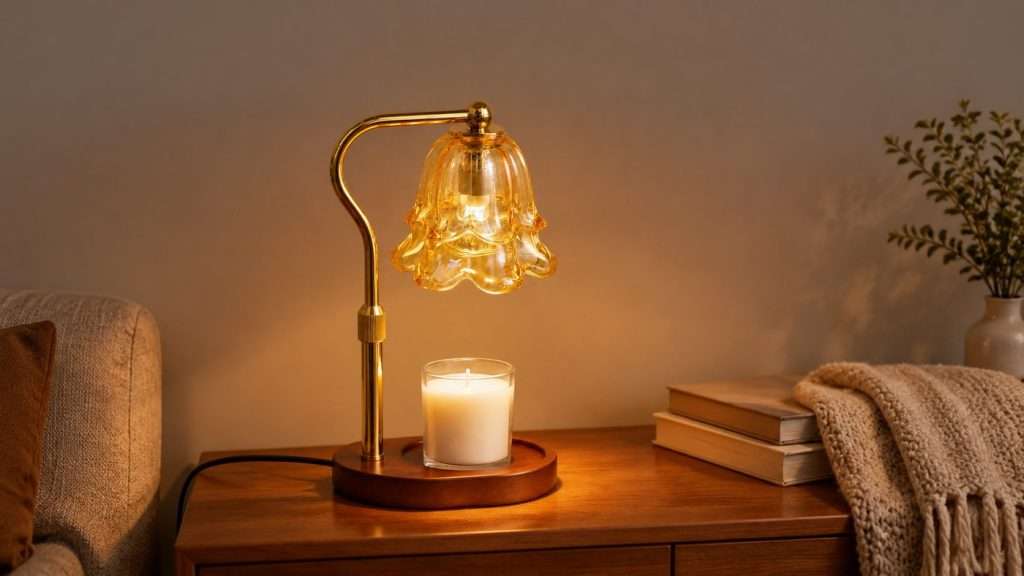
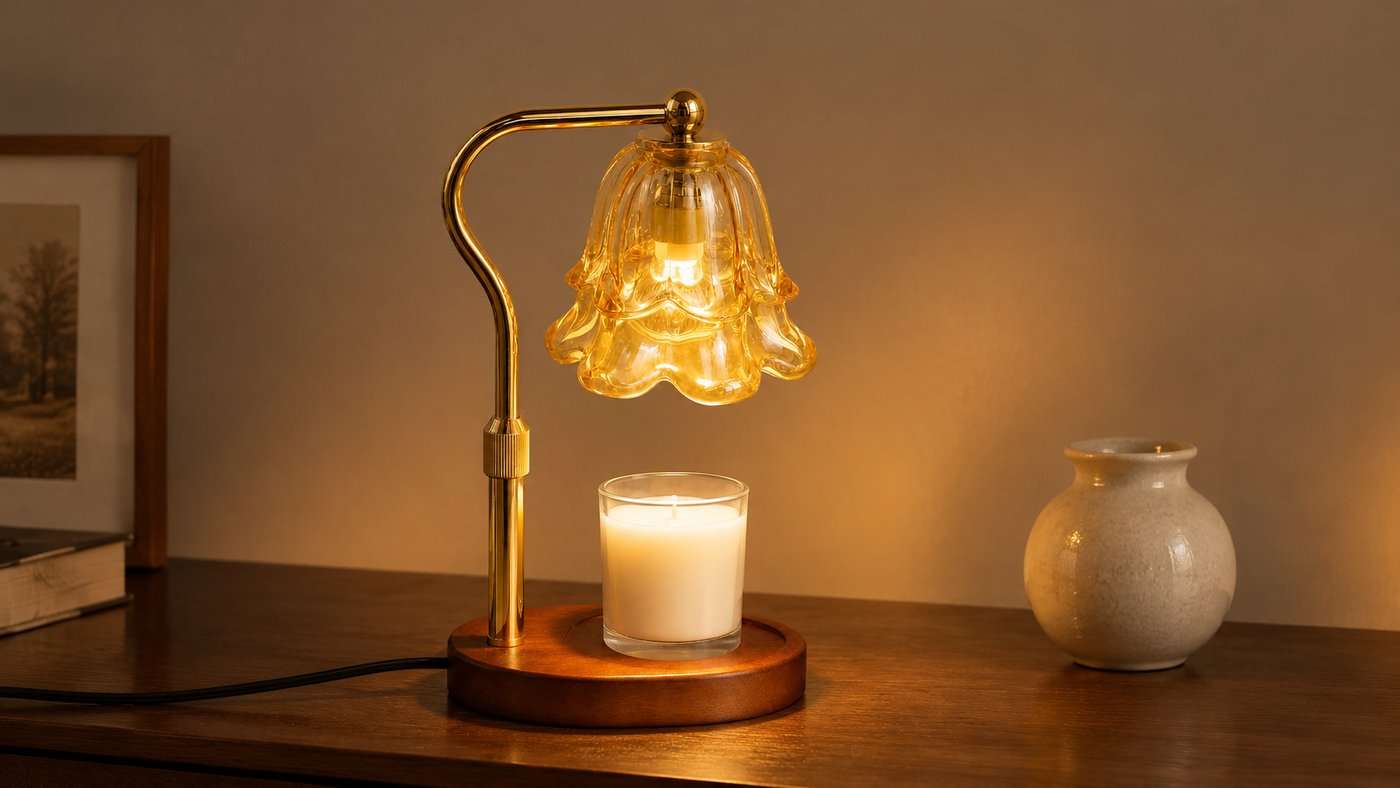
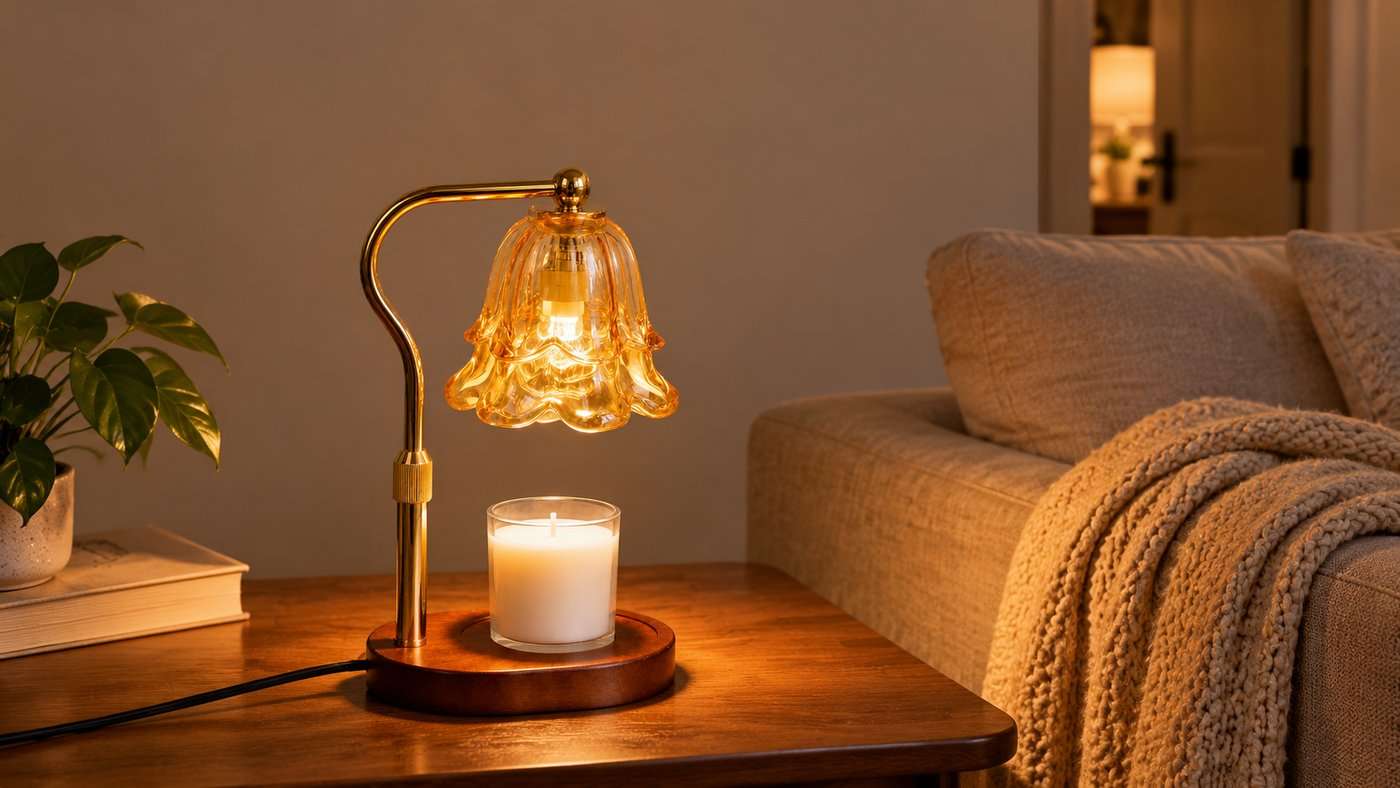
If you want a scented living room and a cat in it, a warmer lamp heats a jar candle from a bulb above instead of a lit wick; it is one of the pieces on our cozy room decor shelf, though it changes nothing about what the fragrance itself contains.
The short version: cats most consistently avoid citrus, strong mint and eucalyptus, aromatic litter, ammonia cleaners and strong detergents, because their nose carries tens of millions more receptors than yours. Several classic dislikes are plants the ASPCA lists as toxic to cats, no study has shown that lavender repels cats, and the most useful fix is to take smells away, starting with the litter box. Labels that promise a candle is fine for pets are a separate matter, covered on our page about pet friendly candles.
The short below opens on a long-haired cream cat with a dark face sniffing a gray sneaker at the feet of a man sitting on a wooden bench, then lifting its head with its mouth open. In a hallway, a man in a gray hoodie tips his head back with a hand on his chest, sniffs his collar, pulls the hoodie off and tosses it toward a wicker laundry basket that a woman in a cream cardigan is carrying, and the cat rubs against his sneaker. The woman sniffs a mustard throw and drops it in a hamper, then pours white litter into a gray litter box while he watches from the doorway; the cat steps in, sniffs and steps back out. She crouches by a small white plug-in at the wall beside the sofa, the cat jumps down from the sofa arm and walks off, and her mouth falls open. A man and a woman laugh in a doorway while the cat settles into the laundry basket on top of the worn clothes. Hands pour litter into the box, unplug the white plug-in and drop it into a trash bag, and lay a mustard cloth in a gray felt cat bed. In the evening, a warmer lamp with an amber floral glass shade, a curved gold arm and a wooden base glows over a white jar candle on a console, a man reads on the sofa beside a woman, and the cat lies in its bed by the door.
Frequently asked questions
Five questions the sections above leave open. If you think your cat has eaten or been exposed to something, call your veterinarian or the ASPCA Animal Poison Control Center on (888) 426-4435 instead of reading further.
Can I use smells to keep my cat off the counter or the sofa?
Not reliably, and the strongest candidates are a poor fit for the job. An Oregon State University Extension bulletin on cat deterrents says there is no solid scientific proof that repellents consistently work, and in the Ellis and Wells shelter study cats' interest in the cloths dropped after the first hour of each session. The smells with the biggest reputation, citrus, mint and eucalyptus, are plants the ASPCA lists as toxic to cats, so spraying or scattering them where a cat lies, grooms or chews moves the risk closer rather than further away. A deterrent that fades and needs topping up is also a smell you are adding to the cat's home every day. If a cat keeps returning to a spot, take away what draws it there and ask your vet or a qualified behaviorist about the behavior itself.
Will citrus peels keep cats out of my garden?
Sometimes, for a while, and with trade-offs. The Oregon State University Extension bulletin does suggest orange, lemon or lime peel around garden beds, but it also lists the catches: the peel loses its scent and has to be replaced regularly, and peel left on the soil can attract slugs, rodents or raccoons as it breaks down. It also says commercial repellents can be costly and usually need frequent reapplication, and that anyone trying one should carefully read the label and follow the directions for safe use. Keep in mind that the ASPCA lists lemon as toxic to cats, with the skins and plant material named as the problem, so a garden full of peel is a poor idea for a cat that chews what it finds.
What should I do if my cat chewed a mint, eucalyptus or citrus plant?
Call your veterinarian or the ASPCA Animal Poison Control Center on (888) 426-4435 straight away rather than waiting to see what happens. All three are listed by the ASPCA as toxic to cats, and the signs it records differ by plant: vomiting and diarrhea with large ingestions for mint; salivation, vomiting, diarrhea, depression and weakness for eucalyptus; and vomiting, diarrhea, depression and possible dermatitis for lemon. Before you call, note which plant it was, roughly how much is missing and when it happened, and photograph the plant or its label if you can, because the person on the phone will ask. This page is general information, not a diagnosis.
How do I clean up cat urine without leaving a smell my cat dislikes?
Use an enzyme-based cleaner, not an ammonia-based one. The AAFP and ISFM house-soiling guidelines warn against ammonia-based cleaners because they smell like urine to a cat, which can mark the spot as a toilet rather than erase it. Their suggested method is to scrub the area with a 10 percent solution of biological, enzyme-based laundry detergent, let it dry, and then spray it with isopropyl alcohol to remove the fat component of the mark. Test any product on a hidden patch of fabric or flooring first. Leave the cleaned spot unscented afterwards instead of covering it with an air freshener, since a strong new smell can be its own reason for a cat to avoid the room. If the accidents keep happening, the same guidelines treat house-soiling as something to work through with a veterinarian, starting with a medical check.
Do cats hate the smell of other cats?
Not as a rule, but a strange cat's scent is not a favorite either. In the preference study covered in section 07, an unfamiliar cat's scent drew no more takers than gerbil scent. The feline environment guidelines from the AAFP and ISFM explain why scent matters socially: cats mark the boundaries of the core living area where they feel secure, largely by rubbing and scent marking. A new cat, a visiting pet or a carrier that smells of the clinic brings someone else's scent into that area, and some cats respond by avoiding the spot or marking over it. Introductions are a behavioral question with their own guidance, so ask your veterinarian before bringing a second cat home.

GODONLIF Camellia Floral Candle Warmer Lamp with Wood Base
An amber glass camellia on an oval wood base. Raise or lower the post to fit your jar, dim the bulb, set the timer. No open flame, two bulbs included.
Shop the camellia warmer lampSold and shipped by GODONLIF — free shipping within the contiguous US. Price and availability are shown on the product page.
Sources and evidence limits
Veterinary, poison-control, feline-guideline, peer-reviewed and extension sources. Links checked before publication.
- Williams, K.; Llera, R. & Buzhardt, L. (VCA Animal Hospitals), “Why Cats Sniff Rear Ends.” Receptor counts, sensitivity, Jacobson’s organ and flehmen. vcahospitals.com — why cats sniff (Retrieved October 24, 2026).
- Ellis, S.L.H. & Wells, D.L., “The influence of olfactory stimulation on the behaviour of cats housed in a rescue shelter,” Applied Animal Behaviour Science, volume 123, issues 1–2, pages 56–62, February 2010, DOI 10.1016/j.applanim.2009.12.011. Design, the overall and catnip interaction figures and the habituation finding, all from the published abstract. Shelter cats, not a home. agris.fao.org — abstract of the shelter-cat olfactory study (Retrieved October 24, 2026).
- Bol, S. et al., “Responsiveness of cats (Felidae) to silver vine (Actinidia polygama), Tatarian honeysuckle (Lonicera tatarica), valerian (Valeriana officinalis) and catnip (Nepeta cataria),” BMC Veterinary Research, volume 13, article 70, March 16, 2017. Response counts quoted in section seven. pmc.ncbi.nlm.nih.gov — silver vine, honeysuckle, valerian and catnip (Retrieved October 24, 2026).
- Vitale Shreve, K.R.; Mehrkam, L.R. & Udell, M.A.R., “Social interaction, food, scent or toys? A formal assessment of domestic pet and shelter cat (Felis silvestris catus) preferences,” Behavioural Processes, volume 141, pages 322–328, 2017. Preference counts quoted in section seven. doi.org — cat preference assessment; full-text copy at gwern.net (PDF) (Retrieved October 24, 2026).
- ASPCA Animal Poison Control, “Toxic and Non-toxic Plants: Lemon.” Toxicity, toxic principles and signs. aspca.org — lemon (Retrieved October 24, 2026).
- ASPCA Animal Poison Control, “Toxic and Non-toxic Plants: Eucalyptus.” Toxicity, toxic principle and signs. aspca.org — eucalyptus (Retrieved October 24, 2026).
- ASPCA Animal Poison Control, “Toxic and Non-toxic Plants: Mint.” Toxicity, toxic principle and signs. aspca.org — mint (Retrieved October 24, 2026).
- ASPCA Animal Poison Control, “Toxic and Non-toxic Plants: Catnip.” Toxicity and the quoted note. aspca.org — catnip (Retrieved October 24, 2026).
- Ellis, S.L.H. et al., “AAFP and ISFM Feline Environmental Needs Guidelines,” Journal of Feline Medicine and Surgery, volume 15, issue 3, pages 219–230, 2013. Quoted lines on scent, facial rubbing, products to avoid and bedding rotation. pmc.ncbi.nlm.nih.gov — feline environmental needs guidelines (Retrieved October 24, 2026).
- Carney, H.C. et al., “AAFP and ISFM Guidelines for Diagnosing and Solving House-Soiling Behavior in Cats,” Journal of Feline Medicine and Surgery, volume 16, issue 7, pages 579–598, 2014. Quoted lines on litter, scooping, ammonia cleaners and enzyme cleaning. pmc.ncbi.nlm.nih.gov — house-soiling guidelines (Retrieved October 24, 2026).
- Pandey, J., “Protecting your garden from cats,” Oregon State University Extension Service, EM 9564, October 2025. Citrus, limonene, oil sprays and the repellent-evidence caveat. extension.oregonstate.edu — protecting your garden from cats (Retrieved October 24, 2026).
- Benson, K. (DVM, Pet Poison Helpline / SafetyCall International), “Toxicoses From Essential Oils in Animals,” Merck Veterinary Manual, last updated March 2025. The quoted enzyme deficiency; the oil list is left to our cat warmer page. merckvetmanual.com — toxicoses from essential oils (Retrieved October 24, 2026).
Evidence limits: receptor counts are estimates. The ASPCA entries describe plants a cat might eat, not a scent in the air, and are not dose thresholds. Neither behavior study measured a scented home, and no source ranks the smells cats hate. This is general information, not veterinary advice.
You may also like


