


News
What Size Lamp for a Nightstand? Height, Width, and When a Short Lamp Is the Right Answer
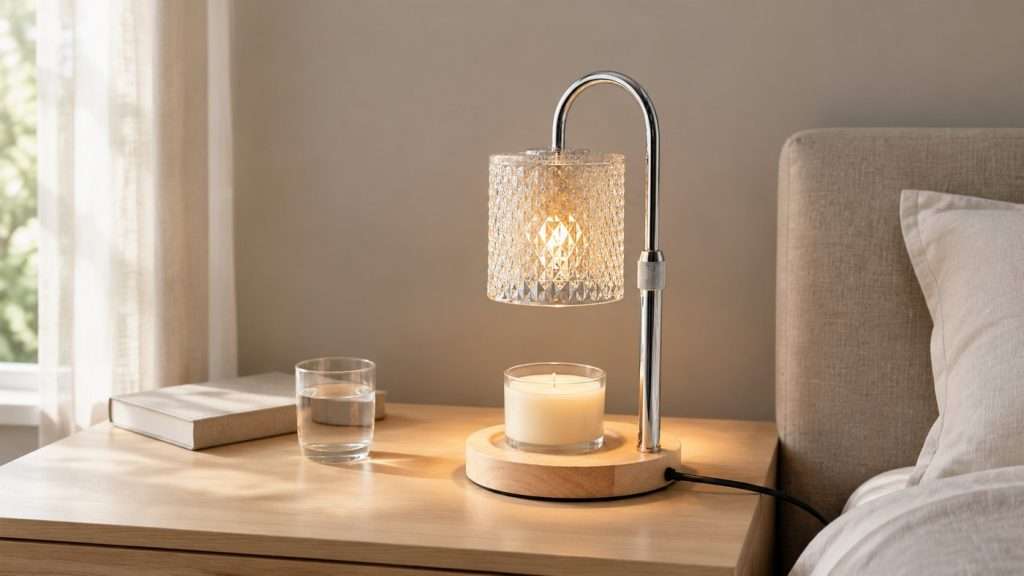
Sep
Bedroom & Bedside
What size lamp for nightstand use? One whose shade bottom lands at or just below your eye level when you sit up in bed, with the widest point of the shade no more than about two-thirds of the table’s shorter side and the base set back from the front edge. On an ordinary bed and table that works out somewhere between 20 and 27 inches tall. That familiar band assumes you read in bed; if the lamp is there for a low warm hour instead, a short lamp is right by construction.
Key takeaways
One question here: how big a lamp a bedside table can take, and what that size protects you from. Whether a warmer lamp fits the surface at all, and what the surface must be made of, is answered in our guide to where a warmer lamp can stand.
- Total height is the output, not the input. Three measurements decide it: floor to the top of your mattress, floor to the tabletop, and floor to your eyes sitting up in bed.[2][4]
- The rule of thumb was written for reading. It puts the shade bottom near eye level for an adult propped against a headboard on an average bed. Change the bed, the table or the job and the number moves.
- Nothing standardizes a nightstand. The nearest codified band is the accessibility limit for dining and work surfaces, 28 inches minimum to 34 inches maximum above the floor, and a nightstand is neither.[1]
- A short lamp cannot make the glare mistake. At roughly a foot tall its light source stays under the eye line of anyone sitting up in bed.[7] The sleep research asks for the same restraint after dark: keep a light that stays on dim, and away from the sleeper.[5]
Everyone searching this is in the same spot: beside the bed with a tape measure, looking at a table either too tall or too short for the lamp they liked. What they find is a number with no working shown. Here is the working: three measurements, one subtraction, and one honest question about what the lamp is for.
01What Size Lamp for a Nightstand? The Short Answer
Buy a lamp whose shade bottom lands at or just below your eye level when you sit up in bed, on a base small enough to leave the front third of the table clear. On an ordinary bed and table that usually works out somewhere between 20 and 27 inches tall, which is why the internet rounds it into one band. The band is the result of a subtraction, not a spec to shop by.
It has three inputs. The mattress sets how high you sit: accessible-lodging guidance puts a usable bed at 20 to 23 inches from floor to mattress top, and real beds run both sides of it.[2] The tabletop sets how much height is already spent. Your own eye level, sitting the way you actually sit, sets the ceiling.
Sources: ADA National Network, Accessible Lodging;[2] US Access Board, 2010 ADA Standards for Accessible Design, section 902.3;[1] seated eye height from the BIFMA ergonomics figures, small female to large male, clothing allowance included.[4] The fourth bar is arithmetic on the first three, not a measurement. Retrieved September 21, 2026.
Read the third bar against the fourth and the rule explains itself. A lamp sized by the rule of thumb puts its top at the upper end of the seated eye-level band, leaving the shade bottom a shade-height lower, in or under most sight lines. It also shows how easily that breaks: the same 27-inch lamp on a 30-inch table reaches 57 inches, above the eyes of every adult in the band.
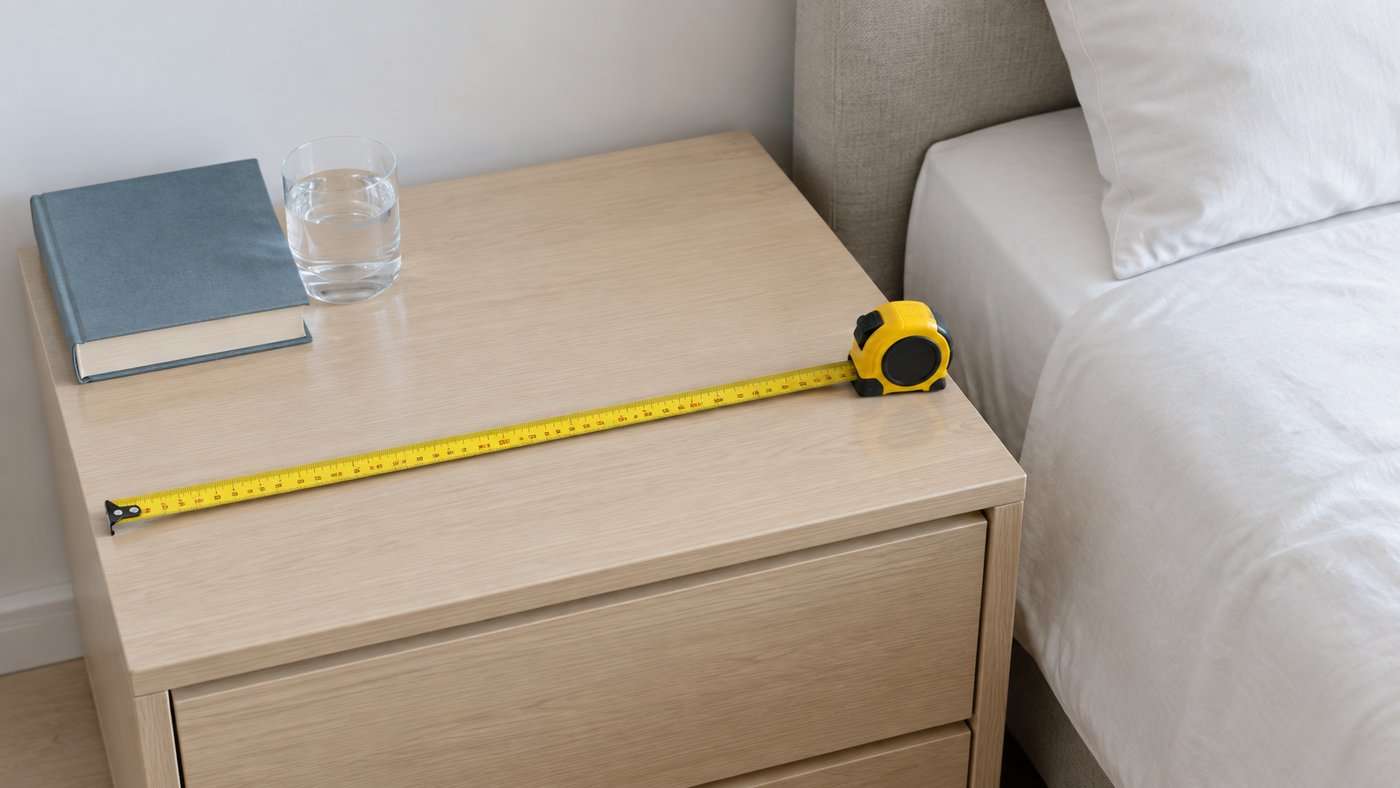
02How Tall Should a Nightstand Lamp Be? Measure From the Mattress, Not the Floor
Work backwards from your eyes. Sit up in bed the way you actually sit and have someone run a tape from the floor to the outer corner of your eye. That number is the ceiling, because a shade bottom above your eye line is a bare view of the bulb. Subtract the nightstand height and what is left is the tallest lamp the table can take.
When nobody can hold the tape, the ergonomics figures used in furniture design put seated eye height, floor to eye, at 42.6 to 48.8 inches for women and 46.3 to 52.6 inches for men.[4] Those came from office seating, so treat them as a sanity check, not your number: a mattress sits higher than a task chair and gives under you.
| What you measure | What it decides | How to take it | Skipped it? |
|---|---|---|---|
| Floor to the mattress top | Whether you sit 20 inches up or 27 | With your weight on the bed | You size the lamp to the room, not the bed |
| Floor to the tabletop | How much height is already spent | To the surface, not the drawer pull | A tall lamp on a tall table puts the bulb in your eyes |
| Floor to your eye, sitting up | The only height that decides glare | Sit as you actually sit, measure to the eye corner | You buy by the rule and still squint |
| Shade width against table depth | Whether you can reach past it for a glass | Tabletop front to back, then the widest shade point | The shade overhangs and catches a sleeve |
How tall should a lamp be on a nightstand that stands above the mattress?
Take the difference off the lamp. If the tabletop sits 4 inches above the mattress top, a 24-inch lamp behaves like a 28-inch one and the rule is already wrong by a shade height. This is the commonest way the standard advice misfires, because mattresses have thickened while bedside tables have not. The fix is subtraction, not a different rule.
What size lamp for end table use, beside a sofa instead of a bed?
The same subtraction, from a different seat. Beside a sofa or a reading chair there is no mattress under you, so the first measurement changes and the other two do not: sit where you actually sit, measure from the floor to the outer corner of your eye, subtract the height of the tabletop, and what is left is the highest the bottom of the shade may sit. The seated eye-height figures above, 42.6 to 48.8 inches for women and 46.3 to 52.6 for men, come from office seating, so beside a sofa they remain a cross-check rather than your number.[4]
Width follows the bedside rule: the widest point of the shade at no more than about two-thirds of the table’s shorter dimension, and the base pushed back so nothing overhangs the edge you reach past. Nothing standardizes an end table any more than a nightstand; the nearest codified band, for dining and work surfaces, runs 28 to 34 inches above the floor,[1] and a side table is neither. That is why one rule-of-thumb height breaks beside a sofa for the same reason it breaks beside a bed.
03Where Did the 24 to 27 Inch Rule Come From?
From reading in bed, and for that it is good advice. Ask for the best height for nightstand lamp guidance and the answers converge without agreeing: a band in inches, two or three inches taller than the nightstand, about two-thirds of the nightstand’s height, or a shade bottom near five feet off the floor—that last one sitting above the top of the seated eye band in the chart. All of them are solving one problem: light on the page, bulb out of the eye. A 25-inch lamp on a 26-inch table puts the shade bottom around 42 to 45 inches off the floor, at or just under eye level for an adult propped up on an average mattress.
What it never states is its assumption. Nearly every nightstand table lamp height guide in circulation describes a reading lamp, and a reading lamp is a task light whose job ends when the book closes. If nobody in the bed reads, the number optimizes for something that never happens, and the lamp it picks is taller and brighter than the room wants at eleven at night.
What the 24 to 27 inch rule is built for
- Reading printed text held at chest height
- A bulb kept out of the sight line of someone sitting up
- An average mattress on an average frame
- Assumes the bedside table is around 26 inches tall
- Assumes the job is light, and only light
What people actually switch it on for
- A last low pool of warm light before sleep
- Enough to find a glass of water, not to read by
- A reason to turn the ceiling light off
- Often a table of 28 inches or more, not 26
- Often no reading, so the rule’s task never happens
The band is wobblier than it looks. Table heights in the United States are pinned down only where accessibility rules reach them, and there the tops of dining and work surfaces run 28 inches minimum to 34 inches maximum above the floor.[1] A nightstand is neither, so nothing governs it, and the bedside tables on sale run anywhere from the low twenties to the low thirties. A rule with a 3-inch tolerance is being asked to sit on a variable with a 10-inch spread.
04What Size Table Lamp for Nightstand Use? Shade Width and the Table Edge
Keep the widest point of the shade narrower than the table is deep, and set the base back so nothing overhangs the front edge. Width is where a bedside lamp fails in daily use rather than in photographs: an overhanging shade is what a sleeve catches on the way to the alarm. Cap it at about two-thirds of the table’s shorter dimension.
Depth is rarely the binding constraint. Most bedside tables you will find run roughly 14 to 18 inches front to back, and a small base asks far less. What you budget is the clear surface around it: a few inches clear on each side, and the front strip left empty so you never reach over the lamp in the dark. Push the base to the back of the surface and both problems solve at once.
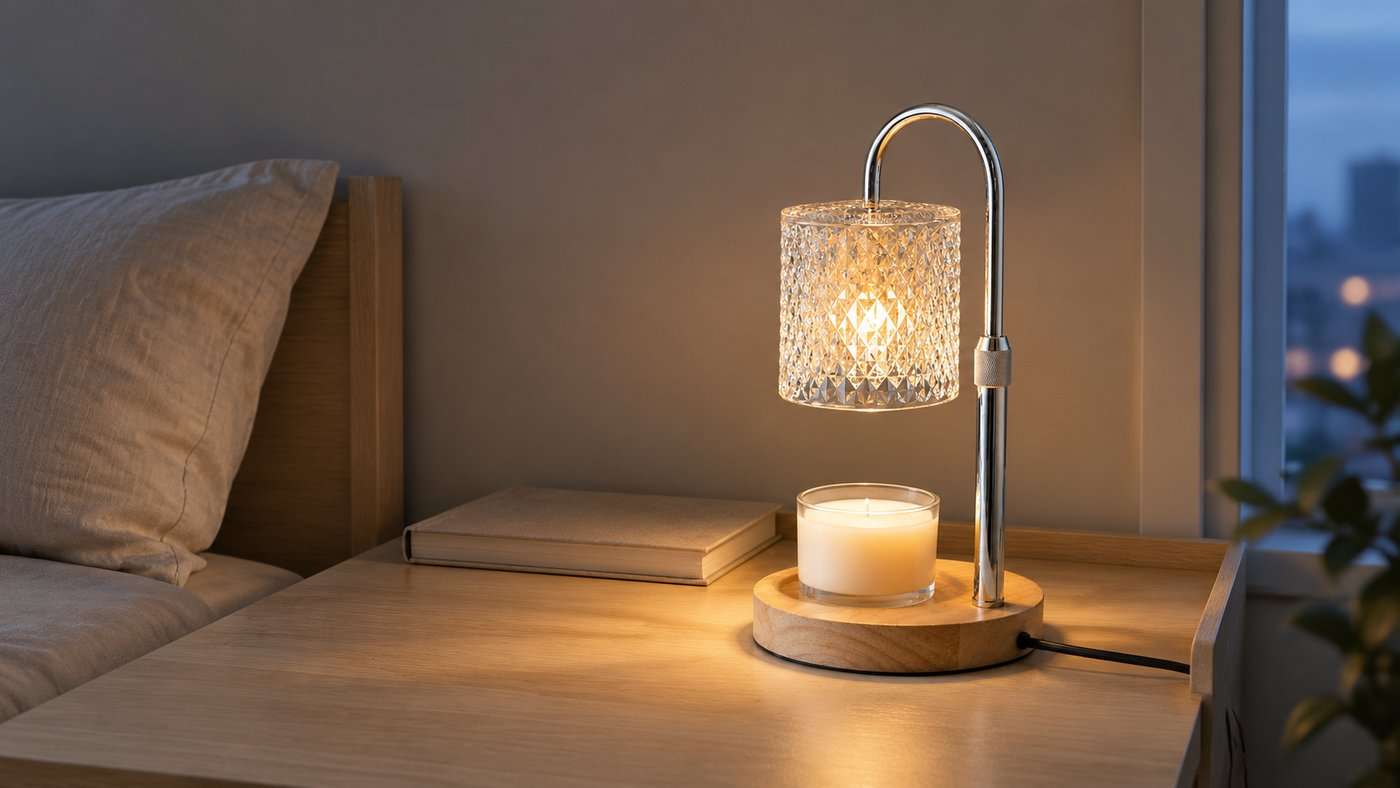
One measurement people take and forget to use: the drawer. Open it fully before deciding where the base goes, because a shade that clears the tabletop can still sit in the arc of an opening drawer front. The same goes for a deep upholstered headboard. Clearance gets checked with the furniture moving, not still.
05When Is a Short Lamp the Right Answer?
When the job is a glow rather than a task. A lamp roughly a foot tall, on an ordinary bedside table, keeps its light source in the high thirties above the floor, under the eye line of essentially every adult sitting up in bed.[7] As our guide to where a warmer lamp can stand puts it, “you want to see the glow, not the bulb”: a lamp that short cannot break the rule it never needed. Tall lamps must be sized correctly; short ones are correct by construction.
The sleep research points the same way. In 2022, a Northwestern University study in PNAS compared a night under 100 lux of room light with a night under 3 lux and reported a raised nighttime heart rate and next-morning insulin resistance after the lit night; the advice given alongside it was to avoid white or blue light, keep the source far from the person sleeping, and make any light that stays on dim and low.[5] How far down a warmer lamp goes, in lux rather than adjectives, is measured in our page on how bright one is after dark.
There is a safety reading of the same geometry. The US Fire Administration is direct about this room: do not use lit candles in bedrooms, bathrooms and sleeping areas, keep candles at least 12 inches from anything that burns, and consider a flameless alternative.[6] A bulb warming a jar from above gives the same small warm point of light, and the same scent, with nothing to put out. Which cutoff windows exist is covered in our guide to warmer lamp timers and auto shut-off.
Buyers who mention height mostly discover the adjustment rather than shop for it, and describe it in terms of the jar:
I didn’t realize it until it arrived. The neck of the lamp is adjustable to accommodate short or medium tall candles.
Both readings are one mechanism. The collar that raises the head to clear a taller jar also sets how far the light source sits above the tabletop, the measurement this page has been subtracting for. It is the only dimension on a bedside lamp you can change after the tape measure is away.
Source: verified Amazon review of the GODONLIF Candle Warmer Lamp (ASIN B0CTJGJL2T), United States, May 2026. Review ID R26J38CURBSLID, excerpted verbatim from the review.
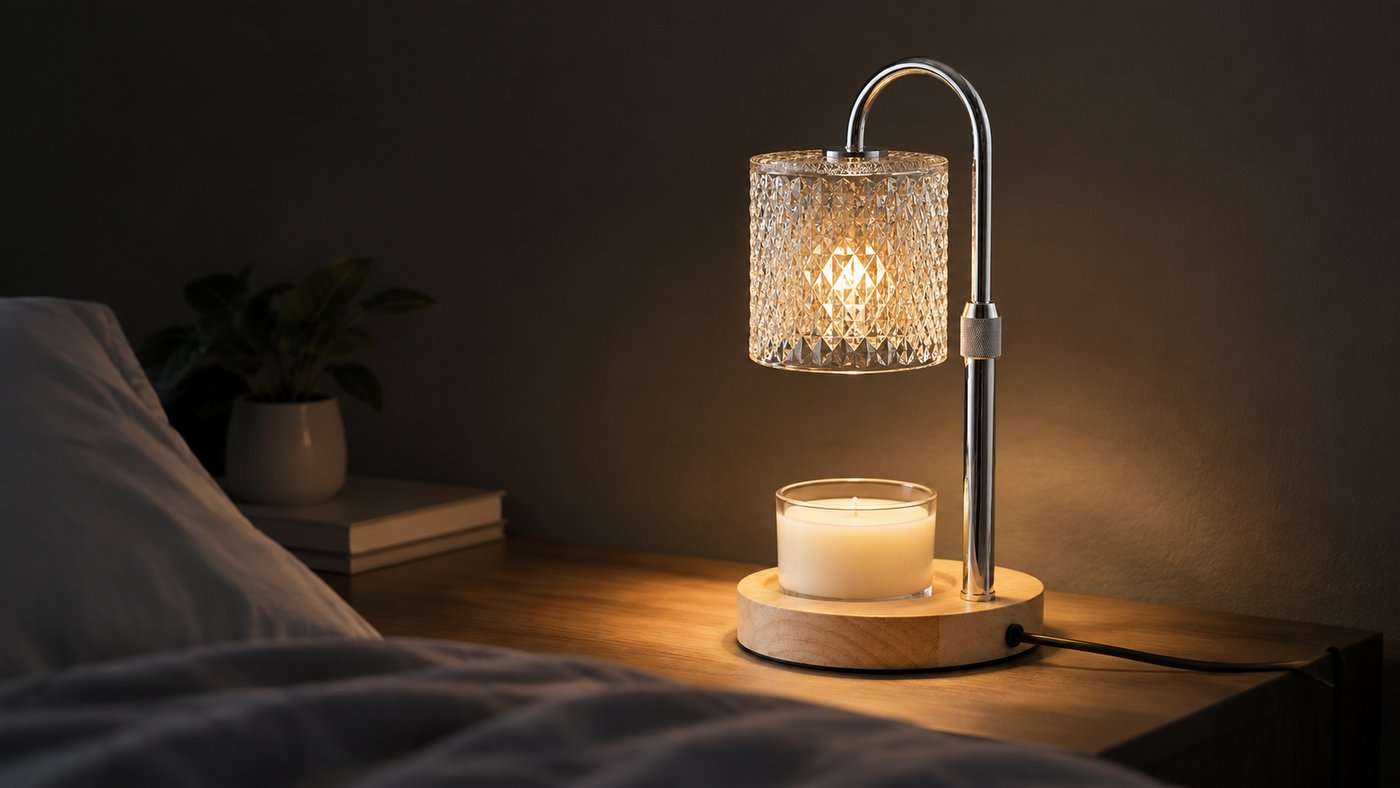
06The Rest of the Tabletop: What Else Has to Fit
Size the lamp last, after the things you reach for in the dark. A bedside table is usually asked to hold a glass of water, a book, a phone with its cable, and a pair of glasses. That is four objects with a claim on the surface before the lamp arrives, and three of them get picked up half asleep. The lamp is the only one that never moves, which is why it should take the corner and leave the middle.
A workable division of a small top: lamp at the back corner away from the pillow, the front strip kept permanently empty, the phone and its cable on the pillow side so the cord never crosses in front of the base, and the glass inside that empty strip where your hand lands without aiming.
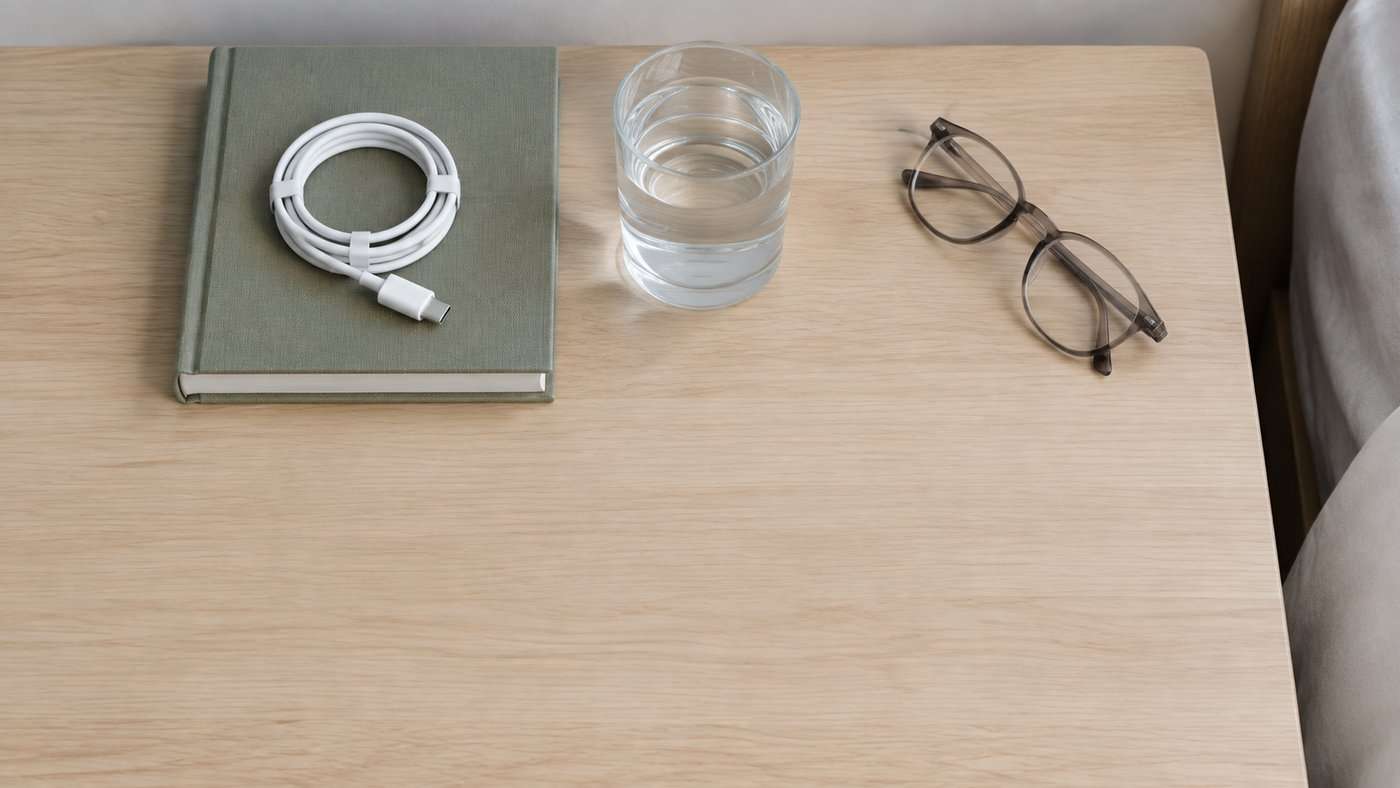
A very small lamp only needs a group around it on a wide console, and a bedside table is not that surface. We take that judgment up in our piece on whether warmer lamps are in style.
07What a Tape Measure Cannot Settle
Three gaps, named rather than smoothed over. The seated eye-height figures come from office seating and carry a clothing allowance; a mattress is higher, softer and slopes under you, so that band is a cross-check and your own measurement is the number.[4] The bed-height range is accessibility guidance for guest rooms, not a description of what people sleep on.[2] And the body-measurement spread is national, not personal: nearly 15 inches of standing height separates the 5th percentile for women from the 95th for men, which is most of a lamp.[3]
There is also a trade-off no measurement resolves. A lamp sized correctly for reading is, by design, brighter and higher than a room wants at the end of the night; a lamp sized for the end of the night is too low and too dim for a paperback. One object serves both only if it dims properly, and plenty of lamps sold as dimmable offer three coarse steps rather than a range. If you read in bed most nights, size for reading and accept turning it down. If you do not, stop sizing for a task you never perform.
08Five Minutes With a Tape Measure
The whole method is one tape and one subtraction, done in the room rather than in a search box.
Floor to the top of the mattress
Take it with your weight on the bed. A thick mattress reads two inches shorter once somebody is sitting on it, and two inches is most of the tolerance in the rule you are about to ignore.
Floor to the tabletop
To the surface the lamp stands on, not the drawer front or a lip. Note the gap between this and the mattress number: that gap is what the standard advice never knows about your room.
Sit up and get your eye level
Sit the way you actually sit, propped where you normally prop, and measure floor to the outer corner of your eye. This is the ceiling the whole exercise protects.
Subtract, then shop
Eye level minus tabletop height is the highest the shade bottom may sit. Add the shade’s own height back and you have your maximum total lamp height.
Check the width before the price
Shade no wider than roughly two-thirds of the table’s shorter dimension, base set back from the front edge, drawer opened fully to confirm nothing collides.
Once you have the three numbers, picking a table lamp for a nightstand stops being a guess and turns into a filter: short enough to stay under your eye line, dim enough to belong in a bedroom, and willing to end its own session. If you would rather start from the hardware than the tape measure, our notes on what makes the best warmer lamp score the adjustment range, the dimmer and the timer window in that order.
The short below keeps to the order this article does. Section one is the whole answer in one move: buy a lamp whose shade bottom lands at or just below your eye level when you sit up in bed, on a base small enough to leave the front third of the table clear. Section two is where the tape actually goes — floor to the outer corner of your eye, sitting the way you really sit — and that number is the ceiling, because a shade bottom above your eye line is a bare view of the bulb. Section three is where the familiar 24-to-27-inch band came from, and what every source behind it has in common: all of them are solving one problem: light on the page, bulb out of the eye. Section four moves from height to width, the dimension that fails in daily use rather than in photographs: keep the widest point of the shade narrower than the table is deep, and set the base back so nothing overhangs the front edge. Section five is the case for going short, and why it needs no arithmetic at all: tall lamps must be sized correctly; short ones are correct by construction. Section six budgets the rest of the surface, because a glass, a book, a phone and a pair of glasses are on it before the lamp arrives: the lamp is the only one that never moves, which is why it should take the corner and leave the middle. Section seven is the part a tape measure cannot settle, since reading light and last-light are two different jobs: one object serves both only if it dims properly, and plenty of lamps sold as dimmable offer three coarse steps rather than a range. The short closes where section eight does, on the method itself: eye level minus tabletop height is the highest the shade bottom may sit.
Frequently asked questions
These cover the sizing cases the sections above leave open: unusual beds, small rooms, headboards, and surfaces that are not really tables.
What height lamp for nightstand use should I buy if the bed sits unusually high?
Add the extra bed height back onto the lamp, inch for inch. A platform bed with a thick mattress can put you sitting eight or nine inches higher than the guides assume, which raises your eye level by the same amount and leaves room for a taller lamp than the usual band allows. The arithmetic does not change: measure floor to your eye while sitting up, subtract the height of the tabletop, and the remainder is the tallest the bottom of the shade may sit. A high bed is the one case where a lamp above the common band is genuinely correct rather than a mistake, because the constraint was never the lamp in isolation. The opposite case, a low platform bed with a standard-height table, is where people most often buy a lamp that shines straight into their eyes.
What size lamp should be on a nightstand in a small bedroom?
Size it to the table, then take one step down. A small bedroom usually comes with a narrow bedside table, often twelve to fourteen inches across, and a lamp that merely fits will still crowd it once a glass and a phone arrive. The useful move in a tight room is to move the light off the surface entirely where you can: a wall sconce or a clip light frees the whole tabletop, and a shelf-mounted light does the same. If the lamp has to stand on the table, choose one whose base is under five inches across and whose shade does not reach past the table edge from any angle. In a small room the lamp is competing for surface, not for floor area, and surface is the scarce thing.
Can a nightstand lamp be taller than headboard height?
Yes, and it often is, because the headboard is a visual reference rather than a functional limit. Nothing about a lamp stops working when its shade rises above the top rail; what changes is how the wall reads from the doorway, and a lamp overtopping a low headboard can look unbalanced with the bed. Two practical checks matter more than the silhouette. First, an upholstered or deeply padded headboard can sit closer to the lamp than it looks from the side, so confirm the shade is not touching it. Second, a lamp taller than the headboard is more exposed to being knocked by pillows being rearranged. If the look bothers you, lower the light rather than the lamp: a dimmer reduces the visual weight of a tall lamp far more than two inches of height does.
Do the two lamps on either side of the bed have to be the same size?
They do not have to match as objects, but the light should. Two different lamps throwing the same amount of light at the same height read as a deliberate pair; two identical lamps at different heights, because the tables differ, read as a mistake. So match the height of the light source above the floor first and treat the design as secondary. This matters in rooms where one side of the bed has a real nightstand and the other has a stool, a stack of books or a shelf. Measure both surfaces, pick each lamp so its shade bottom lands at roughly the same level, and the asymmetry stops being visible once the lights are on. If only one side of the bed is used for reading, there is also no rule saying both lamps need the same output.
What size lamp works on a floating shelf used as a nightstand?
Measure the shelf the way you would measure a table, then add two checks a table does not need. Wall-mounted shelves are usually hung lower and shallower than freestanding nightstands, often eight or nine inches deep, which pushes you toward a lamp with a small base and a shade that does not project past the front edge. The first extra check is load: a bracket rated for books is not automatically rated for something top-heavy that gets knocked. The second is the cord, because a shelf has no back panel to hide it and the drop to the outlet is visible from the bed. A light with a low center of gravity and a cord you can clip along the wall underneath is worth more here than any amount of height.
What size lamp for a 24 inch nightstand, and for a 30 inch one?
First settle which 24 or 30 inches you mean. If it is the table's height, that much of your eye level is already spent: sit up in bed, measure from the floor to the outer corner of your eye, subtract the table height, and the remainder is the highest the bottom of the shade may sit; add the shade's own height back for the tallest lamp the table can take. Against the seated eye-height band on this page, 42.6 to 52.6 inches and only a cross-check, a 24-inch table leaves 18.6 to 28.6 inches below the eye line and a 30-inch table 12.6 to 22.6, which is why a lamp that suits one can put the bulb in your eyes on the other. If it is the width, the depth usually binds first: keep the widest point of the shade to about two-thirds of the shorter side, roughly 9 to 12 inches on a top 14 to 18 inches deep.
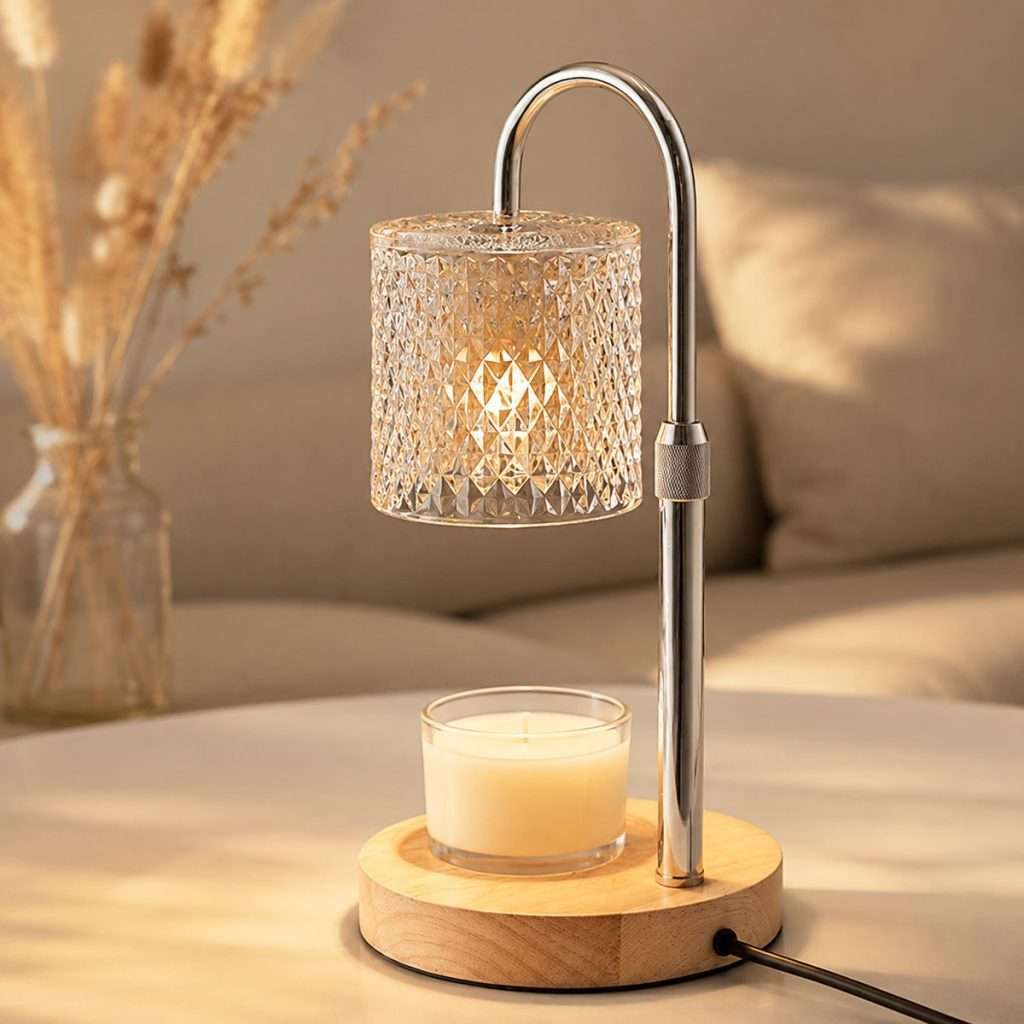
GODONLIF Cut Glass and Wood Adjustable Height Candle Warmer Lamp
An adjustable height candle warmer with a faceted cut glass shade on a round natural wood base. It melts your jar candle with a warm bulb instead of a wick, and both the brightness and the timer adjust.
Shop the adjustable height warmer lampSold and shipped by GODONLIF — free shipping within the contiguous US. Price and availability are shown on the product page.
Sources and evidence limits
Surface and bed heights from published accessibility standards and guidance; body measurements from the national survey and from the ergonomics figures used in furniture design; the light-at-night finding from a 2022 university study; flame guidance from the US Fire Administration. Each link was opened on September 21, 2026.
- US Access Board, “Chapter 9: Built-In Elements,” 2010 ADA Standards for Accessible Design, section 902.3: “The tops of dining surfaces and work surfaces shall be 28 inches (710 mm) minimum and 34 inches (865 mm) maximum above the finish floor or ground.” A nightstand is neither, so this is a reference point, not a requirement. access-board.gov — built-in elements (Retrieved September 21, 2026).
- ADA National Network, “Accessible Lodging”: “Ensure beds are of an accessible height (recommended bed height is between 20 to 23 inches from the floor to top of the mattress).” Guidance for guest rooms rather than a description of the beds people own. adata.org — accessible lodging (Retrieved September 21, 2026).
- Fryar CD, Carroll MD, Gu Q, Afful J, Ogden CL, “Anthropometric Reference Data for Children and Adults: United States, 2015–2018,” National Center for Health Statistics, Vital and Health Statistics series 3, number 46, January 2021. Table 10: women aged 20 and over, mean 63.5 in, 5th percentile 59.0 in (n = 5,510). Table 12: men aged 20 and over, mean 69.0 in, 95th percentile 73.8 in (n = 5,092). Standing height, not seated eye height. cdc.gov — anthropometric reference data (Retrieved September 21, 2026).
- BIFMA Ergonomics Guidelines, 2002, tabulated as Table 1 of Ergonomics and Design: A Reference Guide (Allsteel Inc., 2006), hosted by Oregon State University Environmental Health and Safety: sitting eye height 42.6 to 48.8 in for females and 46.3 to 52.6 in for males, in inches, including allowances for clothing. Office seating, measured floor to eye, which is why this page treats it as a cross-check. oregonstate.edu — ergonomics and design reference guide (Retrieved September 21, 2026).
- Northwestern University, “Close the blinds during sleep to protect your health,” news release dated March 14, 2022, on a study published the same day in PNAS: one night under 100 lux against one night under 3 lux, with raised nighttime heart rate and next-morning insulin resistance after the lit night; source also for “keep it far away from the sleeping person.” A small laboratory study, not a home trial. northwestern.edu — light during sleep (Retrieved September 21, 2026).
- US Fire Administration, Federal Emergency Management Agency, “Candle Fire Safety”: “Don’t use lit candles in bedrooms, bathrooms and sleeping areas,” “Keep candles at least 12 inches away from anything that burns,” plus the suggestion to consider flameless alternatives. Guidance about open flames, not about lamps. usfa.fema.gov — candle fire safety (Retrieved September 21, 2026).
- GODONLIF, product specification for the arch-style candle warmer lamp: round base 14 cm (5.5 in) across, overall height 30.5 cm (12 in), weight 0.9 kg (2 lb), height-adjustable pole, dimmable, countdown timer up to twelve hours. Manufacturer data for our own hardware, not an independent measurement; heights differ a little across models.
Evidence limits are in section seven. The 12-inch figure above is written for open flames, so the bedside geometry it describes is borrowed by analogy rather than by standard.
You may also like


