News
Do Candle Warmers Use a Lot of Electricity? The Real Monthly Cost

Jul
Guides
Real 2026 U.S. electricity rates, an actual bulb-wattage spec, and the exact monthly math — including what the lamp’s built-in 12-hour timer does to your worst-case bill.
Key takeaways
- No, not really: a candle warmer lamp’s halogen bulb draws about 25 to 50 watts, similar to a single incandescent light bulb.
- Typical monthly cost: roughly $0.28 to $0.79 for a few hours of daily use, based on the 2026 U.S. average residential rate of 18.83 cents per kWh (EIA).
- Worst realistic case: a 50 W bulb run the full 12-hour timer every day tops out around $3.39 a month.
- For comparison: a typical refrigerator costs roughly $23 a month to run, because it never stops.
- The 12-hour timer caps cost as well as risk — running the same bulb non-stop would nearly double the worst-case bill.
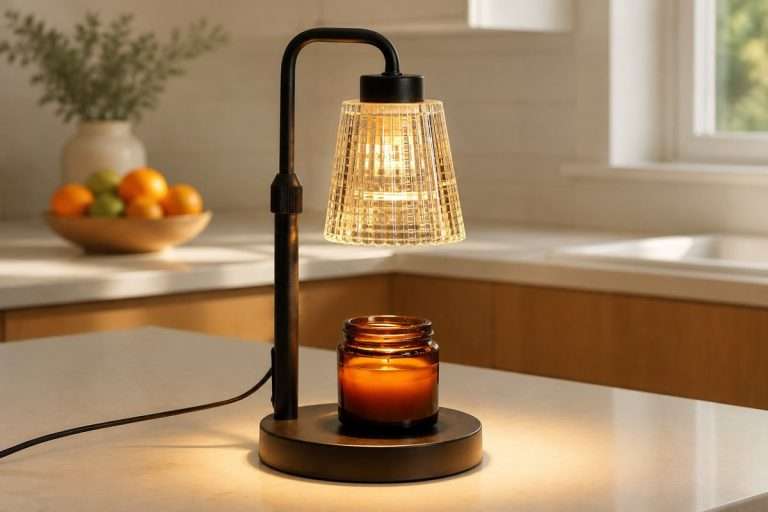
Do candle warmers use a lot of electricity? Short answer: no. A top-down candle warmer lamp runs on a single halogen bulb, and even the largest, most-used bulb in GODONLIF’s arch-style lamps costs a few dollars a month at most, at current U.S. electricity rates. This guide walks through the actual bulb wattage, the current EIA rate, and worked monthly costs for light, typical, and heavy use — including what happens if you run the built-in 12-hour timer to its limit every single day. Every number in that arithmetic is a property of the bulb rather than the lamp: the GU10 bulbs these lamps take top out at 50 W.
01Do candle warmers use a lot of electricity?
TL;DR. No. A candle warmer lamp’s halogen bulb draws about 25 to 50 watts, far less than a space heater, and it typically runs just a few hours a day. At 2026 U.S. average electricity rates, that is well under a dollar a month for most households, and about $3.39 even at the full 12-hour timer, daily.
Twenty-five to fifty watts is less electricity than a hair dryer, a toaster, or a phone fast-charging at full tilt. The bulb does two jobs at once — lighting the room with a warm amber glow, and radiating enough heat to melt the wax below it — but the draw on your electric meter barely registers next to appliances that cycle on and off all day.
The honest caveat: it is not the cheapest thing you own to run. It uses meaningfully more electricity than an LED nightlight or a phone charger, and it is not free the way a match and a wick are. It is nowhere near a real cost concern, though — the rest of this guide works through the actual math, using the current U.S. average rate rather than a guess.
02How many watts does a candle warmer lamp actually use?
Most top-down candle warmer lamps, including GODONLIF’s arch-style lamps, use a dimmable halogen bulb rated between 25 and 50 watts, with 35 watts a common general-purpose choice for a standard jar candle. Halogen is used because it produces real radiant heat alongside its light; a standard LED bulb of the same wattage runs too cool to melt wax (our candle warmer bulb guide covers replacement and lifespan). Other warmer brands land in a similar band: full-size wax warmers commonly ship with 20-, 25-, or 40-watt bulbs, according to Scentsy’s own guidance on warmer energy use.
Wattage is also the number you need before calculating your own cost — it’s the variable that changes most between models. Check the sticker on your lamp’s socket housing or base for the exact rating rather than assuming; GODONLIF ships spare bulbs printed with the correct wattage. Everything in the next section scales from this one number.
For socket types, bulb shapes and how to replace one, see our full guide to candle warmer wattage.
03The real math: what a candle warmer costs per month
In 2026, the U.S. Energy Information Administration’s Electricity Monthly Update put the average U.S. residential electricity rate at 18.83 cents per kWh (April 2026 data). Running a 35-watt candle warmer bulb four hours a day at that rate costs about 2.6 cents daily — roughly 79 cents a month, or under ten dollars a year.
The arithmetic is simple, not a trade secret: divide the bulb’s wattage by 1,000 for kilowatts, multiply by hours of use per day, then by your electricity rate. A 35-watt bulb is 0.035 kilowatts; run four hours a day, that’s 0.14 kWh, costing about 2.6 cents at the national average rate. Multiply by 30 for a month, or 365 for a year, for the figures below.
| Usage pattern | Bulb wattage | Hours per day | Est. cost / month | Est. cost / year |
|---|---|---|---|---|
| Light, occasional use | ~25 W | ~2 hrs | $0.28 | $3.44 |
| Typical daily use | ~35 W | ~4 hrs | $0.79 | $9.62 |
| Heavy use, full 12-hour timer daily | ~50 W | 12 hrs (timer max) | $3.39 | $41.24 |
Find your bulb’s wattage
Check the socket label or the base sticker. GODONLIF’s arch-style lamps ship with 25–50 W halogen bulbs.
Note your daily hours of use
The built-in 12-hour timer sets a natural ceiling, but most people use far fewer hours than that.
Do the math
(Watts ÷ 1,000) × hours/day × your electricity rate × 30 for a monthly figure. Check your utility bill or the EIA’s state-by-state map if your local rate differs.
04Does the 12-hour timer change the math?
Yes — the timer caps the worst-case bill in half. GODONLIF’s lamps include a built-in 12-hour countdown timer that shuts off automatically, and that ceiling matters for cost as much as for overnight safety. A 50-watt bulb left running with no timer, 24 hours a day, would cost about $6.78 a month. Cap it at 12 hours with the timer and the cost drops to $3.39 — exactly half, because 12 hours is half of 24.
In practice, almost nobody runs a warmer lamp for the full 12 hours every day — the “typical daily use” row above, at 4 hours a day, is far more realistic. But the timer’s real value is that it makes the maximum possible bill predictable and bounded: you can leave the lamp running and walk away without wondering whether it’s quietly running up a bill, because the ceiling is fixed either way.
05Candle warmer electricity cost vs. other household devices
Twenty-five to fifty watts means little in isolation, so here is how a candle warmer’s bulb stacks up against other things already plugged in at home. A 60-watt-equivalent LED bulb draws about 10 watts, roughly a third of a candle warmer’s typical draw, per energy-research site EnergySage. A phone charger pulls about 5 watts while charging, which EnergySage estimates costs about 2 cents a month for one charge a day — essentially free.
The real contrast is a refrigerator. EnergySage puts its average running wattage at about 167 watts — more than a candle warmer’s bulb, but the deciding difference is runtime, not wattage. A refrigerator runs 24 hours a day, 365 days a year, adding up to roughly 1,463 kWh annually and about $23 a month at current rates. A timer-capped candle warmer, used a few hours an evening, simply never accumulates hours the way an always-on appliance does.
| Device | Typical power draw | Typical run time | Est. cost / month |
|---|---|---|---|
| Candle warmer lamp bulb | 25–50 W | 2–4 hrs/day typical | $0.28–$0.79 |
| LED light bulb (60 W equivalent) | ~10 W | 4 hrs/day | ~$0.23 |
| Phone charger | ~5 W | One charge/day | ~$0.02 |
| Refrigerator | ~167 W (average running) | 24 hrs/day | ~$22.96 |
06Do wax warmers use a lot of electricity? How plug-in warmers compare
Plug-in wax warmers sit in the same power band as the lamp costed out above. Full-size wax warmers commonly ship with 20-, 25-, or 40-watt bulbs, according to the Scentsy guidance already cited on this page, against 25 to 50 watts for a candle warmer lamp — neither format is an energy hog. At the same 18.83 cents per kWh used throughout this page, run four hours a day, the monthly cost lands here:
| Plug-in wax warmer | Power draw | Est. cost / month |
|---|---|---|
| Small plug-in warmer | 20 W | $0.45 |
| Mid-size wax warmer | 25 W | $0.56 |
| Full-size wax warmer | 40 W | $0.90 |
The real difference is run time, not wattage. Most plug-in wax warmers have no timer, so they stay in the outlet and get forgotten, while this lamp’s 12-hour timer caps a single session. Two 25-watt devices can land three months apart on the same bill: with a 12-hour timer, about $0.56 a month; left in the outlet around the clock, about $3.39. If you are choosing between the two formats rather than costing one you already own, our candle warmer vs. wax warmer comparison covers the practical differences.
07Is a candle warmer cheaper than burning candles?
It depends what you count. Burning a candle uses zero electricity — a match and a wick cost nothing to run. A candle warmer lamp does have a small cost, typically well under a dollar a month. Count only the power meter, and burning wins on a technicality.
But electricity is only one line item. A warmer melts wax evenly instead of burning it away, so the same jar candle typically lasts far longer than it does on a wick, meaning fewer replacement candles — how much longer depends on whether you count wax or noticeable scent (see do candle warmers make candles last longer?). Whether that nets out cheaper depends on how many candles you go through — for regular buyers, the wax savings outweigh a few dollars a year in electricity; for occasional use, the difference barely matters either way.
Put both on a per-hour basis and the gap is not close. The lamp’s electricity is about 0.66 cents an hour. The candle itself — a $12 jar rated 35 to 45 hours, the burn times we break down in our guide to how long a candle lasts — is 27 to 34 cents an hour. Electricity is roughly two percent of the cost of running a scented candle; the wax is the other ninety-eight.
Burning a candle
- Zero electricity cost
- Wax burns away, often tunnels
- Candle replaced sooner
Candle warmer lamp
- Small electricity cost (cents to a few dollars a month)
- Wax melts evenly, lasts 2–3× longer
- Fewer replacement candles bought overall

Candle Warmer Lamps
A GODONLIF flameless candle warmer lamp melts your jar candle from above with a dimmable bulb — an electric candle warmer, not an open flame — so the same candle lasts far longer and melts evenly with no tunnelling.
See what a few cents a night buysBrowse all Candle Warmer Light Bulbs →
Sold and shipped by GODONLIF — free shipping within the contiguous US. Prices are shown on each product page.
08Ways to lower your candle warmer’s electricity cost even further
The cost is already small, but a few habits push it lower. Running the lamp on a lower dimmer setting draws less power than full brightness, and it also extends the bulb’s rated lifespan of roughly 1,000 to 2,000 hours, since lower filament temperatures mean less wear. Using the built-in timer instead of leaving the lamp on by habit is the second easy win — it puts a hard stop on any session rather than letting hours quietly add up.
Matching bulb wattage to the job matters too. A 25-watt bulb is plenty for a small jar candle in a bedroom, while the 50-watt end is meant for larger jars or bigger rooms — no need to run the highest-wattage bulb you own if a smaller candle only needs gentle warming. None of these habits will move your bill by more than a dollar or two a year, but they stack with the timer to keep the number near zero.

09Watch the dimmer and timer in action
The two controls that decide almost all of your actual electricity cost are the dimmer and the 12-hour timer — both are on the lamp’s base.


10Frequently asked questions
Do candle warmers use a lot of electricity?
No. A candle warmer lamp’s halogen bulb typically draws 25 to 50 watts, and most people run it for just a few hours a day, not around the clock. At the 2026 U.S. average rate of 18.83 cents per kWh, typical use costs well under a dollar a month, and even the largest bulb run the full 12-hour timer daily comes to only about $3.39.
How much does it cost to run a candle warmer lamp per month?
About 28 to 79 cents a month for most households. A 25-watt bulb run 2 hours a day costs roughly $0.28 a month, and a 35-watt bulb run 4 hours a day, a common pattern, costs about $0.79, based on the current U.S. average rate of 18.83 cents per kWh. Even the highest realistic case, a 50-watt bulb run the full 12-hour timer daily, tops out around $3.39 a month.
What wattage bulb does a candle warmer lamp use?
Most top-down candle warmer lamps, including GODONLIF’s arch-style lamps, use a halogen bulb in the 25 to 50 watt range, with 35 watts a common general-purpose choice. Halogen produces real radiant heat as well as light; a standard LED bulb of similar wattage stays too cool to melt wax. Bulb shapes, socket types and how to replace one are covered in our candle warmer bulb guide.
Does the 12-hour timer save money?
Yes, in addition to being a safety feature. The built-in 12-hour timer caps how long the bulb runs in a single session, which caps the cost too. A 50-watt bulb left running with no timer for 24 hours a day would cost about $6.78 a month; capped at 12 hours, the same bulb costs about $3.39, half the worst case, on top of removing the risk of leaving it on indefinitely.
Are candles cheaper than electricity?
Not in the way the question assumes. The electricity is the cheap part: a 35-watt candle warmer bulb costs about 0.66 cents per hour to run at the 2026 U.S. average rate of 18.83 cents per kWh. The wax is the expensive part — a $12 jar candle rated 35 to 45 burn hours works out to roughly 27 to 34 cents per hour of fragrance, forty to fifty times the electricity. And because a warmer melts the same jar 2 to 3 times slower than a wick burns it, the lamp lowers the line item that actually dominates: the candles you buy.
Is a candle warmer more expensive to run than a light bulb?
More than a single LED bulb, but not dramatically more. A 60-watt-equivalent LED draws about 10 watts, versus 25 to 50 watts for a candle warmer bulb. Run four hours a day, an LED costs about 23 cents a month and a typical 35-watt warmer costs about 79 cents, both trivial next to appliances that run around the clock, like a refrigerator, which averages closer to $23 a month.
Sources & further reading
- U.S. Energy Information Administration — Electricity Monthly Update: average price of electricity to residential customers, April 2026 data, retrieved 2026-07-08.
- EnergySage — How Many Watts Does a Refrigerator Use?, retrieved 2026-07-08.
- EnergySage — How Many Watts Does a Phone Charger Use?, retrieved 2026-07-08.
- EnergySage — How Many Watts Does a Light Bulb Use?, retrieved 2026-07-08.
- Scentsy — How much energy do wax warmers really use?, retrieved 2026-07-08.
- GODONLIF — Candle Warmer Light Bulb Guide (halogen wattage specification), retrieved 2026-07-08.
You may also like