News
How to Make a Candle Smell Stronger: 9 Fixes That Actually Work

Jul
Scent Throw
Your candle smelled amazing in the store and faint at home. Here is how to make a candle smell stronger — the melt-pool science, the wax and fragrance load that matter, and the flame-free warmer lever most guides skip.
Key takeaways
Scent strength is driven by one thing: evaporation from a full, hot pool of melted wax. Get more of the wax surface liquid and holding a steady, gentle heat, and more fragrance lifts into the room. Every fix below serves that single mechanism.
- The melt pool is the master lever: the larger and hotter the pool, the stronger the hot throw.[3][7]
- Burn it right or warm it right: ~1 hour per inch of diameter on a wick, or a flame-free lamp that holds a full pool all day at 100 to 160°F.[2]
- Honest limit: these fixes maximize the scent a candle already holds — none can add fragrance that was never in the wax.[1]
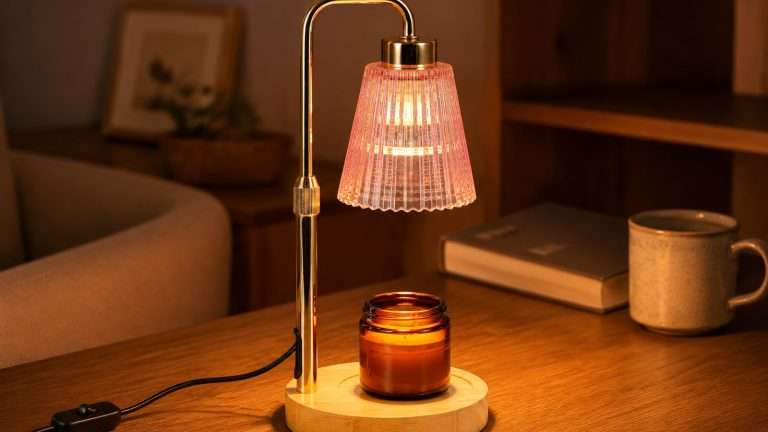
How to make a candle smell stronger comes down to one mechanism the whole candle industry agrees on: scent strength is driven by evaporation from a full, hot pool of melted wax. Get more of the wax surface liquid and holding a steady, gentle heat, and more fragrance lifts into the room. Everything below is built on that single idea — from the way you burn a wick to the flame-free warmer lamp that holds a full melt pool all day. At the lamp end that comes down to two settings rather than luck: a warmer lamp you can dim and whose arm slides up and down lets you set both the bulb’s output and its distance from the wax. One honest caveat up front: these fixes maximize the scent a candle already holds; none can add fragrance that was never in the wax.
01Why Your Candle Smells Weak (Even When It Smelled Great in the Store)
The most common complaint about scented candles is that they smell incredible on the store shelf and then barely register at home. That is not your imagination, and it usually is not a defective candle. An estimated 75 to 80% of candles sold in the US are scented (NCA), and their aroma is released two ways: by evaporation from the hot, melted pool and, more faintly, from the solid wax itself.[1] When the melted-pool half of that equation is missing or weak, a fragrance-packed candle underperforms anyway.
There are only a handful of real causes, and every one is fixable: a melt pool that never reaches the edge, a wax or fragrance load that releases slowly, a candle that was never properly cured, a wick left too long, or a room too big for one small jar.[5] The nine fixes in this guide walk through each lever in order of impact — starting with the melt pool, which controls more of your scent than anything else, and ending with the flame-free warmer lamp that holds that pool at its maximum all day.
02First, What “Scent Throw” Actually Means: Cold Throw vs. Hot Throw
Asking how to make a candle scent stronger is really asking about one of two different smells, and every fix further down this page depends on knowing which one you mean.
Before the fixes, two quick definitions, because they explain almost everything. Cold throw is the scent a candle gives off unlit, at room temperature — the smell that sold you in the store. Hot throw is the scent it releases once the wax is melted and evaporating, which is what you actually live with at home.[3] The two are produced by very different amounts of heat, so a strong cold throw is no guarantee of a strong hot throw.
Throw also has two dimensions of its own: distance (how far the scent travels) and intensity (how strong it is up close).[6] “Make a candle smell stronger” almost always means raising the hot throw — getting more fragrance evaporating, and pushing it further into the room. Keep that target in mind, because a few popular “tricks,” like parking a candle by a warm vent, actually work against it, as we will see.
03The One Thing That Controls Scent Strength: Your Melt Pool
If you remember one sentence, make it this: the larger and hotter the melt pool, the stronger the hot throw.[3][7] Fragrance leaves a candle by evaporating off the liquid wax surface, so the size of that liquid surface is the single biggest lever you control, which is why the exact melt point of your wax (see our candle wax melting point reference) sets how fast that pool forms. A candle burning in a narrow well can only evaporate scent from a coin-sized circle; the same candle with an edge-to-edge pool evaporates from the entire top. As Milkhouse Candles puts it, “a larger melt pool means more fragrance is released into your space” (Milkhouse).[7]
This is why heat, not more oil, is the honest answer to a weak candle. Everything downstream — how you burn it, which wax it is, whether you use a flame or a warmer — is really a question of how much wax surface you can get liquid and keep liquid. Get the pool right and most “weak candle” problems disappear on their own, which is exactly why the fixes below are ordered around it.
04Fix 1: Get a Full, Edge-to-Edge Melt Pool Every Time
On a wick, a full pool takes time and a clean flame. The rule of thumb is to burn a candle roughly 1 hour per inch of container diameter, and never more than 4 hours in a single session (NCA).[2] A 3-inch jar therefore needs about 3 hours on its first burn to liquefy the whole surface. Hot throw is genuinely judged after 2 to 4 hours of burning (CandleScience)[3] — a candle that seems weak in the first 30 minutes may simply not have a full pool yet.
Cut that first burn short and the wax “remembers” the small pool: it forms a memory ring and starts to tunnel, permanently shrinking the melt surface — and the scent — for the life of the candle (NCA, Milkhouse).[2][7] Also trim the wick to ¼ inch before every burn; a clean, steady flame builds a fuller pool and can extend a candle’s life by up to about 25% (NCA).[2] If your candle is already burning down the middle, a tunneled candle can only melt a small pool, so it can only throw a fraction of its scent — here’s how to stop candle tunneling before you try anything else.
05Fix 2: Know Your Wax and Fragrance Load
Wax type sets the ceiling on throw. Paraffin throws strongest, coconut forms a fast pool and a strong early throw, and soy is a slower, gentler, longer diffusion (CandleScience, Blended Waxes).[3][8] A lower melt point means the pool forms faster and fragrance evaporates sooner, which is why paraffin and coconut feel punchier out of the gate (Blended Waxes).[8] If you are shopping for a candle specifically to throw hard, this is the spec that matters most — see which candles throw best (and which waxes to look for).
Fragrance load is the other half. Most waxes hold their best scent at a 6 to 10% fragrance load, and — counter-intuitively — more is not better: overloading the wax disrupts the burn and actually weakens the throw (CandleScience, FizzleMeThat).[3][5] IFRA Category 12, the safety standard for candles set in the 49th Amendment of May 2021, frames practical loads by wax type (PetalMade).[4]
Practical IFRA Category 12 load bands; above the band, more oil disrupts the burn and weakens throw. Sources: PetalMade, CandleScience, FizzleMeThat (retrieved 2026-07-20).
You cannot change the fragrance load of a candle you already own — but you can recognize its symptoms. A candle that smells faint even with a perfect, full pool was probably under-loaded at the factory or poured in slow-release soy, and that is the one problem technique alone can only partly solve. Match your expectations to the wax: a soy candle asks for patience and steady heat, while paraffin and coconut reward a fast, full pool.
| Wax | Typical fragrance load | Cure time | Hot-throw character |
|---|---|---|---|
| Paraffin | 3–8% (up to ~12% with additives) | ~3–5 days | Strongest, fastest |
| Coconut / coconut blend | 8–12% | ~1 week | Fast-forming pool, strong early throw |
| Soy | 6–10% | 1–2 weeks | Slower, gentler, longer |
| Beeswax | 4–6% | ~1 week | Subtle, natural |
06Fix 3: Cure It, Place It, and Beat Nose-Blindness
Cure is the most overlooked lever of all. Fragrance needs time to bind to the wax before the first burn: soy and natural waxes want about 1 to 2 weeks, paraffin roughly 3 to 5 days, with a bare minimum near 48 hours just to bind at all (CandleScience, FizzleMeThat).[3][5] A fresh, uncured candle can smell dramatically weaker than the same candle two weeks later. If you buy handmade, ask when it was poured; if a new candle seems flat, give it another week before writing it off.
Typical cure (rest) time before the first burn; soy and other natural waxes need the longest rest for fragrance to bind, which is why a fresh soy candle can smell flat until it is fully cured. Sources: CandleScience, FizzleMeThat (retrieved 2026-07-20).
Placement and your own nose finish the job. Match the candle to the room: up to 100 sq ft needs one standard candle, 100 to 300 sq ft wants one large candle or two, and 300+ sq ft open-plan spaces need multiples or a multi-wick (ReCandle).[6] Keep it away from vents, fans, and open windows, because moving air pulls scent away instead of letting it build. Finally, beat nose-blindness: your nose adapts to a constant smell within minutes, so step out of the room for 15 to 20 minutes and the scent will hit you fresh when you return.
07The Upgrade Most Guides Skip: Warm It, Don’t Burn It
Every fix so far has been about getting a full, hot pool and keeping it. A candle warmer lamp is simply the most controllable way to do exactly that — which is why it belongs in any honest answer to how to make a candle smell stronger, and why the top-ranking guides that never mention it leave the best lever on the table. New to the format? Here is how warming compares to burning. Instead of a wick, a bulb warms the wax from above and holds an edge-to-edge pool continuously, with no flame in the picture at all.
The mechanics line up with everything above. A warmer holds the wax surface around 100 to 160°F (GODONLIF) — gentle heat, not a flame — as our guide on exactly how hot a warmer lamp gets lays out. That is hot enough for a full, continuous pool, yet cool enough that it does not blowtorch the delicate top notes off the surface the way a flame’s ~1,400°C tip can. There is also no 4-hour session cap (NCA)[2] and no wick to tunnel, so the pool stays at its maximum all day. And because there is no flame consuming the wax, the same candle also lasts far longer.

A warmer plays especially well with soy, the wax that struggles most to throw. Soy needs steady heat to keep a pool liquid, and a lamp supplies exactly that without the flicker and session limits of a flame — turning the industry’s slowest-throwing wax into an all-day diffuser. It is the cleanest version of the melt-pool principle every source above already agrees on.
08The Honest Part: What a Warmer (and These Tricks) Can’t Do
Here is the part product pages skip. A warmer, and every trick above, maximizes the release of the scent a candle already holds — none of them can add fragrance that isn’t in the wax.[1] A scent-starved, under-loaded, or long-expired candle will stay weak no matter how perfect the pool. If the fragrance was never loaded in at the factory, no amount of heat will conjure it, and chasing a stronger smell by overheating a cheap candle only shortens it.
There is a temperature tradeoff, too. More heat lifts throw only up to a point: push the wax too hot and you flash off the light top notes fast, so the candle screams for twenty minutes and then goes flat — the exact “strong then fades” complaint. This is precisely why a gentle, dimmable warmer lamp beats a scorching hot plate: you want the lowest heat that keeps a full pool, not the highest heat you can manage. Warm it steadily, do not cook it. Once you have the technique down and want your whole home to smell amazing without a single flame, that is the natural next step.
If you overshoot in the other direction and the pool ends up hot, deep and spent within a couple of evenings, the fixes reverse: see how to slow a melt pool that forms too fast.
Frequently asked questions
These answers keep the mechanism — a full, gently heated melt pool — separate from the candle’s own fragrance ceiling, because confusing the two is what makes weak candles feel unfixable.
Is there one simple answer to how to make a candle smell stronger?
The short version is warm a full, even melt pool and do not overheat it. Scent strength is driven by evaporation from the liquid wax surface, so a candle that reaches an edge-to-edge pool and holds it steadily will always out-throw one burning in a narrow tunnel. On a wick that means burning about 1 hour per inch of diameter (NCA); flame-free, a warmer lamp holds that full pool all day at roughly 100 to 160°F (GODONLIF). What none of these can do is add fragrance the wax never contained.
Why can I smell my candle in the jar but not when it's lit?
That gap is the difference between cold throw and hot throw. Cold throw is the scent an unlit candle gives off at room temperature; hot throw is what you smell once the wax is melted and evaporating (CandleScience). A candle can have a lovely cold throw yet a weak hot throw if it was under-cured, has a small melt pool, or was made with a wax and fragrance load that release slowly. Give it a full pool and a proper cure before you judge it.
Does a candle warmer make a candle smell stronger than burning it?
Often, yes, for two reasons. A warmer lamp holds a full, edge-to-edge melt pool continuously with no 4-hour session cap (NCA), and its gentle 100 to 160°F heat does not send a flame straight through the delicate top notes (GODONLIF). The result is a steadier, rounder throw over a longer stretch. The ceiling is still the candle itself: a warmer maximizes the release of the fragrance already in the wax, it cannot manufacture more.
Why does my candle smell strong at first, then fade after an hour?
Two things are usually happening at once. The lightest top-note molecules evaporate first and burn off quickly, so the opening blast naturally softens as the heavier base notes take over. At the same time your nose adapts and simply stops registering a constant smell, an effect called olfactory fatigue or nose-blindness. Step out of the room for 15 to 20 minutes and the scent will read far stronger when you walk back in.
Can you make a cheap candle smell stronger?
Partly. A full melt pool, a trimmed wick, and a warmer lamp will pull every bit of fragrance a budget candle holds, and that alone can be a noticeable upgrade. But an inexpensive candle is often under-loaded with fragrance oil or poured in slow-releasing soy, and no amount of technique adds oil that is not there. Technique raises a weak candle toward its own ceiling; it cannot lift the ceiling.
Does putting a candle near a heater or vent make it smell stronger?
No, it usually does the opposite. Moving air from a vent, fan, open window, or HVAC register pulls fragrance away before it can build up in the room, and a draft also makes a flame flicker and pool unevenly (ReCandle). Place the candle or warmer on a stable surface in the part of the room where people actually sit, away from active airflow, so the scent can accumulate rather than being swept off.

Candle Warmer Lamps
A GODONLIF flameless candle warmer lamp melts your jar candle from above with a dimmable bulb — an electric candle warmer, not an open flame — so the same candle lasts far longer and melts evenly with no tunnelling.
Browse candle warmer lampsSold and shipped by GODONLIF — free shipping within the contiguous US. Prices are shown on each product page.
Sources and evidence limits
Scent-mechanism and burn figures come from the National Candle Association; hot/cold throw, load, and cure figures come from CandleScience and other maker-science references; the IFRA Category 12 standard comes from a compliance guide; the warmer’s 100 to 160°F surface comes from our own temperature explainer. Each link was checked on 2026-07-20.
- National Candle Association, “Elements of a Candle: Fragrance.” https://candles.org/elements-of-a-candle-fragrance/ (retrieved 2026-07-20).
- National Candle Association, “Your Foolproof Guide to Burning a Candle Correctly.” https://candles.org/your-foolproof-guide-to-burning-a-candle-correctly/ (retrieved 2026-07-20).
- CandleScience, “Candle Making 101: Hot Throw.” https://www.candlescience.com/learning/candle-making-101-hot-throw/ (retrieved 2026-07-20).
- PetalMade, “IFRA Compliance for Candle Makers (Category 12).” https://petalmade.com/guides/ifra-compliance-complete-guide-2025 (retrieved 2026-07-20).
- FizzleMeThat, “The Science Behind Candle Fragrance Throw: Cold and Hot Scent Explained.” https://fizzlemethatoils.com/blogs/fragrance-info/the-science-behind-candle-fragrance-throw-cold-and-hot-scent-explained (retrieved 2026-07-20).
- ReCandle Co., “Candle Scent Throw: What It Is and Why It Matters.” https://recandlecompany.com/blogs/refillable-candle-collective/candle-scent-throw-what-it-is-and-why-it-matters (retrieved 2026-07-20).
- Milkhouse Candles, “The Perfect Burn: Understanding the Full Melt Pool.” https://milkhousecandles.com/blogs/blog/the-perfect-burn-understanding-the-full-melt-pool (retrieved 2026-07-20).
- Blended Waxes, “The Science of Scent Throw.” https://blendedwaxes.com/blog/the-science-of-scent-throw/ (retrieved 2026-07-20).
Evidence limits: fragrance load, cure, and throw figures are typical ranges that shift with the specific wax blend, additives, fragrance chemistry, room, and heat setting, not fixed constants. The 100 to 160°F warmer surface is a typical operating band, not a single measured value, and varies by device and setting. Most importantly, every technique here changes how much of a candle’s existing fragrance reaches the air; none can raise the fragrance the wax was made with.
You may also like