News
Candle Wax Melting Point: What Temperature Does Candle Wax Melt?

Jul
Wax Science
Candle wax melting point is not one number: paraffin, soy, and beeswax each soften at a different temperature. This guide gives the full melting chart in °F and °C, then keeps melting point separate from flash point and pour temperature.
Key takeaways
Candle wax melting point is a range, not a single figure. Most candle wax melts between about 115°F and 154°F (46 to 68°C).[1] Soy sits low near 120°F to 130°F (49 to 54°C),[4] while beeswax is the highest common wax at 144°F to 149°F (62 to 65°C).[5]
- It is a band, not a point: wax is a blend, so it softens across several degrees.
- Wax type sets the range: paraffin spans the widest band, soy is lowest, and beeswax highest among common waxes.
- Melting is not ignition: paraffin vapor does not flash until 200°C to 240°C (392°F to 464°F), far above any melt.[1]
- Warmers stay in the melting band: a lamp holds the top layer near 130°F to 180°F (54 to 82°C), which is why it can preserve a candle longer than burning.[9]
Candle wax melting point is best understood as a temperature band, because candle wax is a blend of many molecules rather than one pure compound. Paraffin, for example, begins to soften above roughly 99°F (37°C) but is not fully liquid until 115°F to 154°F (46 to 68°C).[1] Every candle wax melting point in this guide is written as a range in both Fahrenheit and Celsius, whether you are pouring a fresh batch or simply using scented wax melts in a warmer.
01What Is the Melting Point of Candle Wax?
Melting point is the temperature at which a solid becomes a liquid. For a pure substance that is a single number, but candle wax is a mixture of hydrocarbon or ester molecules of slightly different lengths, so it melts across a band instead of at one clean line. Paraffin shows this clearly: it starts to soften above about 99°F (37°C), yet it does not turn fully liquid until somewhere between 115°F and 154°F (46 to 68°C).[1] That wide spread is normal for a wax, not a sign of bad data.
The range is also why two reputable guides can disagree while both are correct. One may report the temperature where the surface first turns glossy, another the point where the whole block flows freely. So when someone asks what temp does candle wax melt, the accurate reply names a range and a wax type, never a universal number. The sections below give that range for each common wax, then separate it from two temperatures people routinely confuse it with: flash point and pour temperature. Put plainly, there is no single melting point for wax: an honest answer names a band and a wax type together. Which wax type, in turn, is a question about where the material came from, and the four origins behind every jar are traced in what candle wax is made of.
02Candle Wax Melting Points by Type
The melting point of waxes used in retail candles spans roughly 46°C to 96°C, so the chart below sorts them from coolest to hottest, in both Fahrenheit and Celsius, with where you are most likely to meet it and whether its temperature suits a candle warmer. That last column is written against the heat an electric candle warmer actually delivers, which is a much narrower band than a flame. Read the figures as typical bands rather than exact points, because additives, blends, and refining grade shift every number.
Ranges are typical; blends and refining grade shift every figure. Sources: Wikipedia, Hywax, VedaOils, Candlesmolds (retrieved 2026-07-14).
| Wax type | Melting point °F | Melting point °C | Typical use | Warmer-friendly? |
|---|---|---|---|---|
| Paraffin | 115°F to 154°F[1] | 46°C to 68°C | Jars, pillars, votives, tarts | Depends on grade |
| Soy | 120°F to 130°F[4] | 49°C to 54°C | Container candles | Yes, gentle heat |
| Coconut | 124°F to 127°F[4] | 51°C to 53°C | Container blends | Yes |
| Parasoy | 125°F to 135°F[6] | 52°C to 57°C | Container candles | Yes |
| Palm | About 140°F[6] | About 60°C | Pillars, tarts | Usually |
| Beeswax | 144°F to 149°F[5] | 62°C to 65°C | Pillars, tapers | Higher setting |
| Microcrystalline | 145°F to 205°F[4] | 63°C to 96°C | Additive, modeling wax | Rarely, too firm |
| Gel | About 180°F[5] | About 82°C | Novelty gel candles | No, too high |
| Carnauba | 180°F to 187°F[11] | 82°C to 86°C | Hardening additive | No, too firm |
Two rows deserve a caveat. Paraffin’s band is wide because it is sold in distinct grades, which the next section unpacks. Soy’s frequently quoted 180°F (82°C) is a heating or pouring figure used by candle makers, not its melting point, which sits closer to 120°F to 130°F (49 to 54°C).[4]
Coconut Wax Melting Point: Pure Coconut vs. Coconut Blends
The coconut wax melting point is 124°F to 127°F (51°C to 53°C) as pure wax.[4] Most jars on a shelf labelled coconut are not pure, though: they are coconut-soy or coconut-apricot blends, and blending makes them softer and drops the temperature at which they pool. So the coconut wax melting point a buyer actually meets often sits below the figure on the spec sheet, which is why two candles both calling themselves coconut can behave very differently under the same lamp. A quick check without a thermometer: if the jar is already soft and faintly oily at a room temperature near 80°F (27°C), it is a blend rather than pure coconut wax. Either way this is the friendliest family for a candle warmer, because a low melting point plus a soft texture means a wide pool early and a full surface opening more readily than soy. One caution: coconut wax is not coconut oil, which liquefies around 76°F (24°C) and is not a candle wax at all.
03Why Does Paraffin Wax Melting Point Vary So Much?
The paraffin wax melting point varies more than any other wax because paraffin is refined into distinct grades, each sold for a different job. Suppliers usually split it into low melt at 115°F to 129°F (46 to 54°C), medium melt at 129°F to 140°F (54 to 60°C), and high melt at 140°F to 154°F (60 to 68°C).[3] A candle maker picks the grade to match the format, which is why one bag of paraffin can behave almost nothing like another on the same warmer.
That grading is why a flat claim such as “paraffin melts at one fixed temperature” can mislead: it describes a single grade, not the whole family. Softer grades pour cleanly into jars and tarts; firmer grades hold the shape of pillars and survive warm shipping. Paraffin’s soot and safety questions are a separate subject, covered in our note on whether paraffin wax is toxic. Here the point is narrower: its melting point is a family of overlapping ranges, not one temperature you can memorize.
04Soy Wax Melting Point vs. Beeswax Melting Point: Which Suits a Warmer?
The soy wax melting point sits near the bottom of the chart, around 120°F to 130°F (49 to 54°C),[4] which is one reason soy dominates container candles: a modest, even heat brings the whole surface to a liquid pool. The beeswax melting point is the highest of the waxes people burn at home, roughly 144°F to 149°F (62 to 65°C),[5] so beeswax needs noticeably more heat to reach the same liquid state. Beeswax is also one of the two oldest candle fuels, burned alongside tallow for centuries before soy existed, as our history of when candles were invented shows.
A candle warmer lamp brings the top wax layer to roughly 130°F to 180°F (54 to 82°C),[9] which clears soy with room to spare and reaches well into the beeswax band. The tradeoff shows on a gentle setting: a dense beeswax pillar may pool slowly or only at the surface, while low-melt soy starts releasing fragrance almost at once. Because a warmer holds wax far below a flame, it also tends to stretch a candle’s usable life compared with burning it down.
Soy Wax Melting Point by Grade: Why Two Bags of Soy Behave Differently
Soy is not one material, it is sold by grade, and the soy wax melting point shifts by a few degrees between them. Three container grades dominate the shelf: Golden Brands GW 464 melts at 115°F to 120°F (46°C to 49°C), GW 444 at 120°F to 125°F (49°C to 52°C), and NatureWax C-3 at 125°F to 130°F (52°C to 54°C).[12] That is the same logic as the paraffin grades in the section above, only across a far narrower spread. It also explains the generic 120°F to 130°F band usually quoted for soy: that band is an average across grades, and the softest of them starts flowing below it. Keep this separate from the widely repeated claim that soy melts at 180°F, which is a heat-to or pour figure rather than a soy wax melting point, as the caveat under the chart above already flags. On a warmer those few degrees are exactly why one jar of soy pools right across the surface on a low setting while another only opens a well in the middle.
05High Melting Point Wax: Carnauba, Microcrystalline, and Gel
High melting point wax is the top end of the chart above: everything that stays solid past roughly 60°C. That band holds beeswax at 62°C to 65°C (144°F to 149°F),[5] gel near 82°C (180°F),[5] microcrystalline across 63°C to 96°C (145°F to 205°F),[4] and carnauba, the highest-melting of the natural waxes, at 82°C to 86°C (180°F to 187°F).[11] Carnauba is almost never burned on its own; like microcrystalline it goes into blends as a hardening additive.
Makers reach for a high melting point wax when the candle has to hold a shape. Pillars and carved designs need a wax that will not slump, a few percent of a hard wax raises the hardness and opacity of a softer blend, and the same firmness is what lets a candle survive warm shipping or an un-air-conditioned room in July without deforming.
For a candle warmer the useful line falls inside this band rather than at its edge. A lamp holds the top layer at 54°C to 82°C (130°F to 180°F),[9] so beeswax still pools on a higher setting, while the upper half of the microcrystalline range, gel, and carnauba sit at or above the lamp’s ceiling and will soften only at the surface. One thing a high melting point does not change is safety: the flash point stays at 200°C to 240°C (392°F to 464°F) however firm the wax,[1] so a harder wax is neither more nor less likely to ignite. Melting point and flash point are independent, which the next section separates in full.
06What Is the Difference Between Melting Point, Flash Point, and Pour Temperature?
Three temperatures get mixed up, and only one is the melting point. Melting point is where solid wax becomes liquid, the ranges shown above. Pour temperature is a candle-making figure: the temperature at which molten wax is poured into its container, lower than the heat-to figure but above the melt. Flash point is far hotter still, the lowest temperature at which the wax’s vapor can ignite if a flame or spark reaches it. The table sorts them out.
Melting & flash: Wikipedia (paraffin); pour: Lone Star Candle Supply. Retrieved 2026-07-14. Boiling point sits off this scale, above 370°C.
| Temperature term | What it describes | Typical value for wax |
|---|---|---|
| Melting point | Solid wax becomes liquid | 115°F to 154°F (46 to 68°C), paraffin[1] |
| Pour temperature | Molten wax is poured into a vessel | 90°F to 160°F (32 to 71°C), soy[7] |
| Flash point | Wax vapor can ignite near a spark | 392°F to 464°F (200 to 240°C), paraffin[1] |
| Boiling point | Wax vaporizes into a gas | Above 698°F (370°C), paraffin[1] |
The gaps are large and they matter. Candle makers commonly heat soy to about 180°F to 185°F (82 to 85°C), then pour it at 90°F to 160°F (32 to 71°C) once it cools a little.[7] Fragrance oils carry their own flash points, often 141°F to 200°F or higher (60.5°C to 93°C and up), which is why scent is stirred into slightly cooled wax rather than boiling wax.[8] Paraffin’s flash point of 200°C to 240°C (392°F to 464°F) sits far above the temperature where it melts.[1]
The boiling point of wax is the fourth temperature, and it is the one you will never reach at home. Paraffin does not truly boil into a gas until above 370°C (698°F).[1] Long before that the flash point at 200°C to 240°C arrives, and the vapour rising off the wax would ignite near any spark, so boiling wax is not something that happens in a kitchen or under a warmer: the real safety boundary is the flash point, not the boiling point. Keep the two boiling points apart as well. The 212°F (100°C) figure in the hot-water section below is the boiling point of water, used as a tool to melt wax, while the boiling point of wax itself is a purely theoretical ceiling hundreds of degrees higher.
07How Hot Does Wax Get Under a Candle Warmer Lamp?
A candle warmer lamp is designed to sit inside the melting band and nowhere near the flash point. Product guidance puts the top wax layer at about 130°F to 180°F (54 to 82°C) under a lamp, which the same source notes is well below the roughly 400°F (204°C) point at which wax would ignite.[9] That window is warm enough to liquefy soy, coconut, and low-melt paraffin, yet cool enough that the wax never becomes fuel. Our explainer on how a candle warmer lamp works walks through the full heat path.
Set that against an open flame. The National Candle Association reports a candle flame reaching about 1,000°C to 1,200°C (1,832°F to 2,192°F) through its bright zone, and up to roughly 1,400°C (2,552°F) at the hottest outer edge.[2] A warmer never comes close. So what temp does candle wax melt under a warmer is really the whole story here: the device tops out in the low hundreds of Fahrenheit and simply changes wax from solid to liquid. The one tradeoff sits at the high end of the chart, where a very firm beeswax, gel, or microcrystalline wax can meet or exceed a gentle lamp’s reach and may pool only at the surface.

08How Hot Is Melted Candle Wax Once It Pools?
How hot is melted candle wax depends on what is heating it. Under a lamp the pool holds at 130°F to 180°F (54 to 82°C).[9] On a burning candle the pool is cooler than most people assume: it sits only a little above the wax’s own melting point, because the flame’s extra energy goes into melting more wax rather than driving the liquid hotter, a phase change that absorbs heat instead of raising temperature. That is why the pool on a lit candle reads close to the same figures as the chart above.
Pool under a warmer lamp
- Holds at 130°F to 180°F (54 to 82°C)
- The lamp sets the ceiling, so it stays steady for hours
- Hundreds of degrees below the 392°F to 464°F flash point
Pool on a burning candle
- Sits only a little above that wax’s own melting point
- Extra flame heat melts more wax instead of heating the liquid
- Still hot enough to scald, and it clings to skin
Either number is hot enough to hurt. Liquid wax much above 50°C (122°F) can scald skin, and unlike water it does not run off: it clings and keeps releasing heat as it sets, which is what makes a wax burn worse than a splash of water at the same temperature. Both figures still sit hundreds of degrees below the 392°F to 464°F (200 to 240°C) flash point,[1] so a pool is a burn risk, never an ignition risk. In practice: do not carry a jar that has a liquid pool in it, let the wax set before moving it, and never tip a pool out while the warmer is still switched on.
09Melting Point in Practice: Hot Water and Microwaves
Because every wax in the chart melts below the boiling point of water, 212°F (100°C), a hot-water bath is a gentle way to loosen leftover wax. The water stays hotter than the wax’s melting point, the wax turns liquid, and as it cools it floats and sets into a disc you can lift out. That is a direct consequence of the melting-point ranges above, not a separate trick. The step-by-step version of that, for a full jar as well as for melts and jar leftovers, is set out in how to melt candle wax without lighting it.
Microwaving a candle to melt it is a different story. Many candles hold a small metal disc under the wick, which can arc and spark in a microwave, and the fast, uneven heating can thermal-shock a glass jar until it cracks.[10] The melting point tells you the wax would liquefy easily; it does not make the container or the wick base microwave-safe. For softening or reusing wax, a warmer or a hot-water bath keeps the temperature safely inside the melting band.
Frequently asked questions
These answers keep melting point separate from flash point and pour temperature, and they treat every figure as a typical range rather than a fixed number.
The visible FAQ and its schema come from one source, so both stay identical.
What temperature does candle wax melt?
It depends on the wax. Most candle waxes melt somewhere between about 115°F and 154°F (46 and 68°C). Soy is on the low side near 120°F to 130°F, beeswax on the high side near 144°F to 149°F, and paraffin covers the widest span because it is sold in several grades. There is no single number that fits every wax.
What temp does candle wax melt under a candle warmer?
A candle warmer keeps the top wax layer at roughly 130°F to 180°F (54 to 82°C). That is hot enough to melt soy, coconut, and softer paraffin into a scented pool, yet far below the point where wax vapor could ignite. Very firm waxes such as dense beeswax may only soften at the surface on a gentle setting.
How hot is melted candle wax?
Under a candle warmer lamp the melted pool sits at roughly 130°F to 180°F (54 to 82°C). On a burning candle the pool is cooler than most people expect — close to the wax's own melting point, because the extra heat goes into melting more wax rather than raising the pool. Either way it is hot enough to scald skin, and molten wax clings instead of running off, so let a pool set before you move the jar. Both figures stay hundreds of degrees below wax's 392°F to 464°F (200 to 240°C) flash point.
Does candle wax melt in hot water?
Yes. Every common candle wax melts below the boiling point of water, 212°F (100°C), so water near boiling stays hotter than the wax and turns it liquid. As the water cools, the melted wax floats to the top and hardens into a layer you can lift off. Never pour that softened wax down a drain.
Can I microwave a candle to melt the wax?
It is risky and usually a poor idea. Many candles have a small metal disc under the wick that can spark in a microwave, and fast, uneven heating can crack a glass jar through thermal shock. The wax itself would melt easily, but the container and the wick base are the real hazard. A warmer or a hot-water bath is safer.
Which candle wax has the highest melting point?
Among everyday candle waxes, beeswax has the highest melting point at about 144°F to 149°F (62 to 65°C). Specialty waxes climb higher: gel candles melt near 180°F (82°C), and microcrystalline wax, used mostly as an additive, can reach up to roughly 205°F (96°C). Paraffin's firmest grade tops out around 154°F (68°C).

Candle Warmer Lamps
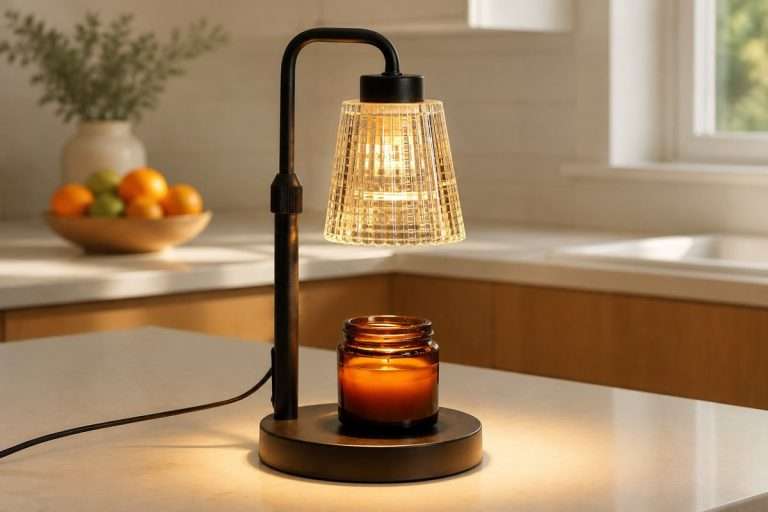
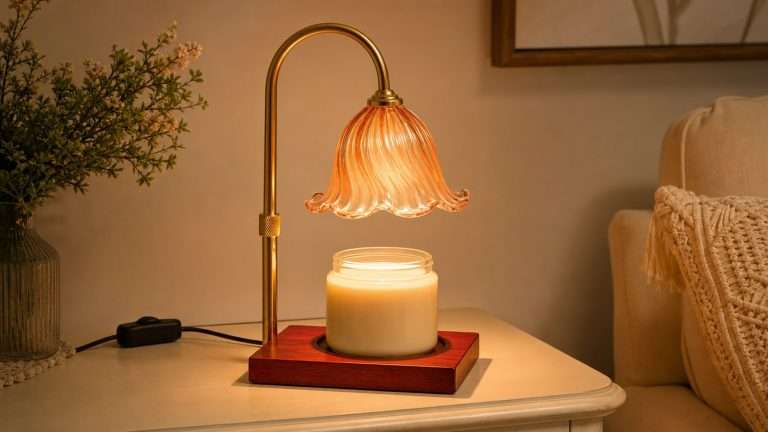
A GODONLIF flameless candle warmer lamp melts your jar candle from above with a dimmable bulb — an electric candle warmer, not an open flame — so the same candle lasts far longer and melts evenly with no tunnelling.
Lamps that hold wax in its melting bandSold and shipped by GODONLIF — free shipping within the contiguous US. Prices are shown on each product page.
Sources and evidence limits
Melting points come from wax suppliers and a materials reference; flame and flash-point figures come from combustion and chemistry sources. Manufacturer blogs are used only for candle-warmer operating temperatures, the least authoritative tier here.
URLs were checked on July 14, 2026, and the two sources added in the July 30, 2026 update were checked that day. The soy-grade source was replaced and checked on October 17, 2026. Wax melting points are typical ranges, not fixed constants: additives, dye load, fragrance percentage, and refining grade shift every figure, and supplier bands sometimes overlap. Soy’s 180°F and similar high numbers are heating or pouring temperatures, not melting points. Candle-warmer temperature ranges are drawn from brand guidance rather than independent lab measurement.
- Wikipedia, “Paraffin wax” (melting, flash, and boiling points with citations). https://en.wikipedia.org/wiki/Paraffin_wax (retrieved July 14, 2026).
- National Candle Association, “Candle Science” (flame temperatures). https://candles.org/candle-science/ (retrieved July 14, 2026).
- Alphawax, “Paraffin Wax Melting Point” (low, medium, and high grades). https://www.alphawax.com/blog/paraffin-wax-melting-point (retrieved July 14, 2026).
- Hywax, “Wax Melting Point” (soy, coconut, and microcrystalline). https://www.hywax.com/blog/wax-melting-point (retrieved July 14, 2026).
- VedaOils, “Candle Temperature Guide” (beeswax and gel wax). https://www.vedaoils.com/blogs/candlemaking/candle-temperature-guide (retrieved July 14, 2026).
- Candlesmolds, “Candle Wax Melting Temperature Guide” (palm and parasoy). https://candlesmolds.com/pages/candle-wax-melting-temperature-guide (retrieved July 14, 2026).
- Lone Star Candle Supply, “Heating and Pouring Waxes” (pour and heat-to temperatures). https://lonestarcandlesupply.com/heating-and-pouring-waxes/ (retrieved July 14, 2026).
- Scented Flame Candle Supply, “Guide to Fragrance Flash Points.” https://scentedflame.com/blogs/learning-center/guide-to-fragrance-flash-points (retrieved July 14, 2026).
- Strabella Home & Kitchen, “How Candle Warmer Lamps Work” (warmer surface temperatures; manufacturer guidance). https://www.strabellahome.com/blogs/news/how-candle-warmer-lamps-work (retrieved July 14, 2026).
- Lume & Wick, “Can You Microwave Candles?” (microwave hazards; manufacturer guidance). https://lumeandwick.com/microwave-candles/ (retrieved July 14, 2026).
- Wikipedia, “Carnauba wax” (melting point; hardest and highest-melting of the natural waxes). https://en.wikipedia.org/wiki/Carnauba_wax (retrieved July 30, 2026).
- Lone Star Candle Supply, “Choosing a Soy Wax” (melt points for Golden Brands GW 464, Golden Brands GW 444, and NatureWax C-3 soy waxes, from manufacturer data). https://lonestarcandlesupply.com/choosing-a-soy-wax/ (retrieved October 17, 2026).
You may also like