News
Do Candles Help You Sleep? What Scent at Bedtime Actually Does — and How to Get It Without a Flame
Sep
Scent & Routine
Do candles help you sleep? Partly, and only in the way a bedtime routine helps: the evidence supports treating fragrance as a wind-down cue rather than a sleep drug, and it is still evolving. People searching for candles for sleeping are almost never shopping for wax. They want the last hour of the day back, where the light drops, the room changes smell, and the body is told the evening is over. Nobody mentions the contradiction in the format: the hour you most want that smell is the hour the flame has to be out.
Key takeaways
This page is about what scent does at bedtime. How much light a warmer throws belongs to our page on a warmer lamp at night; whether one may be left running while you sleep is a separate safety question. Neither is re-argued here.
- A cue, not a drug. The federal complementary-health agency: aromatherapy “is sometimes used for insomnia, but we don’t know whether it’s helpful.”[2]
- Once you are asleep, the scent is doing almost nothing to you. In a sleep-laboratory study, adults responded to an odor on 92 percent of trials in drowsy stage 1, and to peppermint not at all in stages 2, 4 or REM.[3]
- The bedroom is where candle fires start. Across 2020 to 2024, US home fires with candles as the heat source averaged 5,894 a year, and 36 percent began in the bedroom.[5]
- The evidence is early and small. The best controlled look at lavender before sleep measured 53 people and named its own sample size as a limitation.[7]
Search this and you get a ranked list of jars — an answer to which one to buy, when the real questions are whether the smell does anything at all, and what to do with a product that must be put out before the part of the night it was bought for.
01Candles for Sleeping: The Short Answer
Candles for sleeping work the way a bedtime routine works, not the way a sedative works. The scent signals that the day is closing, and the research supports it at that strength — associated with relaxation, occasionally with measurable changes in sleep architecture, never established as a treatment. The daytime version of that same claim, a jar sold for stress rather than for the night, is weighed against its own trials in our page on stress relief candles. The Sleep Foundation says plainly that “more rigorous research is needed before it can be considered a standard treatment for insomnia.”[1] That is the honest ceiling, and this page does not build above it.
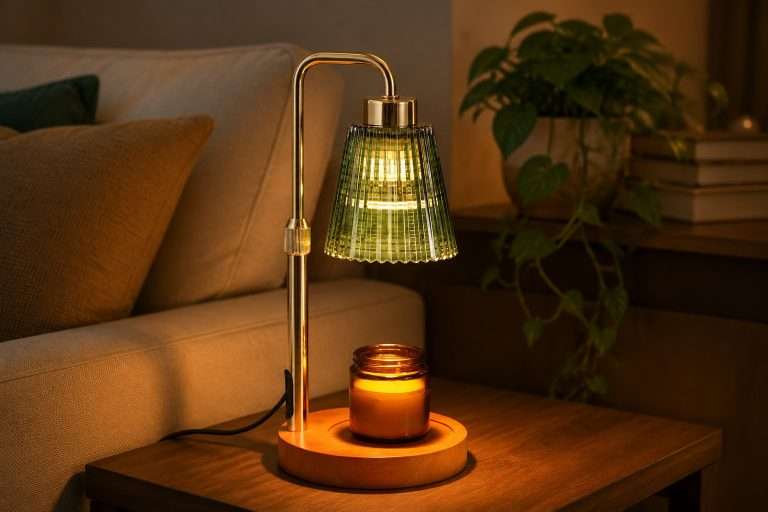
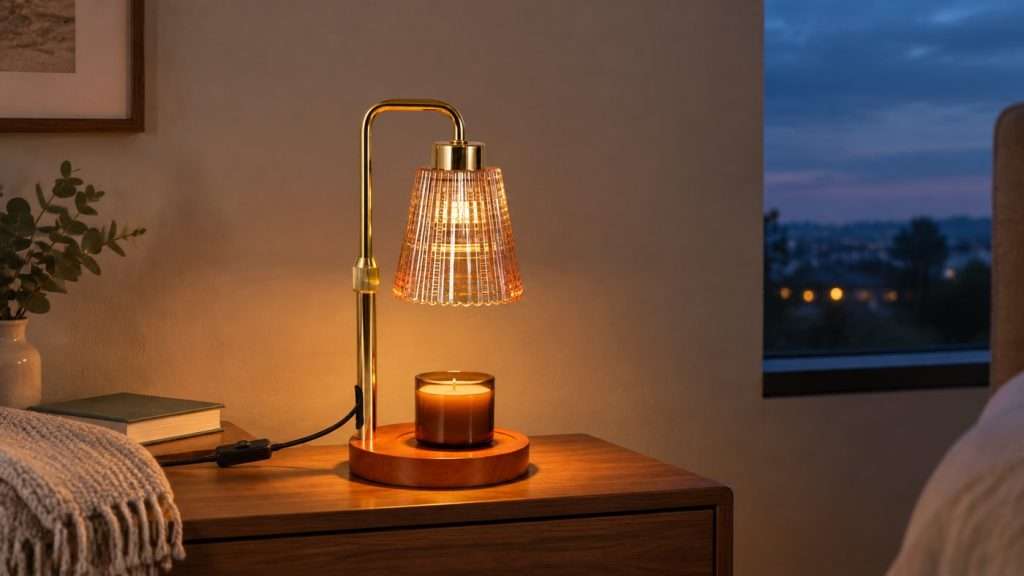
Less often said: the useful part of the exposure is over before you are asleep. What you are buying is a forty-minute cue, not an eight-hour atmosphere — which turns the fire-safety instruction from a footnote into the design constraint. That constraint is easiest to meet with nothing alight at all, which is how our lamps for the bedroom warm the jar.
| Window | What your sense of smell is doing | What the evidence supports | What an open flame requires |
|---|---|---|---|
| The wind-down hour, 30 to 60 minutes before lights out | Fully awake; where a scent is registered and recognized | Relaxation and routine-building, by association not pharmacology | A constant line of sight |
| Sleep onset, the drowsy minutes as you drop off | Partly responsive — the last stage in which an odor registers | The narrow window in which scent could affect falling asleep | Someone awake enough to put it out, which is not you |
| The rest of the night | Offline; odors do not reach a sleeping person | Nothing; scenting a room is not an effect on sleep | Nothing; the flame should already be gone |
Read down the last column and the product argues itself out of the window it was bought for. That is not a reason to give up the scent; it is a reason to stop requiring scent and fire in the same object.
02What a Sleep Candle Is Actually Doing in the Hour Before Bed
A sleep candle is doing three things at once, and only one is chemical. It changes the smell of the room, which the brain registers faster than almost any other sensory change. It marks a boundary. And it occupies the stretch of the evening sleep guidance keeps asking people to protect: the CDC’s habits for better sleep include keeping the bedroom “quiet, relaxing, and at a cool temperature” and “turning off electronic devices at least 30 minutes before bedtime.”[8] Filling those thirty minutes with something other than a screen is quiet work in itself.
The chemical half has been measured, and it is smaller than the marketing around it. In a single-blind randomized trial published in the Journal of the Chinese Medical Association in 2023, 53 adults with disturbed sleep slept two consecutive nights under polysomnography, one with lavender-based essential oil inhalation. In the single-oil group, total sleep time rose by about 43 minutes, sleep efficiency by 8.1 percentage points, and spontaneous arousals fell.[7] Those are instrument readings rather than questionnaires — from 53 people, one night each, already reporting poor sleep, with the authors naming the small sample among their limitations.[7] A single night can move, and the field still lacks the trials that would turn a movement into a recommendation.[2]
03Why You Stop Smelling It the Moment You Fall Asleep
This is the part almost no article on the subject includes, and the most useful thing to know before spending money. Human olfaction largely switches off during sleep. In a 2004 study in Sleep, Mary Carskadon and Rachel Herz tested whether odors could rouse sleeping adults. Participants responded on 92 percent of trials in stage 1, the drowsy transition into sleep, while peppermint was ineffective in stages 2, 4 and REM.[3] Their conclusion: “human olfaction is not reliably capable of alerting a sleeper,” or as Herz put it at the time, it is “insufficiently sensitive and reliable to act as a sentinel system.”[4] The Sleep Foundation says the same in one line — “smells don’t usually cause a person to wake up.”[1]
Source: Carskadon & Herz, “Minimal Olfactory Perception During Sleep,” Sleep 27(3), 2004.[3] REM is reported as about one third of trials, the tone as at least 75 percent throughout. Retrieved September 14, 2026.
That rearranges the shopping list. A product running all night scents the room rather than the sleeper, who stopped receiving it around the time the eyes closed. The question is which arrangement delivers a recognizable scent in the forty minutes you are awake for it — without leaving anything burning behind.
04Lavender: What the Studies Say, and Exactly Where They Stop
Lavender is the default answer for a reason, and searches for lavender candles for sleep dwarf every other scent here. It is the one material with controlled trials behind it. The Sleep Foundation says lavender “has been associated with improved sleep in multiple research studies, including in some people with insomnia,” with calming effects observed on heart rate, blood pressure and mood.[1] The 2023 trial above used a lavender-based oil.[7]
It is also a smaller evidence base than a product page implies. Writing in 2025, a team setting up an umbrella review described the position as it stands: several meta-analyses report effects of aromatherapy on sleep quality, but “the efficacy varies widely, with some studies showing that the effects are negligible or inconsistent.”[9] A field still assembling its own summary has not produced a dosage. Buying a lavender candle for sleep is buying a cue, not a treatment, and that distinction is our whole position on it.
Our own guidance has said the same: the bedroom row of our guide to which scent suits each room treats lavender as a wind-down cue rather than a sleep drug. Which oil to choose is answered in our page on essential oils in a warmer. And if the sleep problem is persistent, no scent on the market is the intervention being looked for; that conversation belongs with a clinician.
05The Bedroom Is Where Candle Fires Actually Start
This section reports numbers rather than verdicts, because the verdicts belong to other pages. The National Fire Protection Association’s current candle safety page puts US home structure fires with candles as the heat source at an annual average of 5,894 across 2020 to 2024 — 63 civilian deaths, 532 injuries and $286 million in direct property damage — with 36 percent beginning in the bedroom.[5] The comparison that gives that share its meaning appears only in the association’s older fact sheet, covering 2011 to 2015, a period whose annual toll ran well above today’s: 37 percent of fires began in the bedroom, while a candle-industry survey found that only 13 percent of users most often burn candles there.[6]
A room used by roughly one candle owner in eight produces well over a third of the fires — a statement about the one room where the user is scheduled to become unconscious, and the single fact the rest of this page needs. Whether a flame-free warmer may be left running while you sleep is a different question, worked through in our page on running a warmer overnight; how long a given format is rated to run is covered in how long a wax warmer runs. Nothing here answers either.
06The Knot: The Hour You Want It Is the Hour It Must Be Out
Put the three findings in a row. The scent is useful while you are awake.[1] The ability to receive it ends as you fall asleep.[3] And the flame has to be gone before that point, in the room where candle fires are most likely to start.[5] A burning candle can serve the first requirement or the third; asked to serve both, it goes out at the exact minute the routine reaches its point.
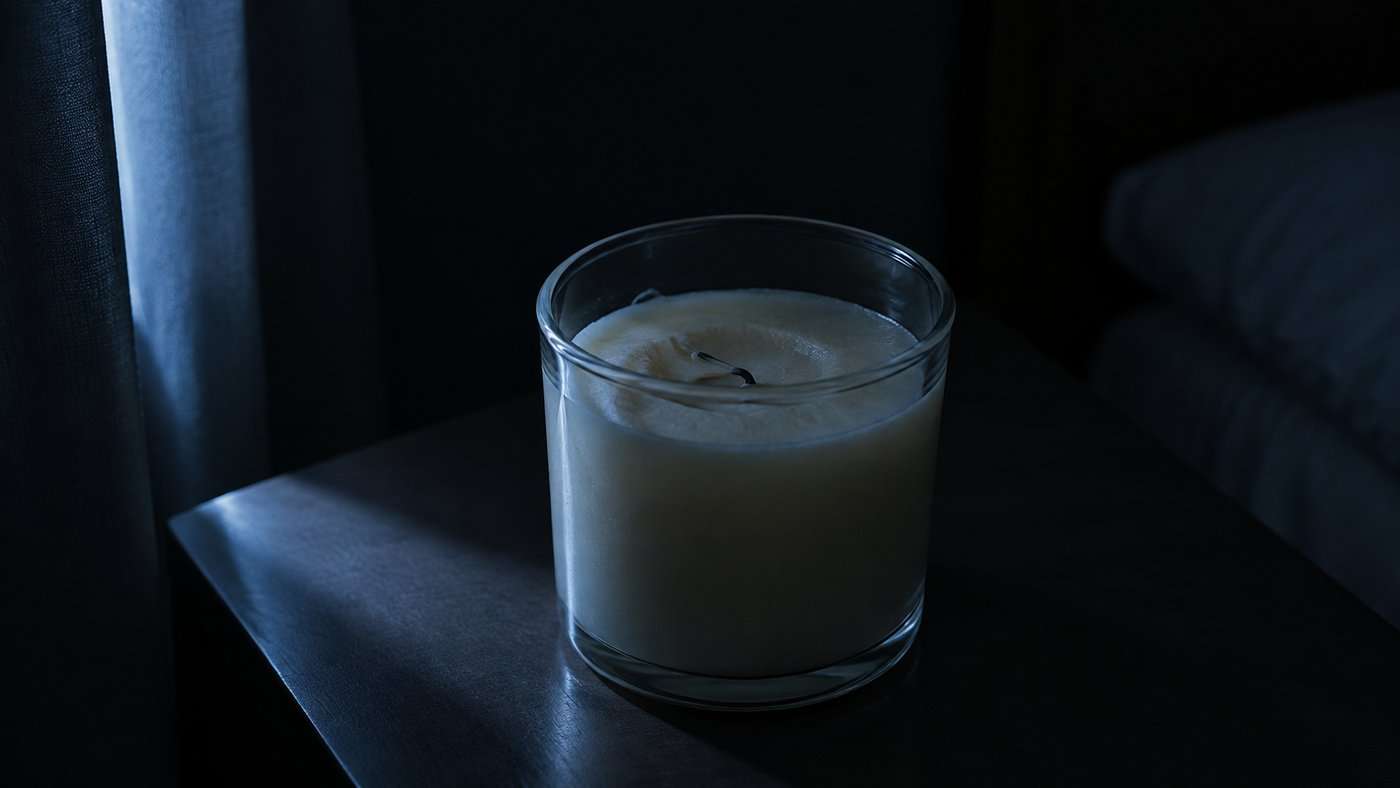
This is narrower than the general question of flame against flame-free, compared in full in our page on warming a candle against burning it. The block below covers only this one hour.
What an open flame brings to the wind-down hour
- Scent throw begins within a few minutes of lighting
- Moving light that reads unmistakably as evening
- Must stay in your line of sight the entire time
- Has to be put out before you are drowsy, not after
- Ends the scent and the light together
What the same jar under a warmer brings
- The identical wax and the identical fragrance
- Warm low light with nothing burning
- Scent strength becomes a setting, not on or off
- A timed cutoff decides the end instead of your memory
- Takes longer to reach full throw than a lit wick does
The candle on the shelf is the fragrance; the flame is only the delivery method — the one part the bedroom, and the clock, both object to.
07How to Keep the Scent After the Flame Goes Out
What follows is a routine, not a product setup: it works with a wick, a warmer, or a jar simply opened on a shelf.
Give the scent the wind-down hour, not the night
Start it thirty to sixty minutes before lights out — the stretch sleep guidance asks you to protect, and the only one in which the nose still reports to you.
Keep it to one note, kept low, in a room with some air
A scent you notice and then stop noticing has done its job. One that becomes the main event in the room is a dose problem in a small closed space.
Use the same one, only at this hour
The mechanism on offer is association. A fragrance that also appears in the kitchen at noon marks nothing; reserve one jar for this hour and it starts to carry information.
Let something other than you decide when it ends
The instruction every fire-safety body agrees on is to “never leave a burning candle unattended.”[10] A cutoff set in advance removes the step you are least able to perform, falling due after you are asleep.
What the Best Bedroom Candles Have in Common
Not a scent family, and not a price. The ones that survive this routine read clearly at low output, because a fragrance that needs the room saturated cannot be run gently; they are simple enough to be recognizable, since a complicated blend makes a poor signal; and they do not need supervision, so the heat source can be switched off from the bed or left to a timer.
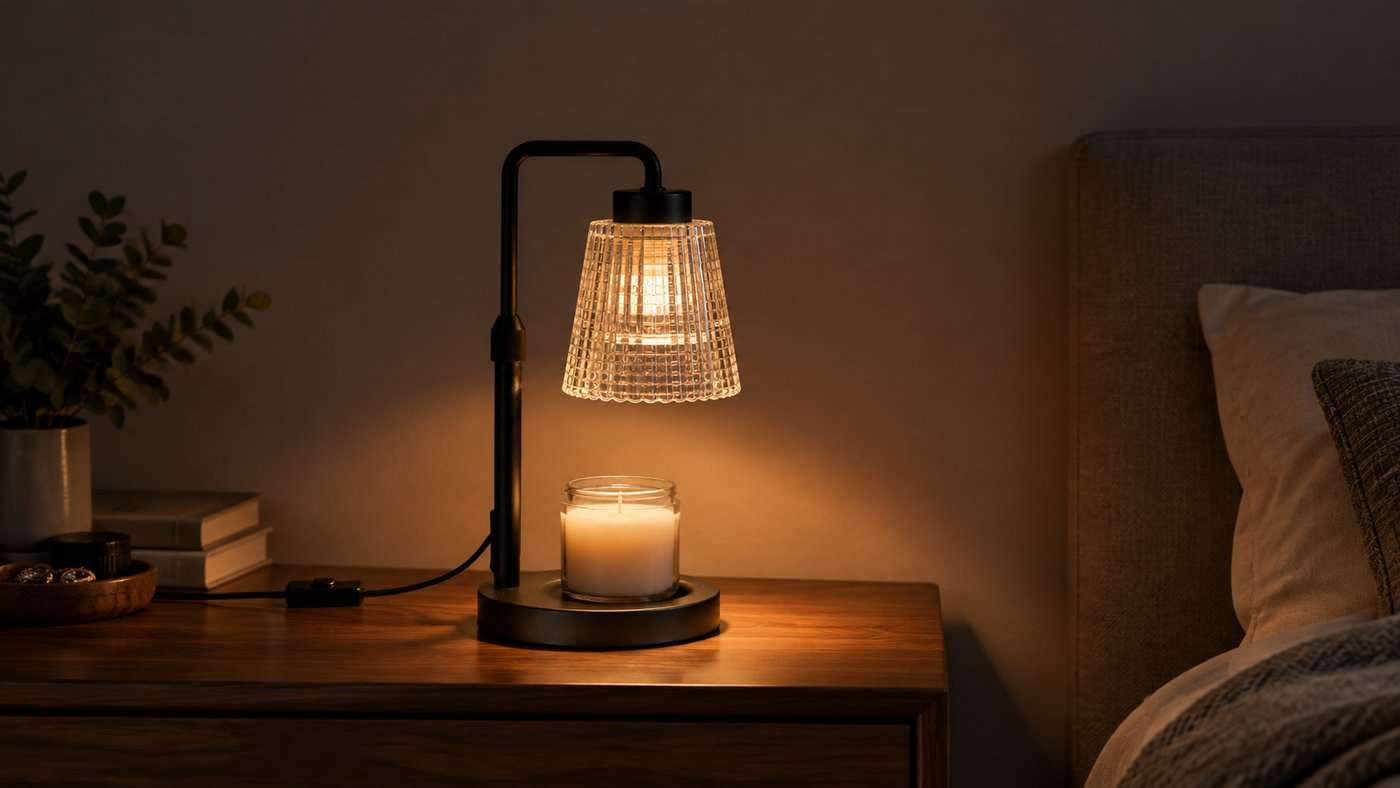
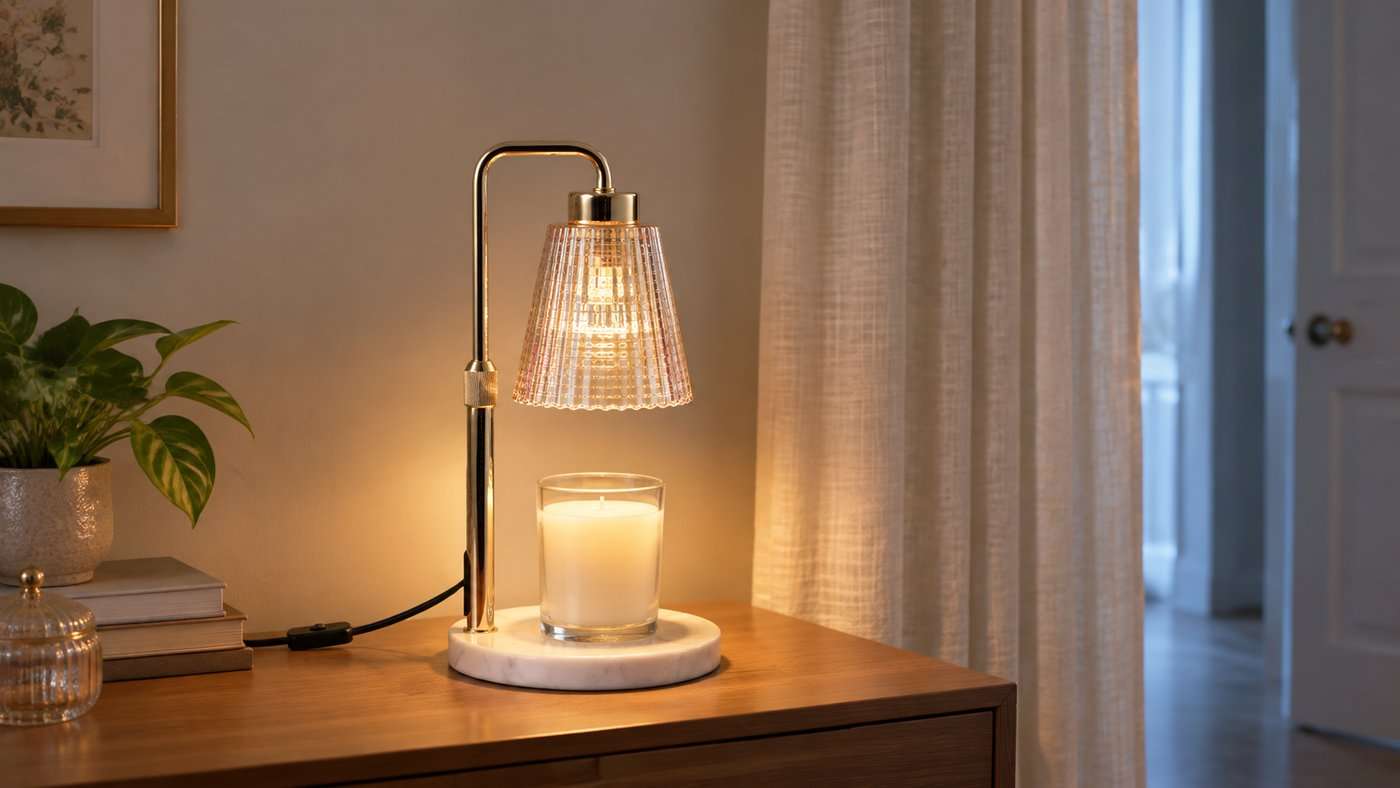
That third property is where a warmer lamp earns its place, and nowhere else in this article. It melts the jar already on the shelf from above, so the fragrance is unchanged and nothing is burned; the output is adjustable; and the session can end on a countdown, with the options set out in our guide to a timer with auto shut-off. It is not a sleep aid and we are not going to call it one. It keeps the cue and drops the flame.
08What This Page Cannot Settle, and When to Ask Someone Else
Three gaps are worth naming. No study has tested a candle warmer lamp against a burning candle for any sleep outcome, so every practical claim above is an inference from research on adjacent products. The strongest instrumented result used lavender oil inhalation in 53 adults over one night, the authors flagging the sample size and the absence of follow-up.[7] And the synthesis is unfinished: researchers summarizing it in 2025 described the reported effects as varying widely and sometimes negligible.[9] Read section four as a cue with promising but unsettled evidence, which is what the federal agency says as well.[2]
The other limit is the subject itself. Persistent difficulty falling or staying asleep is a clinical matter; a scented jar is a household object. The CDC’s list of sleep habits is about schedule, light, temperature, screens, caffeine and alcohol — a fragrance is at best an addition to it, never a substitute.[8]
The short below keeps to the order this article does. It opens where section one opens: candles for sleeping work the way a bedtime routine works, not the way a sedative works. Section two is what the jar is actually doing in that last hour — it changes the smell of the room, which the brain registers faster than almost any other sensory change. Section three is the part people are rarely told: human olfaction largely switches off during sleep, so the work happens before you are under rather than through the night. Section four is lavender, and it is the one material with controlled trials behind it, with those trials’ own limits named rather than hidden. Section five reports where candle fires actually start, and it is careful about what that means: this section reports numbers rather than verdicts, because the verdicts belong to other pages. Sections six and seven are the knot and the way out of it — the hour you want the scent is the hour a flame has to be out, and what follows is a routine, not a product setup. The short closes where section eight does: no study has tested a candle warmer lamp against a burning candle for any sleep outcome, so nothing here is a sleep claim, and trouble sleeping that persists belongs with a clinician.
Frequently asked questions
These answers stay inside what the cited sources establish, and none is medical advice.
What scent helps you sleep at night?
Lavender is the only scent with more than anecdote behind it, and even there the claim is modest. Sleep-education guidance places it alongside chamomile and jasmine as fragrances associated with relaxation, with lavender the one most often studied. The shortlist is where most people stop, and it is the wrong place to stop, because those studies report group averages and you are one person. A scent you find medicinal or cloying will not turn into a restful signal because a ranking says it should, and an unpleasant smell met every evening builds the opposite association just as reliably. Try a candidate at the end of a long day rather than in the middle of a shop in the morning, when both your nose and your mood are different from the ones that will meet it at bedtime.
What kind of candles help you sleep?
Almost any candle you already like, because the wax matters far less than people expect. Soy, coconut blends and paraffin all carry fragrance; they differ in how quickly a scent builds and how much of it you get per hour, not in whether the smell can work as a bedtime signal. Two things do change the answer. The first is what the scent is already attached to: if the only jar in the house is the one that burns in the kitchen every Saturday, it carries a daytime association, and a second, plainer scent kept for the evening will do more work than a better version of the first. The second is size. A jar built to fill an open-plan floor is too much for a closed bedroom, so buy the smaller one and run it gently.
Is aromatherapy for sleep supported by actual evidence?
Partly, at the level of a cue rather than a cure, and the evidence is still evolving. The federal complementary-health agency states that aromatherapy is sometimes used for insomnia but that it is not known whether it helps, because little rigorous research has been done. Individual trials have measured real changes, including one polysomnography study in which lavender inhalation raised total sleep time and sleep efficiency in a group of 53 adults over a single night. Against that, a 2025 team assembling an umbrella review of this literature described reported effects as varying widely and sometimes negligible or inconsistent. The fair reading is that scent may help set up sleep and has not been shown to treat a sleep disorder. Persistent insomnia is a question for a clinician.
Do candles that help you sleep actually exist, or is it a marketing category?
No certifying body defines the term and nobody verifies the claim before it reaches a label, so candles that help you sleep is a marketing description rather than a tested category. That does not make every jar dishonest; it means the front of the jar carries nothing you can check. Read the parts that are measurable instead: the fill weight, the declared burn time, and whether the maker will say what size of room the jar was built for. Those tell you what you are actually buying. Words like restful, dreamy or nighttime tell you only which shelf the buyer wanted it on, and they cost the maker nothing to print.
Does the scent still do anything once the candle has been put out?
Very little for you, and that is the most under-reported fact in this whole subject. Fragrance compounds linger in a closed room for a while after the wax stops being heated, so the room keeps smelling of it. Your ability to receive that smell, however, drops sharply as you fall asleep, and a sleep-laboratory study found that odors do not reliably register once a sleeper is past the drowsy first stage. In other words the lingering scent is scenting the room rather than working on the sleeper. The useful implication is not to extend the session but to move it earlier, so the scent is doing its job while you are still awake enough to notice it.
Can a candle help you fall asleep faster?
Nothing has tested that directly. The one window in which a scent could affect falling asleep is the drowsy few minutes at sleep onset, the last stage in which an odor still registers; after that, the sense of smell largely stops reporting to you. The strongest instrumented result, a 2023 trial, used lavender-based oil inhalation in 53 adults with poor sleep for a single night, and its authors named the small sample as a limitation. No study has tested a candle or a candle warmer lamp against any sleep outcome, so the honest answer is a cue for the wind-down hour, not a way to fall asleep faster. If falling asleep is a persistent problem, that belongs with a clinician.

Lamps for Bedroom
These lamps for bedroom tables and dressers do two jobs at once: they give you a soft, dimmable glow in the evening, and they melt a jar candle from above so the whole room smells the way you want it to.
Browse Lamps for BedroomSold and shipped by GODONLIF — free shipping within the contiguous US. Prices are shown on each product page.
Sources and evidence limits
Each link checked September 14, 2026.
- Sleep Foundation, “Smell and Sleep: Can Certain Scents Help You Sleep?”, by Eric Suni, medical review by Alex Dimitriu, MD; revised June 11, 2026. Source for the caveats in sections one and four, the lavender line and the waking line in section three. sleepfoundation.org (Retrieved September 14, 2026).
- US National Center for Complementary and Integrative Health, NIH, “Aromatherapy,” January 2020. Source for the insomnia sentence in the key takeaways and sections two and eight; a federal position statement. nccih.nih.gov (Retrieved September 14, 2026).
- Carskadon, M. A. & Herz, R. S., “Minimal Olfactory Perception During Sleep,” Sleep 27(3), 402–405 (2004). Source for every figure in section three and the chart. Six young-adult participants, a real limit on how far it generalizes. academic.oup.com (Retrieved September 14, 2026).
- Brown University news release on that study, May 18, 2004. Source for the Rachel Herz quotation in section three. sciencedaily.com (Retrieved September 14, 2026).
- National Fire Protection Association, “Safety with candles.” Source for the 2020 to 2024 figures in sections five and six and the key takeaways. The same current source our other candle-safety pages cite. nfpa.org (Retrieved September 14, 2026).
- National Fire Protection Association, “United States Home Candle Fires,” fact sheet, November 2017, reporting 2011–2015 data. Cited in section five only for the comparison the current page does not publish: 37 percent of fires beginning in the bedroom against 13 percent of users who most often burn candles there. Its annual totals are higher than the current ones and are not used here. bellinghamma.org — NFPA fact sheet PDF (Retrieved September 14, 2026).
- Yang, C.-P.; Yang, C.-C.; Tsai, I.-J. and colleagues, “The immediate effects of lavender-based essential oil inhalation on subsequent polysomnography in people with poor sleep quality,” Journal of the Chinese Medical Association 86(7), 665–671 (2023). Source for the trial in sections two, four and eight; the authors name the small sample as a limitation. pmc.ncbi.nlm.nih.gov (Retrieved September 14, 2026).
- US Centers for Disease Control and Prevention, “About Sleep,” May 15, 2024. Source for the sleep-habit list quoted in sections two and eight. cdc.gov (Retrieved September 14, 2026).
- Shi, H.; Liu, M.; Fan, X.; Peng, W. & Hu, Y., “Effects of aromatherapy on sleep quality in patients: Protocol for an umbrella review,” PLOS One 20(8), e0329928, August 18, 2025. Cited in sections four and eight for the state of the field; a protocol, not a completed review. journals.plos.org (Retrieved September 14, 2026).
- National Candle Association, “Candle Safety Tips.” Source for the single instruction quoted in section seven. candles.org (Retrieved September 14, 2026).
Nothing here is medical advice, no product mentioned treats insomnia or any sleep disorder, and persistent trouble sleeping belongs with a clinician.
You may also like